What do Mars and Texas tell us about technology?

Two major stories about technology struck me this week.  Each was fascinating on its own, but I thought that pairing them was also interesting:

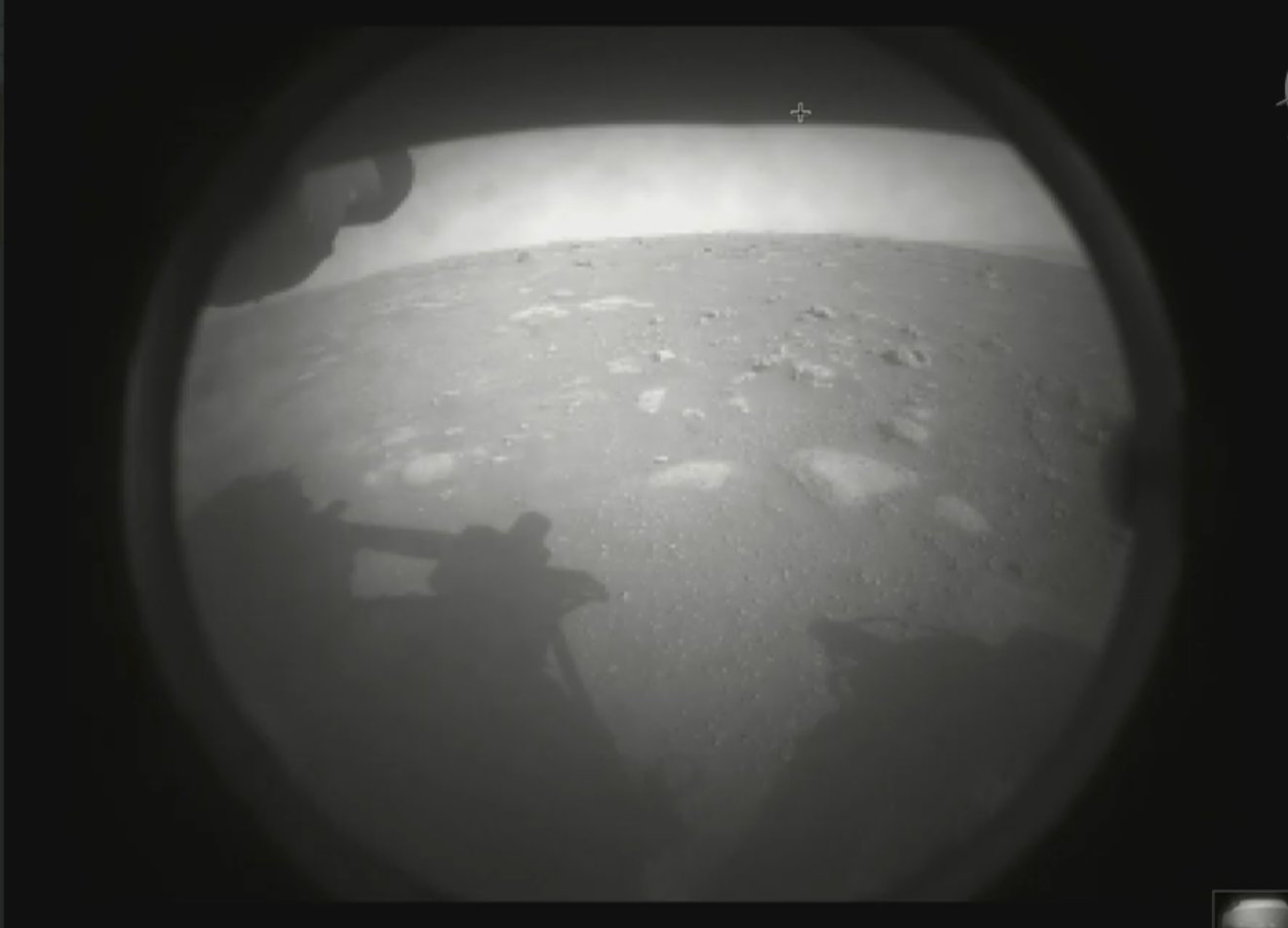
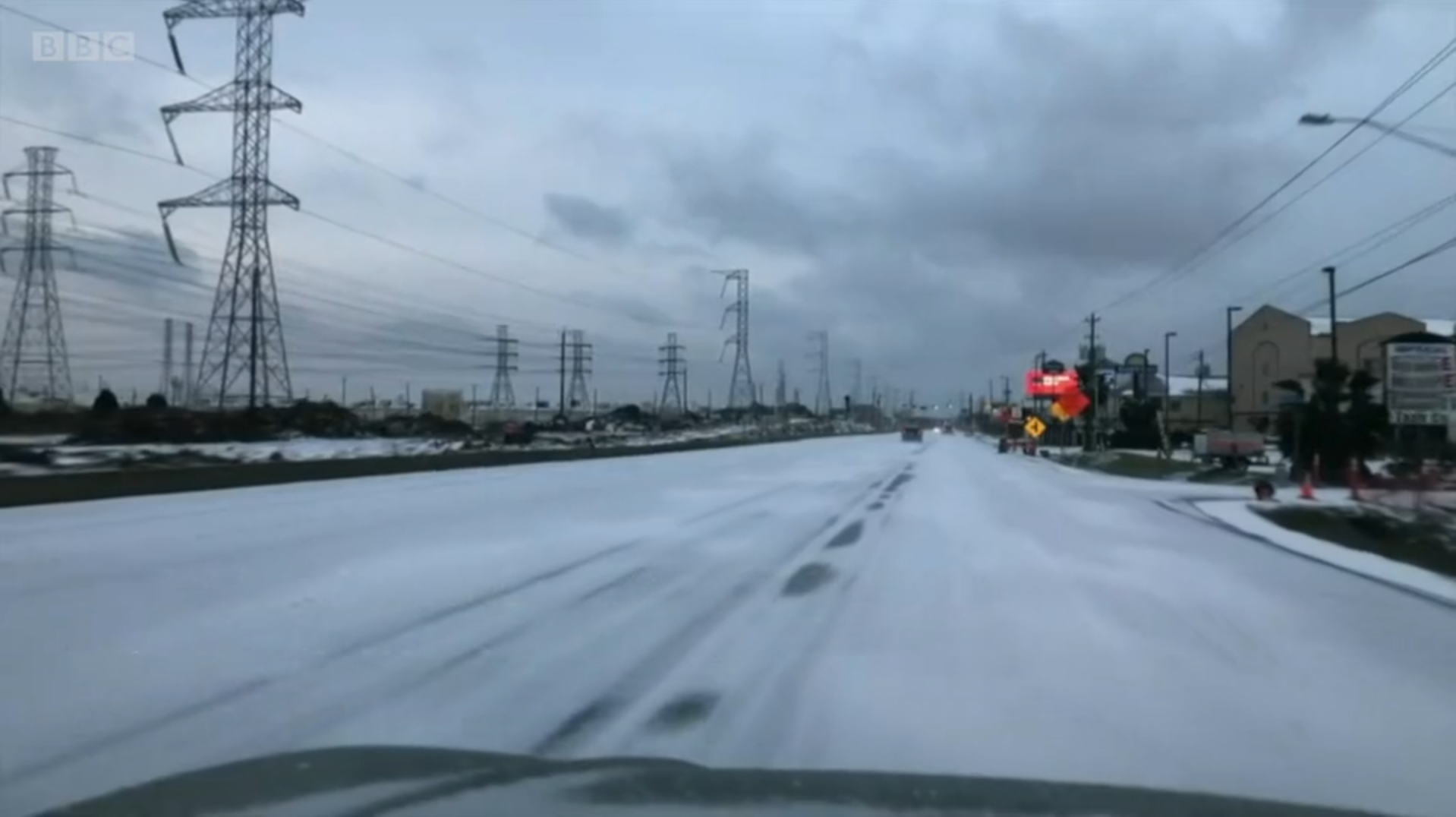
What does Perseverance landing on Mars, and the massive power failure in Texas, taken together, tell us about technology?

Perseverance first look at Mars

I don’t mean to offer this combination as a way of entirely describing technology in 2021.  These are only two stories out of many. It’s an artificial pairing indeed, yet one that’s intended to be symbolic and provocative rather than realistically descriptive.  The method on display here is not about achieving historical accuracy, but instead for stirring thought.

I’m basing it on work from my late friend Charles Cameron. He created what he called DoubleQuotes, unusual pairs of quotations that could provoke insights. Over time Charles extended the DoubleQuotes project, adding images to textual framings, extending the reach of each item, always as a tool for reflection and imagination.  In that spirit I’d like to pair this week’s stories of NASA and ERCOT, a successful plummet through an alien world’s atmosphere and a catastrophic drop in domestic temperatures, a technological marvel and an industrial disaster, an inspiration and an embarrassment.

Texas snowstorm BBC

What do they tell us about technology in 2021, and what do they suggest about the future?

Consider the themes and ideas each involves. The Texas story includes, among other things: cascading failures across multiple sectors, from water supplies to agricultural production to silicon chip manufacture; the role of climate change; a (pretty dumb) debate about fossil fuel and post-carbon energy sources; state and interstate regulation; international tension; human suffering.  On and around Mars we see: automation’s continued rise; multinational competition (China and the UAE also succeeded in getting probes to Mars this month); scientific exploration; human inspiration.

I initially posted this pairing across social media and people responded with good thoughts.  For example, NPR reporter and Future Trends Forum guest Anya Kamenetz tweeted:

On Patreon Anthony Helm agreed, observing that some of the economy is geared towards start-ups but not sustainability. Some firms burn through bright, younger workers.  Brett Boessen offered a similar thought, citing a recent Zeynep Tufekci article about financial firms squeezing opportunities for fast, short-term gain.

On Facebook some friends (Tatiana Benet-Riley, Kim DeBacco, Doug Reilly) also agreed with Anya, seeing the Texas story as an example of how America doesn’t care much about infrastructure.

Back on Twitter, Matt Cropp found a science fiction parallel:

Christina Wehlburg urged us to separate technology from leadership:


Ellen Moody reacted with this observation:

Capitalism unchecked altogether now one of the most destructive forces on our planet, genuinely disinterested gov’t one of the best: witness also these vaccines for COVID19.

Andrew Peterson offered a related political thought:

…we have the knowledge and the resources to do amazing things. I think the problem is with the pace of the people in charge. with 4 year terms, you never get a chance (or super small window) to make the right choice, not just the popular one. No one will praise someone for investing 1 trillion in infrastructure, that might cost the ave family $25 a year…. but when something doesn’t fall down/break/fail, no one notices.

If that’s not enough to inspire you, let me add one more idea in the shape of a question.  What does each story suggest about the other’s future?

That is, will America summon up the engineering brilliance and public funding of Perseverance and apply it to infrastructure upgrades, especially as climate change sets in? Turned the other way, will the United States continue to support Mars exploration, or will we back off from paying for the less flashy aspects?

Over to you.  What do you make of this DoubleQuote?

This one’s for Charles Cameron. In memoriam.

Posted in technology | 6 Comments

Getting my first COVID vaccination shot: good news, bad news

On Sunday I received my first COVID-19 vaccination.

buy intagra online buy intagra no prescription generic

I’d like to describe the story here.  That’s partly to demystify the experience for anyone who might be skeptical of the shot. And perhaps this is a bit of useful documentation for the historical record.  There are very good and very bad parts to the story.

tl;dr version – I successfully got vaccinated.  Far too many people are not.

buy valif online buy valif no prescription generic

So I really lucked into this. Our county and state set up a registration system, which slotted me into 1b.  Being a university worker and having two comorbidities seemed to be key. I also bugged one local medical provider until they grudgingly added me to their list of people to jab with extra vaccines.  And this worked!  Apparently Prince William County wrangled a hefty vaccine stash.  I was originally scheduled for a shot later in February, but the county authorities rescheduled for Sunday.  So I packed up my face mask and phone and drove over to a local public high school.

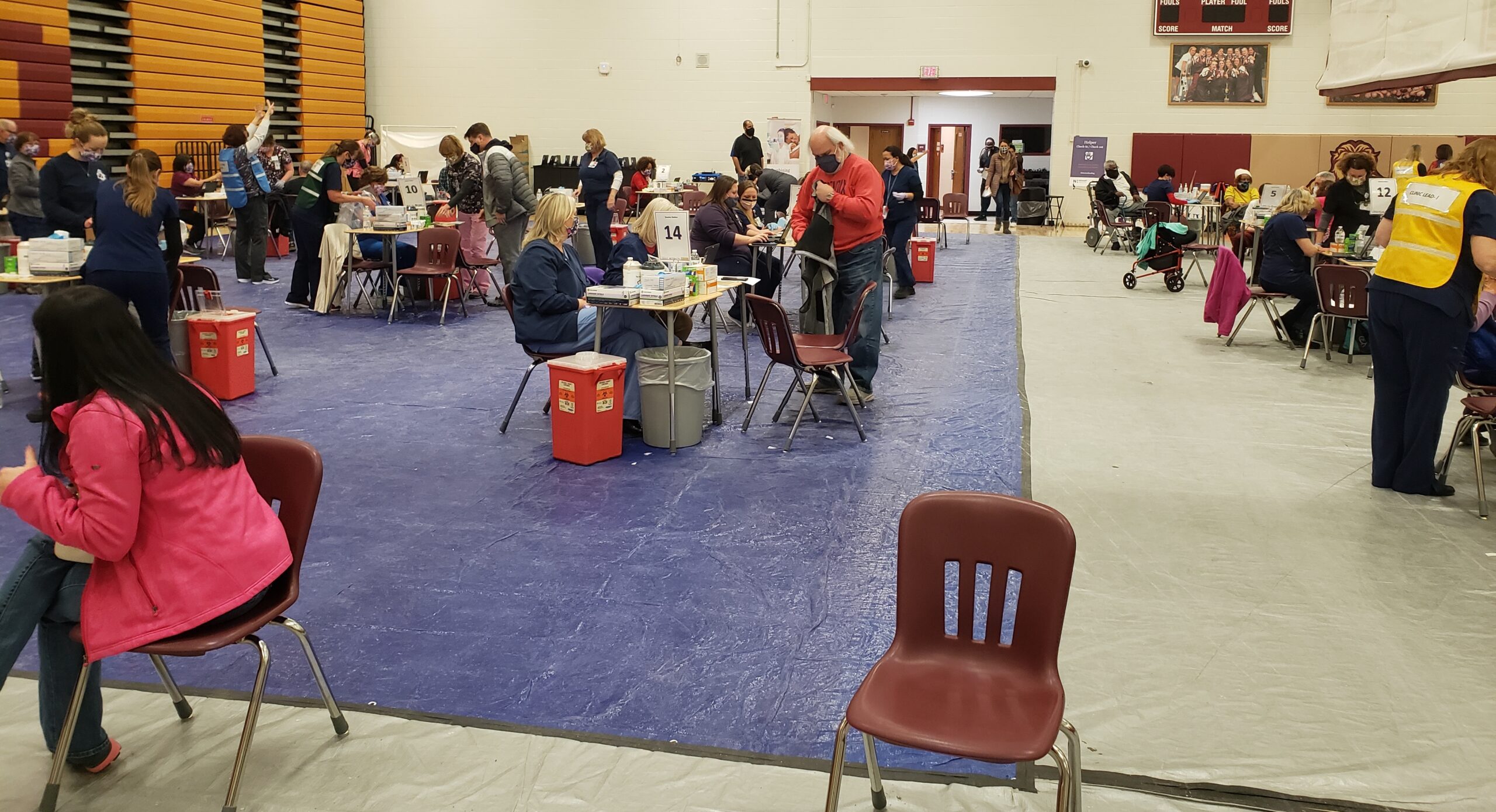
The site was crowded with cars, and also clearly marked with “COVID VACCINATIONS HERE” signs.  Arrows pointed inside, as did a flow of people. At the door a masked staff member greeted me, asking about my appointment, then sending me to the end of a line.

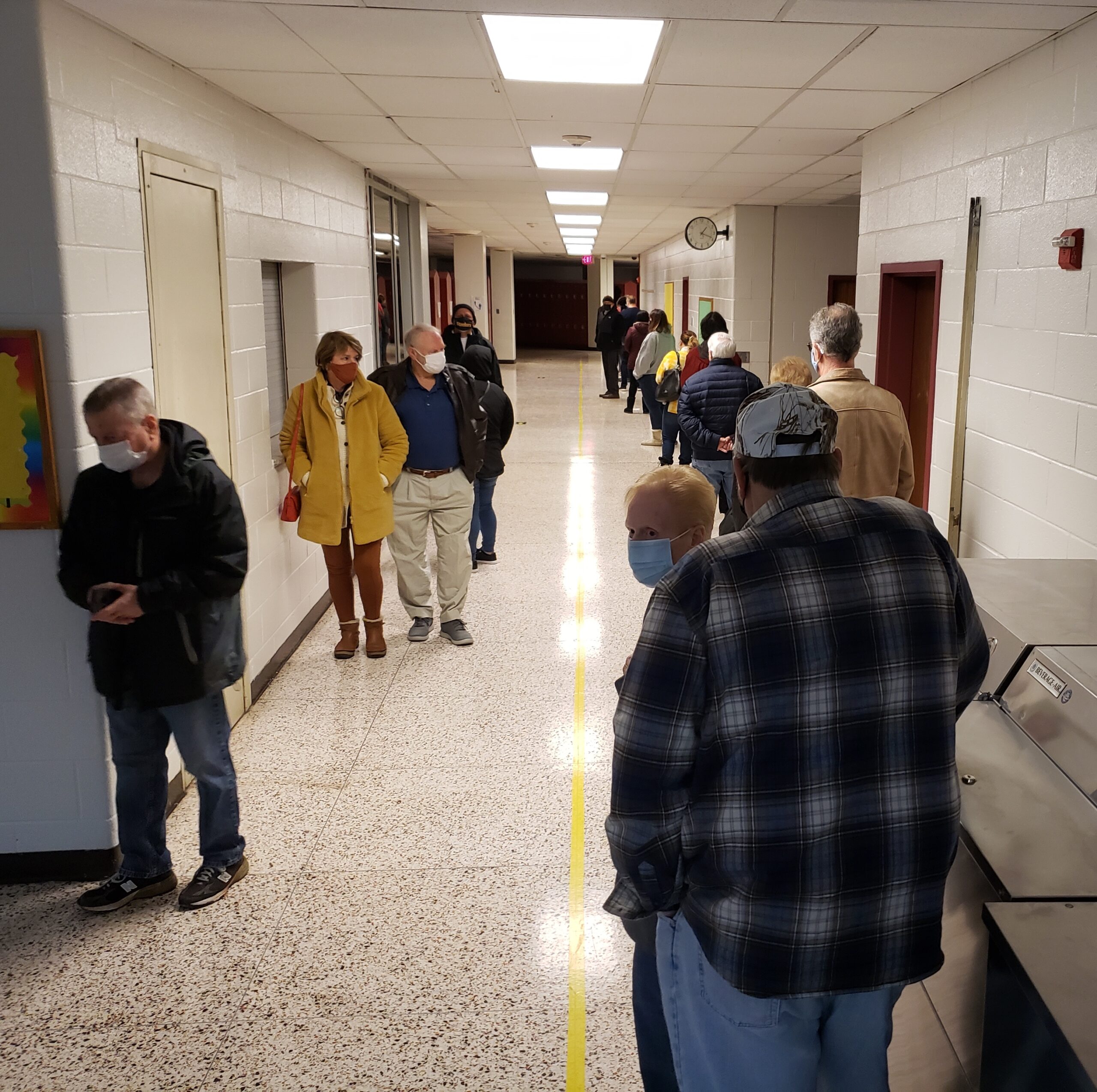
Which turned out to be a very, very long line.

buy ventolin online buy ventolin no prescription generic

It ran past multiple offices and rows of lockers, wrapping around two corners. Everyone I passed was masked and tended to maintain social distance. A quick check of demographics: evenly balanced by gender; more white than black or Latinx.

vaccination 2021 Feb_line

The line moved quickly. A helpful fellow passed out plastic folding chairs for fatigued folks. Another staffer cheered us up with stories of the oldest people there today (99, and another who claimed WWII veteran status) and assuring us that things were speedy.  Which they were.  I read a Kindle book as I stepped ahead.

I also asked the cheerful staffer about the operation. She described it as a partnership between the public school district, including school nurses, and one local clinic network.  She also confirmed that they were giving the AstraZeneca vaccine.

About 15 minutes in I hit the check-in stations.

vaccination 2021 Feb_getting into system

Staff asked for my ID and determined that I was at the right place and time, then sent me straight down another hall.

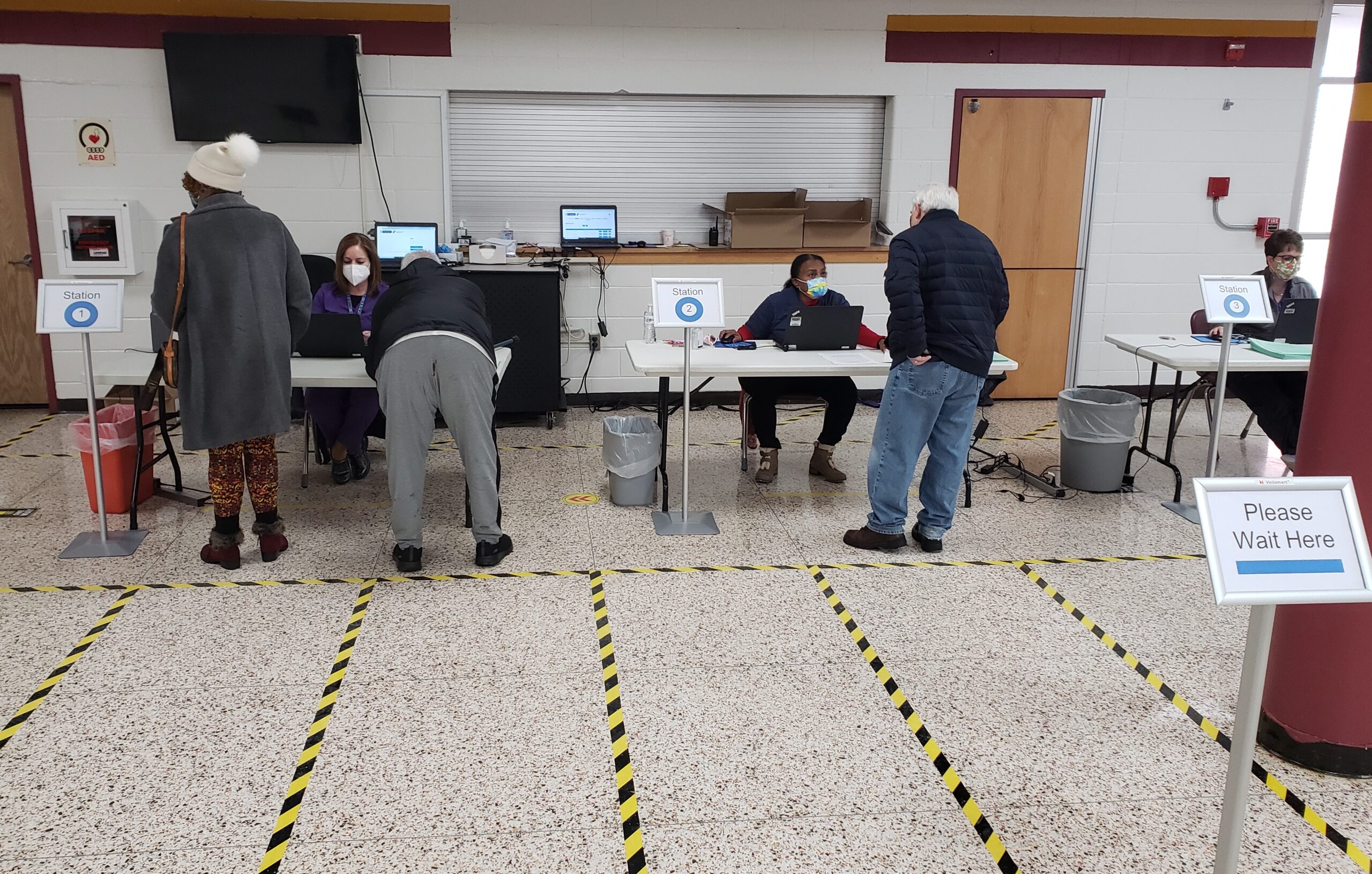
This led to a gigantic gym, where the vaccinations were actually happening.  Stations dotted the front half, each crewed by a pair of people.

vaccination 2021 Feb_stations

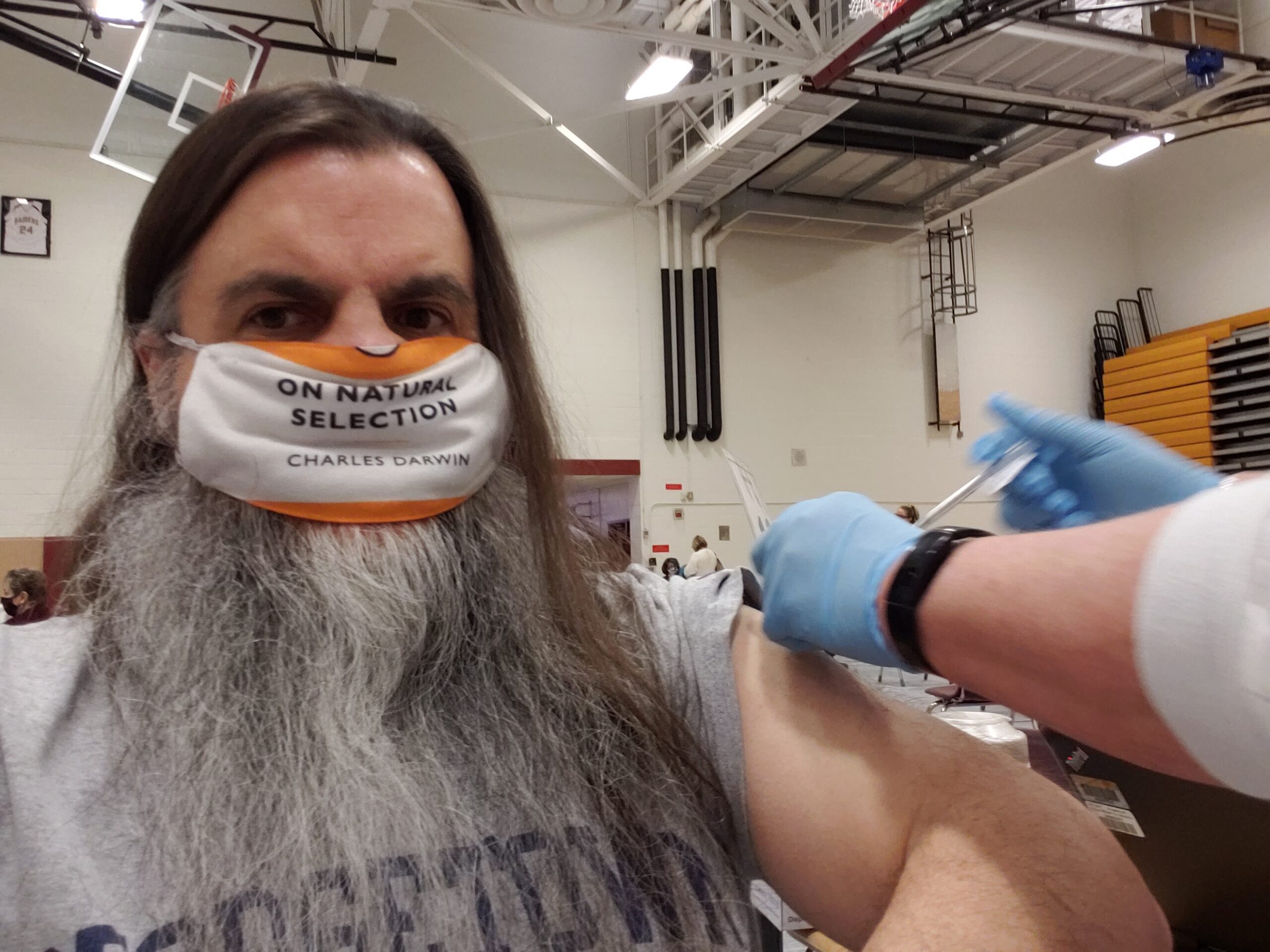
A guide immediately sent me to station 16, which was ready for me. I asked the two staff members if I could photograph them. One was somewhat horrified at the thought, but the other thought it was ok if I took a selfie while getting the jab, which is exactly what happened:

vaccination 2021 Feb_me getting jabbed

The injection was unusually light.  It must have been a very thin needle. I barely felt it going in and exiting.

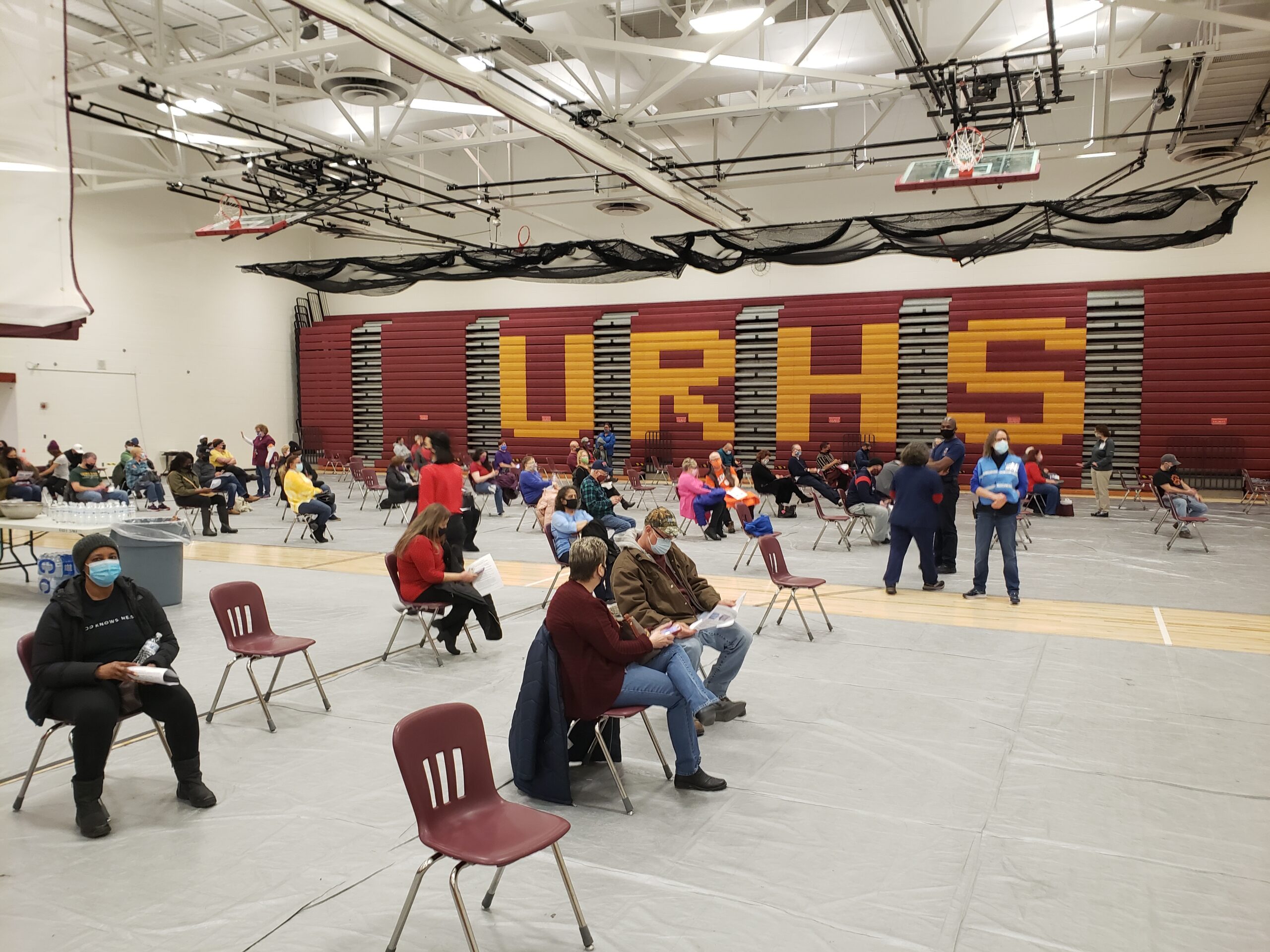
The station pair then sent me to the other end of the gym, which was filled with socially distanced chairs.  There I had to pick one, sit, and wait 15 minutes to check for any allergic reaction to the shot.

vaccination 2021 Feb_seats

This was quite pleasant. A friendly nurse gave me more information, including a handout, and pointed me to free water and snacks. I partook, then sat and read for the rest of my time.

When that elapsed, I walked to a checkout station next to the gym’s main exit. They verified my information and gave me a proof of vaccination card, solemnly abjuring me to not lose the thing. (I’m not sharing a photo of it, in case some clever person figures out how to abuse it.

buy sildalis online buy sildalis no prescription generic

) The staff person also told me to check email for 1) a digital version of the card, and 2) registration for the second shot in a week or so. They recommended I take it easy at home in case my arm hurt.

And that was it. I walked out to the car and drove home. My arm was a little sore, so I put off my daily pull-ups and watched a Netflix movie.  The first email arrived, and I’m waiting for the second.

Overall, I was very impressed by the operation.  There were a few glitches around social distancing – the door greeter got way too close to people, and there wasn’t much of an effort to keep people from walking near other folks. Otherwise the whole procedure was very speedy. Staff were friendly, informative, and helpful. Most importantly, I now have a vaccine in my body, training my immune system to fight COVID-19.


Let me balance that story with its opposite. I shared some of these images and the gist on Twitter and Facebook, hoping that it would inspire people to sign up for shots. Instead the responses that actually came back ranged from frustrated to hurt, as friends and other people described the seething chaos that is the American vaccination process.

From California to New York, Texas to Michigan, Utah to Pennsylvania came stories of delays and cancellations, supplies running out, and bureaucratic obstacles. As per the American public health strategy most of the decision making took place at the state and local level, which now drives what can most charitably be called a patchwork of different policies, practices, and outcomes. Some states have K-12 teachers as high priorities, while others do not. Some rank in-person workers highly, while others don’t mention them. The groups that actually conduct the shots range from giant pharma chains to local shops, county health authorities to independent clinics. Sometimes universities play a role.

Again and again I heard rage, despair, and resignation as people described not getting access to vaccinations this month, or in spring, or even in summer.

Meanwhile I try to help my father. He’s almost 90 and normally inhabits an assisted living facility in southeast Michigan, but is now in a rehab unit for an unrelated medical problem.  Given his age, his gender, and a raft of co-morbidities I won’t mention here he should be a primary subject for vaccination.  He is not.  He has no appointment and no idea how to get one. He is deeply vulnerable to COVID infection, damage, and death and as far as we can tell has no chance for a vaccine in the near term.

I’ll have more to say about this later on, but for now it looks like America is handling the vaccines… unevenly?  Consider these CDC stats: 27,417,468 cases and 482,536.  The scientific consensus is that these are undercounts. Perhaps it’s more accurate to say we’re badly screwing up an amazing scientific development and failing to fight the pandemic seriously.

My thanks to the local system for giving me some hope. My heart goes out to the rest of the nation.  We must do better.

Posted in coronavirus, personal | 5 Comments

Teaching this spring: an educational technology seminar

My spring seminar on education and technology is starting this week.  It’s a graduate class with students in Georgetown University’s Learning, Design, and Technology MA program.

Here I’ll share my plans, in the spirit of openness and transparency I try to follow here.

The idea of the class is to introduce students to the range of ed tech practices, concepts, technologies, and strategies.  It combines conceptual work with hands-on tool learning.  The goal is to inform them so they can make good ed tech decisions in their subsequent work.

Practically, it’s an online class because of COVID. That means we have online sessions over Zoom, about 150 minutes each week. For asynchronous work, we’re starting with materials and exercises in Canvas, Georgetown’s learning management system (LMS), along with some use of Google Apps like Docs and Jamboard.  As the semester progresses, we add more asynchronous tools (see schedule below).

This is the third time I’ve taught the class (previously: 2020, 2019), and so designing it meant the usual redesign and rethink: rerunning things that worked well before, tweaking almost everything, adding new stuff to experiment with, and swapping out the weakest bits.  I cut back the readings a little, after getting feedback that they were sometimes too much.

There are some external factors which also prompted redesign. The class is entirely online, or I’m assuming so, unless the greater Washington, DC area enjoys an unusually brisk and successful COVID vaccination and Georgetown’s campus is clear of viruses normal and variant. So I had to plan for online-only work – which is a change from previous iterations of this class.  Those involved productive visits to the campus maker hub, meeting in different labs, working with experts in person, and using a pile of great gear the main classroom had on hand.

I’m very conscious of the stresses of synchronous work in the COVID era, so I’m doing a few things to make it saner. I’m extending practices developed over teaching last summer and fall: daily check-ins, several cameras-off periods, and important asynchronous activities.

The class schedule changed as well, from being one 3-hour meeting per week to two 75 minute sessions per week. To account for these I set up every Thursday as virtual hands-on time. That’s when we focus on exploring stuff and learning tools.  Tuesdays are devoted to reading scholarship, a minimum of my mini-lectures, and discussion thereof.

I’m continuing my democratic class practice. You can see below that students get to drive some of the content. They also drive some of our policies and technology choices.  I also start with their knowledge and experience, which are gifts they bring to the class.

One fun thing about this class is that we can easily and productively go meta at any time. The LDT program is about design, so I happily put class design on the table. And since ed tech mediates the entire class we can talk about what we’re doing as examples of what we’re studying.

I’m also very happy to have successfully smuggled in a university librarian.  Reference librarian (and therefore deity) Jess O’Toole generously agreed to join us for explorations of information literacy, open education resources (OER), and open access in scholarly publication.

Now for the schedule.  Keep in mind that this grows as we progress. We fill in some of the blanks.  Plus I add links and notes as we accrete them.

January 26 – Introductions

  • Our backgrounds and expectations
  • Organizing the class
  • What is ed tech and what have we done with it so far?
  • What have you done with ed tech? (survey)

January 28 – technology exercises

February 2 – The LMS and the Web

February 4 – technology exercises

February 9 – Digital and information literacy

February 11 – technology exercises

  • visiting: Jess O’Toole
  • create your own guide

February 16 – Learning spaces

February 18 – technology exercises

  • redesign the virtual classroom
  • redesign the physical classroom

February 23 – open

February 25 – technology exercises

February 11 – technology exercises

  • visiting: Jess O’Toole
  • create your own guide

February 16 – Learning spaces

February 18 – technology exercises

  • redesign the virtual classroom
  • redesign the physical classroom

February 23 – open

February 25 – technology exercises

March 2 – audio

March 4 – technology exercises

  • Audacity and beyond
  • create an audio file with at least two tracks.  Upload to Soundcloud.  Share with class digitally and in synchronous session

March 9 – Video

March 11 – technology exercises

  • assemble a video with images, video, and soundtrack in WeVideo; share with class

March 12 – MIDTERM PROJECTS DUE

March 16 – mobile

March 18 – technology exercises

March 23 – accessibility and design

March 25 – technology exercises

  • TBA

March 30 – April 1- break

April 6 – Gaming and education

April 8 – technology exercises

April 13 – VR, AR, XR

April 15 – technology exercises

April 20 – AI

April 22 – technology exercises

April 27 – student choice

April 29 – technology exercises: student choice

May 4 – student presentations, 1

May 6 – student presentations, 2

May 14 – FINAL PROJECTS DUE


What do you think?

Posted in teaching | 2 Comments

Turning 54: delight, decay, nostalgia, the future

I was born 54 years ago today.

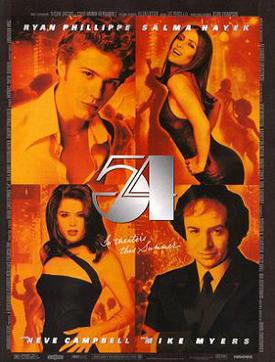
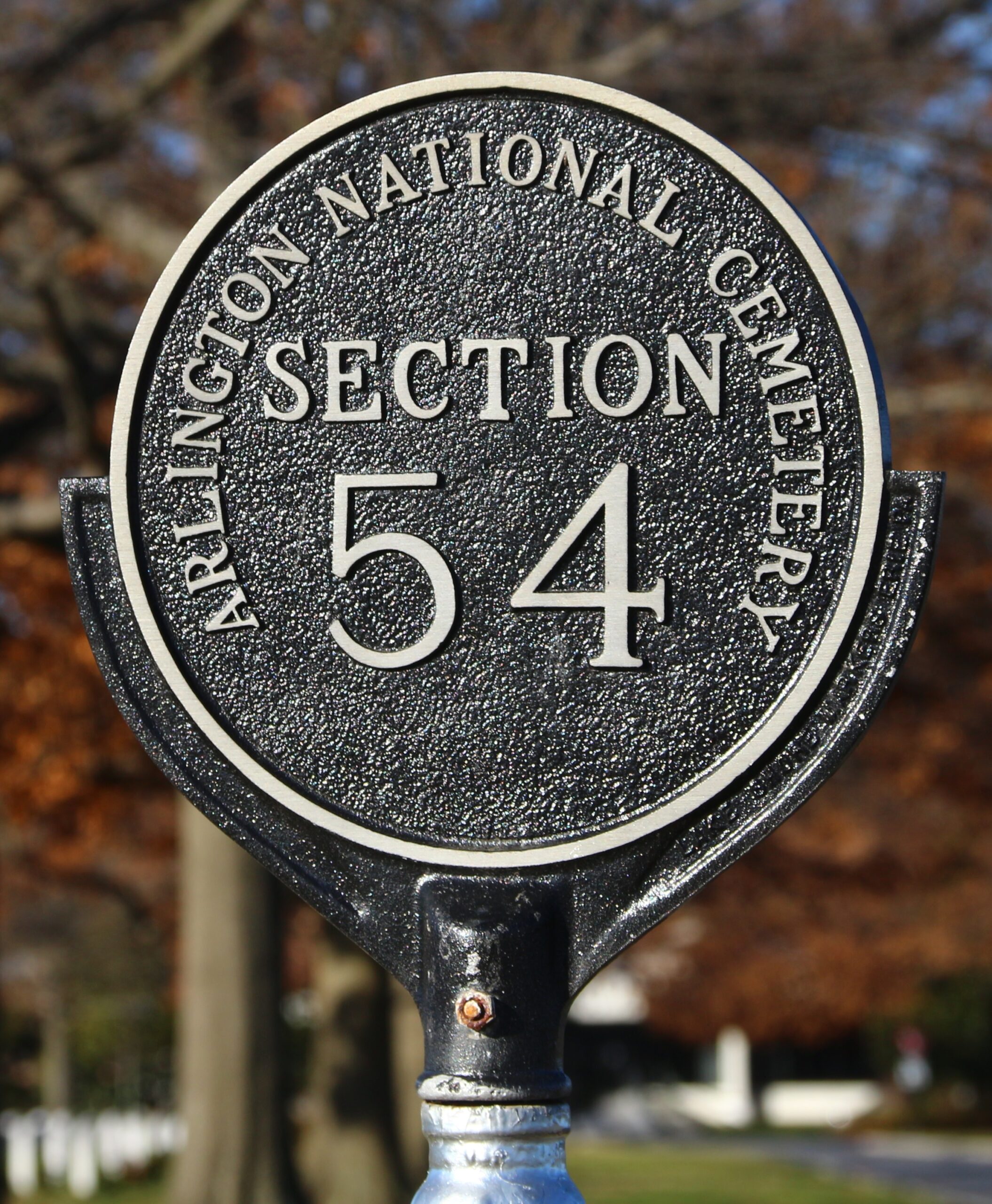
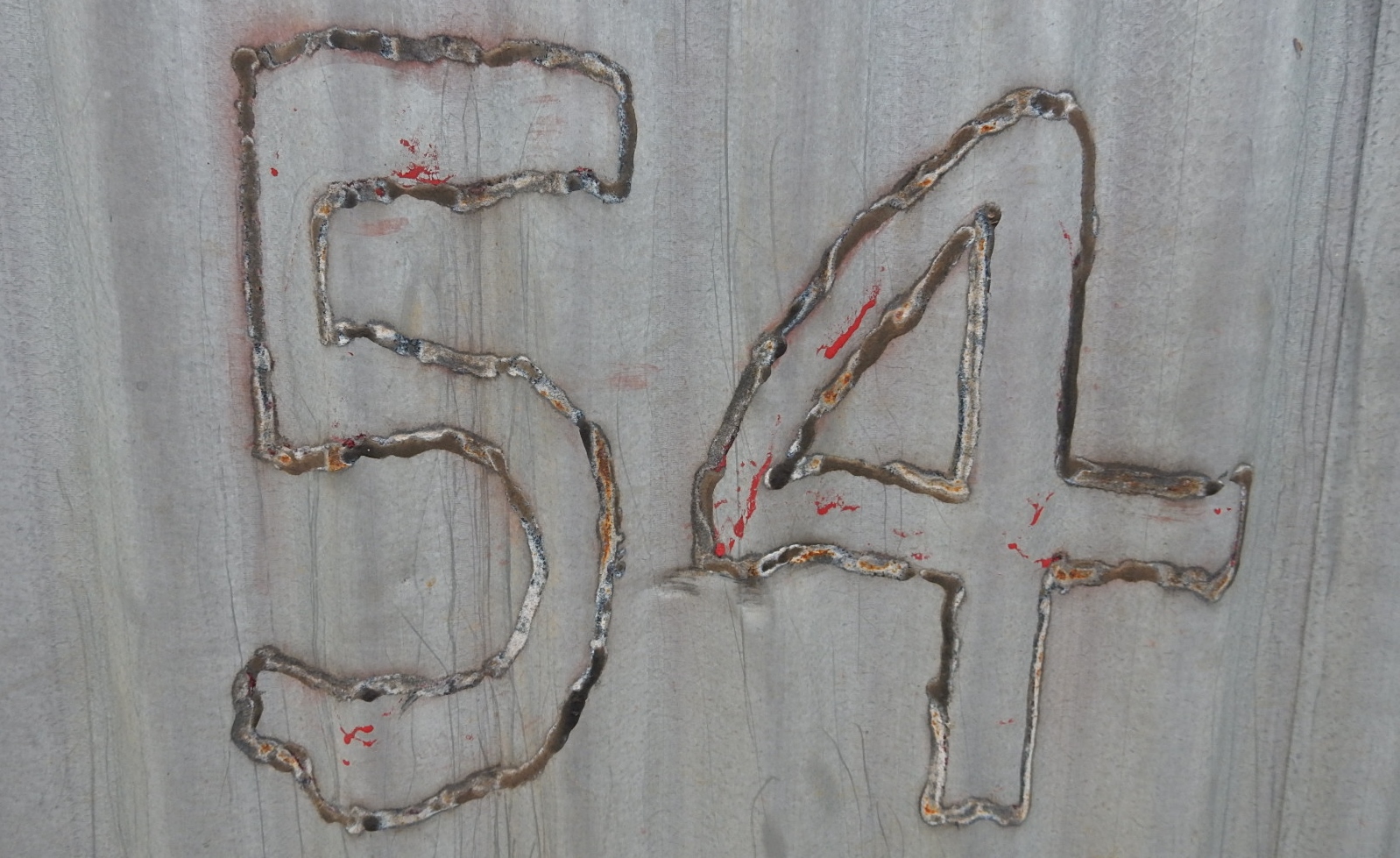
54_posterI’ve blogged about birthdays here a few times (2019, 2018, 2018, 2017).  There are other personal posts here, including one last month looking back at 2020.  This is awkward for me. Maybe it’s being generation X, or maybe spending too many years being self-effacing, or my suspicions of people who misuse autobiography to manipulate people, but it’s hard for me to write about myself.

So I can step back and get analytical with my humanist’s training.  54 is a pretty dull and inconsequential number.  It lacks the decade marker of 50 or 60. There’s no nifty echo as with 55. There aren’t any legal, policy, or cultural markers attached to it that I can find.  Not even Mike Tyson had much to add to the year’s particularity.

It’s not a number… or an age… that meant anything to me earlier in life. I’ve said before that as a child of the Cold War’s darkest years I never really imagined myself living past 30. I certainly didn’t have a picture of myself heading towards age 60. So it’s iffy, blank, open territory.  Which isn’t a bad thing.

As a futurist I look ahead.  That’s the job. So this points me into the middle of the 21st century and again I can leave autobiography behind. The years ahead are fascinating, dangerous, and exciting. I think of (among other things) social progress, climate change and its mitigation, progress in knowledge and technology, the demographic transformation of the species, and the wild array of political possibilities. (I’ve thought of writing a book about this, looking ahead to 2100.)

All right, back to personal me in that impersonal setting. I still can’t see retirement as a possibility, save by medical necessity. On the one hand I love what I do and don’t want to stop. On the other, I’m suspicious that the financial basis will be there for me to throttle back a full-time professional into a part-time “keeping my hand in.”

How dull it is to pause, to make an end,

To rust unburnish’d, not to shine in use!

As tho’ to breathe were life!

My great fears are, actually, medical. That looms very large looking past 54. I fear losing my sight. A few years ago I got a slight taste of that with having to wear reading glasses. I dread losing my hearing, which I’m already witnessing with my father. Losing mobility (also my father, who only gets around with a rollator). Losing fine motor control.   It’s a staggered degradation I glimpse ahead, a personal demolition, a ruthless and painfully graduated reduction of powers, of access, of delight.

At the same time I rejoice in medical advances.  Some of you know I always celebrate health advances when I describe demographic changes.  Even in the teeth of 2020’s shambles we’ve seen incredible progress, most notably with the amazing COVID vaccines, still largely celebrated only by die-hard conservatives (and, once again, putting the notion of a “Republican war on science” in question). I mentioned my father’s woes above, but that he’s alive at all, pushing 90, is largely due to a string of medical triumphs.  I am not sure if I’ll have access to these life-extending and -improving services, given the woeful mess that is the American distribution of health care.

It might not matter, of course. I can easily be felled by any number of speedy demises: a heart attack (one grandfather had a truly disturbing number), an accident (I’ve lost several friends this way), a stroke (other friends), or aneurysm.  January’s Capitol riots reminded me also of the possibility of death by violence.  At any moment I can just – stop.

That gives me the classic memento mori.  This classically inspires people and certainly works for me.  There’s a beneficial flip side, though, the now-famous Swedish death cleaning. I look at my physical and digital stuff and wonder if each item is worth preserving after I die. That breeds a certain tidiness. It makes it easier to get rid of stuff, to quickly delete emails.  I dread my family having to waste their time going through useless things after I (say) am found dead at my desk, brain activity suddenly nullifed.

…and is this the trope that I’ll be living out, the cliche of an older person obsessing over death, declining health, and escalating medical woes?  Since I’m in good shape now, am I getting ahead of things, or falling towards hypochondria? Instinctively I resist all of that, and change the subject.

54, by Ben Campney

What am I doing with my time? How am I using my capacities? Am I wringing the most out of every breathing second?

There’s a lot for me to be proud of for this past year and the year to come.  My family is safe and sound during a horrible pandemic. Personally, the vegan experiment dropped me around 40 pounds and possibly added years to my lifespan. I’m planning on keeping up with it (down to 200 lbs is the goal). Our home is splendid.   We are resilient by any definition, and that feels damn good.

Professionally, I kept my business alive through a terrible economy. Heck, BAC is healthier than ever! Two awards came my way over the past year, each a delight. People read Academia Next and an audio version is in the works. Universities on Fire grows every day. I can turn back to my younger self and say: yes, I am now a writer, a published author.  That’s a lifetime goal realized, and realized from now on.

How is my time spent? It’s dedicated to the future of education, and that keeps going. I do the research and share my thoughts through teaching, interviews, this blog, writing books, giving talks, making other media, and that looks… pretty good so far.  People are interested and some find it useful. Some of my work is durable. I am at least doing what I set out to do.  It feels like I’m doing it well.

The flipside is I still work too much. I need to cut that back. 65-70 hour weeks are not sustainable. Other parts of life require more time. Maybe, maybe this is the year I can make this happen.

54 by Michael Coughlan

One sign of advancing age has failed to appear: thick skin, or not caring about others’ opinions. I am still too sensitive to slights real or imagined. I take other people’s thoughts very seriously for my work, yes, and that’s both rewarding and the right thing to do. But I keep opening up for others and finding myself hit, then obsessing over each blow.  If getting old means running out of fucks to give, I still have a plentiful supply of fucks in store, it seems.  I don’t know what makes that stock run down.

Another sign is somewhat apparent. Nostalgia does hit me at times.  I show older movies to my family and other folks and when they don’t immediately relish them I find myself defensive.  Some music played during the 1970s and 1980s sometimes hits me hard, while most popular music made afterwards is an alien blur.  Looking through my bookshelves (at long, long last set up!) is a surefire way to dive into memories. Ah, reading that novel in junior high, and where I walked, thinking about it. Teaching that collection at Centenary College in the late 1980s. The friend who gave me this book.  Talking with thus-and-so about that book.  The prof who interested me in this subject. My library is a faithful time machine.

At the same time I fight the past’s pull.  I’m a futurist, after all, and eagerly seek out the new, or at least the new to me.  I keep exploring YouTube and Bandcamp for more sounds. Video services provide more to watch.

A third sign is simple quiet – quiet from me. I don’t mean as a professional speaker, where people invite and even pay me to opine. I mean in conversations professional or otherwise. I listen carefully, more than I used to, I think. People’s words are important and I try to encourage them. Environmental sounds are also rich. I hear my children (in their early 20s) arguing, celebrating, and talking up a storm and feel so much more silent than they are, and wonder a) was I really that loud then? probably and b) how much quieter I am now.  After a point, though, we can’t assess ourselves well.  Am I now this different?

Do people play more games as they age? My intuition is divided on this.  On the one hand, I turn to the images of retirees working on puzzles, playing Bingo, etc. On the other I recall my teen obsessions with tabletop, role playing, and computer games. I don’t know how age marks play, actually. But the past year has seen me fall in love with games again. I taught gaming more than ever before, and that was delightful – er, for some students, too. I found myself turning to play games beyond my job, and that was heady.

So, looking ahead to the rest of 2021 and this ragged 21st century?

More work.  Maybe not at the nearly two full time jobs level, but keeping on with BAC and the future of education. Hopefully this is the year the podcast(s) happen(s).

The memento mori’s skull still grins at me. It keeps me going across all registers.

Hopefully my family stays safe from the pandemic and other threats.

And hopefully you all remain safe as well, dear readers.

Onward!

T-54 by Adrian Kot

It’s a T-54, you see.


(images via Wikipedia, Ben Campney, Michael Coghlan, Adrian Kot)


Posted in personal | 23 Comments

Futures thinking and the pandemic: looking back one year ago

One year ago…

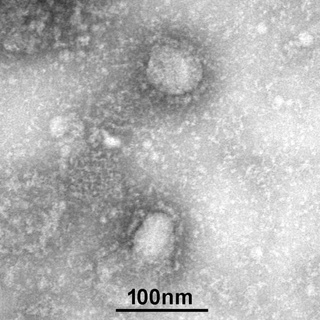
Coronavirus)_C-Tan-nCov_Wuhan_strain_01-20200123104509

The first image I captured.

One year ago, I was (among other things) monitoring the nascent coronavirus outbreak, trying to extrapolate how it might impact the world in general and higher ed in particular. I gathered information and data steadily and did some futures work on the topic.

In this post I want to reflect back on what I was doing on this score in February 2020.  I’d like to be clear eyed about what I did well and what I missed.  This is in the spirit of improving my futures practice, as I’ve done before (for example). It’s also part of my commitment to transparency.

What February 2020 looked like

Looking through my files and posts over the past week, I found items which illuminate last year’s moment decently.

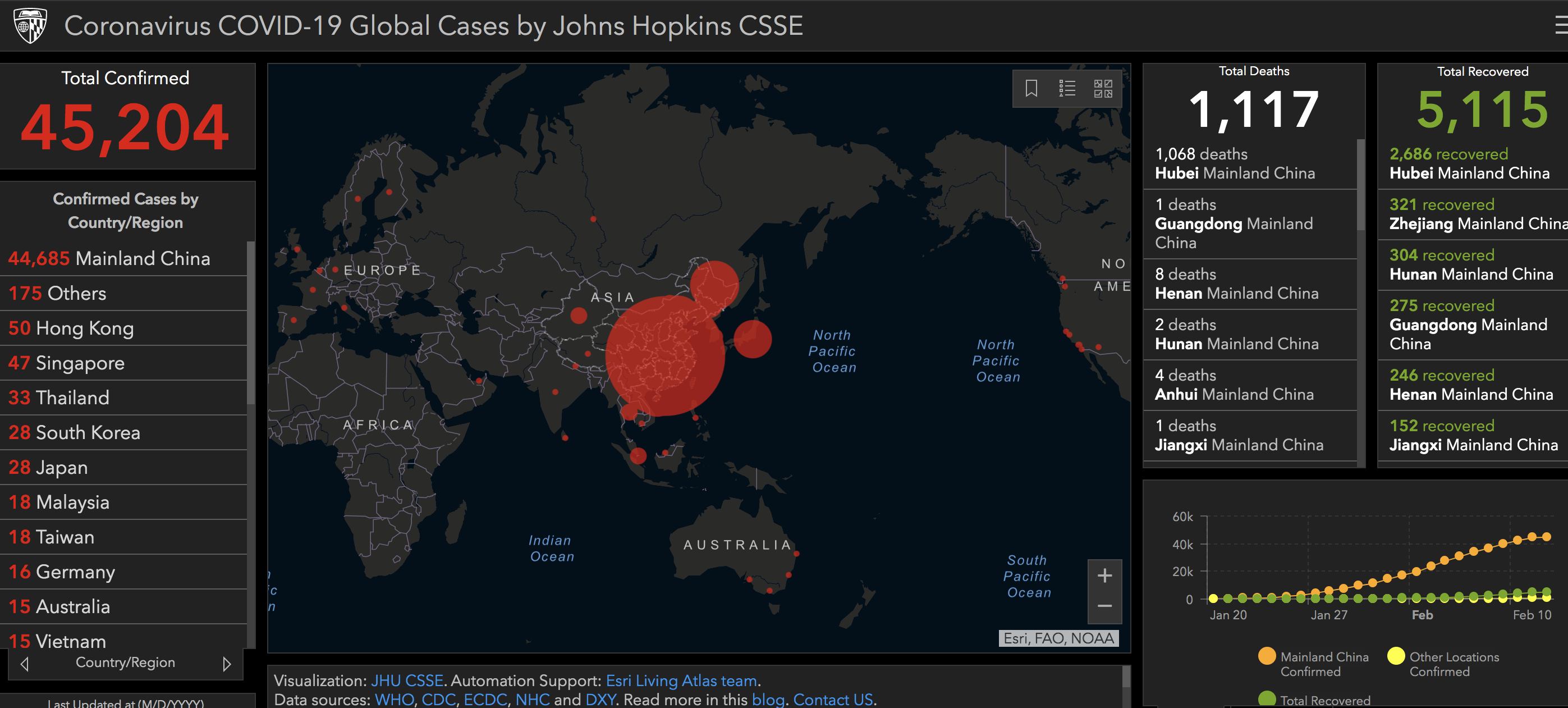
Here’s a screen grab from the now famous Johns Hopkins dashboard, its format unchanged to this day:

Coronavirus stats 2020 Feb 12_JHU

Just 45 thousand infections and barely one thousand dead. (Today the site shows 105,995,961 cases and 2,313,477 deaths.)

I remember hearing from friends and other folks that this was a medical curiosity, something bad for part of China, one bit of a much larger biological mosaic.  It’s overblown, said one Facebook friend.

China was by far the center of COVID, at least as far as my records show, but there were signs of viral spread beyond that nation.

buy fildena online buy fildena no prescription generic

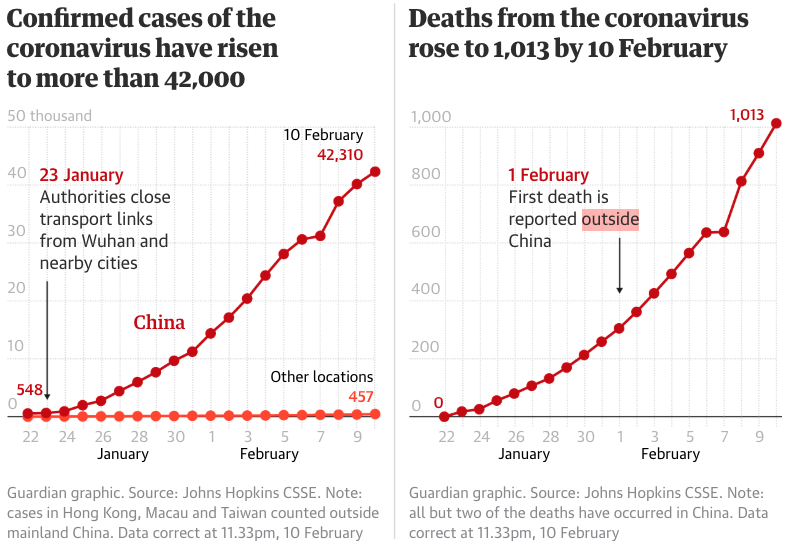
  Here’s a pair of Guardian charts from February 10th:

Coronavirus rising_Guardian 2020 Feb 11

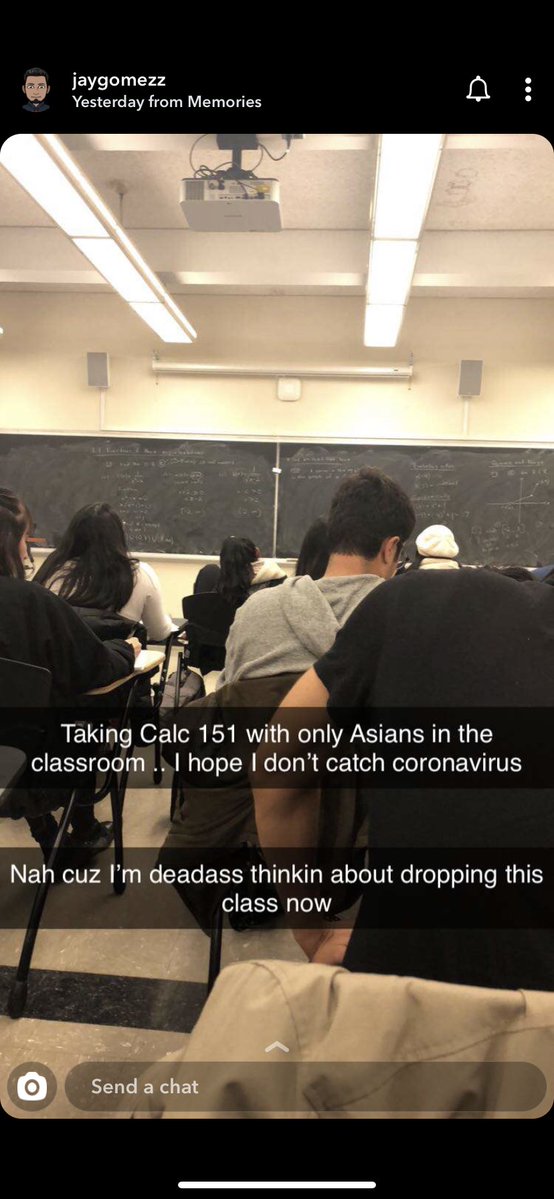
This led to, among other things, fears of anti-Chinese bigotry worldwide, should the thing spread.  For example, this screen grab made the rounds within American higher ed:

coronavirus_fear of Asian students

Meanwhile, many other topics filled the news and crossed my research sweep at the time. The presidential election, economics, etc. all competed for mindshare.

At home, my family started making plans in case of quarantine.

buy acyclovir online buy acyclovir no prescription generic

What I did

Speaking of my family, I owe a lot to conversations we had back then.  My wife, Ceredwyn, is an EMT (and now a contact tracer).  My daughter, Gwynneth, has a degree in disaster planning.  Together they provided a lot of knowledge and also were kind sounding boards to my questions and hypotheses.

I researched the heck out of the emerging virus, crawling the internet, bugging experts, working on the scientific literature.  I drew on extensive, pre-2020 futures work about pandemics. After a few weeks I posted about the resources I found most useful, then used that post as the basis for this sticky page, which has been on top of this blog ever since.

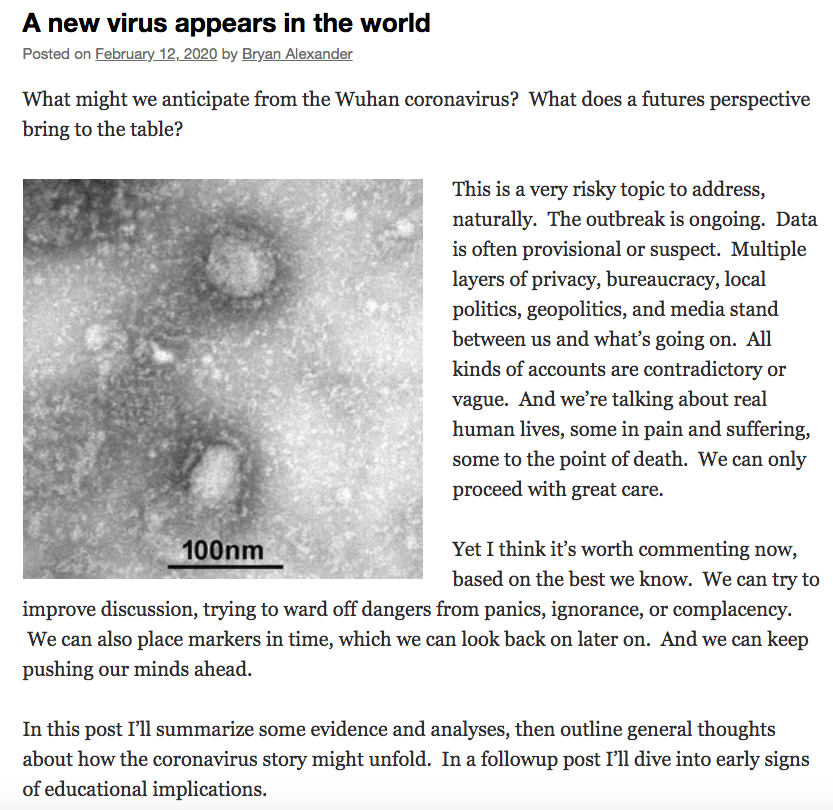
Meanwhile I shared what I found, in good web fashion. Twitter was one venue I used to not only learn, but to quickly get materials out and to elicit discussion. I did the same on Facebook, perhaps less successfully, as few people wanted to converse about COVID in my networks, despite the much larger population. And I blogged, establishing a coronavirus post category with my first post on the topic on February 12th. That let me share some background research and offer first thoughts on where the virus might be headed.

coronvirus my first blog post

The next day I followed up with my initial research and futures thinking about COVID’s impact on higher education.  A week later I posted more.

Much more would come.

What I got right

In February 2020 my posts sussed out quite a few points that would turn out to be accurate. Viral countermeasures did, in fact, hurt economies, including the trans-Pacific network of global supply chains, while “contactless” businesses thrived. Governments did accrete power and this would fly in the face of people who preferred smaller states.  International cooperation would be spotty.  Medical systems were, in fact, badly stressed.

buy silvitra online buy silvitra no prescription generic

Social media did serve as a conduit for good and bad information.  Political and cultural unrest did occur.  Connections between the disease and geopolitics did crop up, specifically along the US-China axis.

For higher ed, I correctly surmised that campuses would take steps to protect their populations, including shutting down travel and in-person education. Residence halls did become danger zones. Mental health did become a critical issue. Institutional finances were afflicted, both directly and as a result of local/regional economic woe.  Academic research into the disease did become important. Campuses did host classes about the disease.

Throughout, I tried to be cautious. I struck a provisional tone, since so much was provisional and emergent.

buy amoxil online buy amoxil no prescription generic

My writing emphasized the provisional nature of data and conclusions, along with my lack of professional expertise, not being an infectious disease specialist.  Beyond myself, I kept trying to provide platforms for others to share their thoughts and questions through this blog, Twitter, and Facebook. (The first Future Trends Forum session on COVID took place in March.) I think these were good choices, overall.

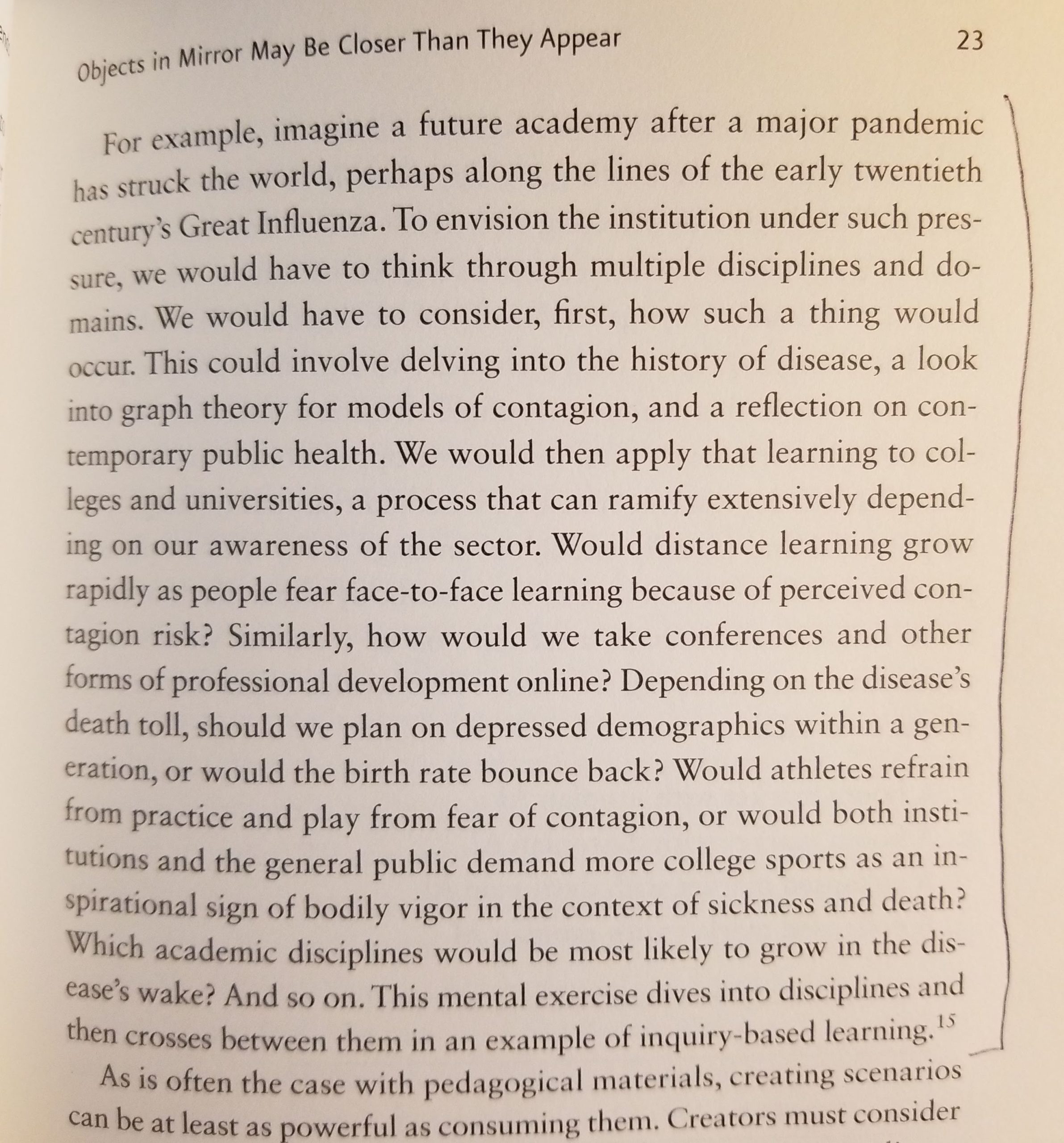
At the same time, several readers told me they found this paragraph from the then recently published Academia Next to be eerily prescient:

Academia next pandemic passage 1.jpg

I think I wrote this bit in 2018.

Georgetown students in the Learning, Design, and Technology program who took our Foundations course in 2019 told me my use of a hypothetical pandemic as a class exercise became similarly spooky with COVID’s real-world onset.

Where I erred

I didn’t foresee the CDC being such a shambles.  To be fair, neither did anyone else I can find.

I expected more religious responses than seem to have played out so far – unless we count Q as a religious accelerated by COVID, which some do.

The virus’ possible origin in a wet market didn’t seem to impact our desire for meat, not even with many Americans’ disgust for such sites.

I didn’t attempt to forecast how Trump would respond and mishandle the crisis.

What we can learn from this

On the positive side, the futures field proved a useful resource, providing productive ways of thinking about the pandemic.  Personally, I found using the social web for finding and sharing research to be very useful.  And my family was brilliant.

On the negative side, I need to better calibrate my analyses of people and institutions (CDC), religion, and food habits.

It is cold comfort to find my analysis to have been generally effective, in the face of such a catastrophe.

PS: my wife received her second (Moderna) vaccine shot this weekend. I’m tentatively scheduled for three weeks from now.

Posted in coronavirus, futures | 2 Comments

How will higher education react to an expanded pandemic this semester?

How will higher education react if the COVID pandemic gets worse this semester?

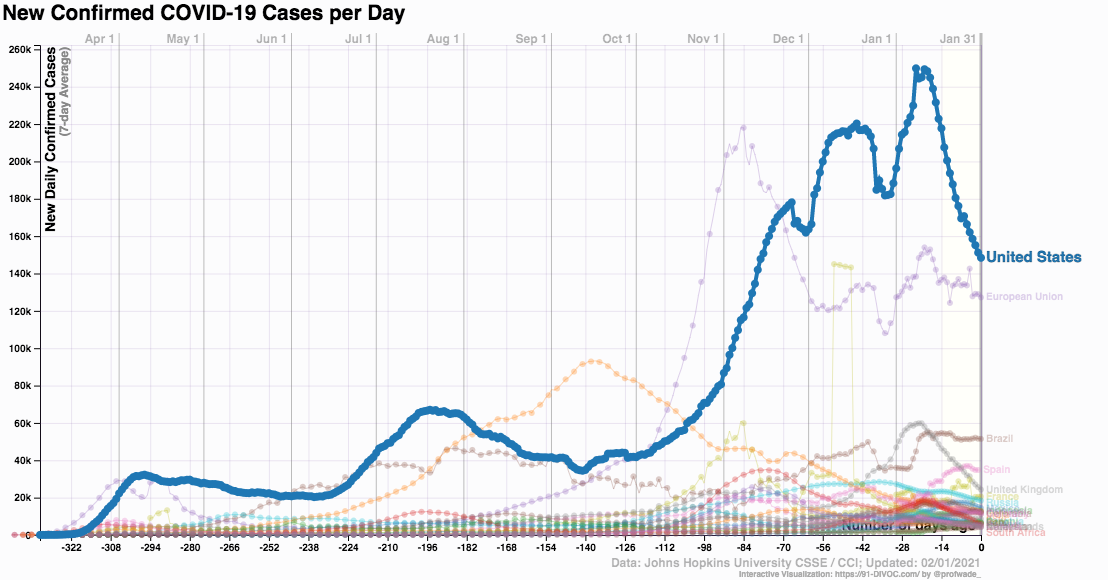
On the one hand this seems like a surprising question, given the current standing of infections, at least in the US. Those numbers have been trending downwards, thankfully.  Here’s the latest graph from 91-DIVOC:

coronavirus cases in world_US_2021 Feb 1_91-DIVOC

We can infer some solid reasons for that plummet. Stupid behavior over December holidays drove infections up, as people traveled to families and spread infections.

buy zydena online buy zydena no prescription generic

  Those infections worked through populations for the two weeks it takes the virus to either kill its host or cease functioning. Meanwhile, people returned to pre-Christmas behaviors with the new year.  Plus it’s possible that the horrible December-January spike scared some folks into actually following public health guidelines.  So: good news, and may the plummet keep plummeting.

On the other hand… a series of COVID-19 mutations have proved both viable and more infectious than their predecessors.  Variants B.1.1.7 (which was first detected in Britain), B.1.351 (South Africa), and P.1 (Brazil) seem not to be more lethal, but spread more rapidly.  It is possible that they could constitute a new, global wave of COVID infections.

Among other people, the University of Minnesota’s Michael T. Osterholm is frightened of this. In an NBC interview he looked ahead to March and April:

the surge that is likely to occur with this new variant from England is gonna happen in the next six to fourteen weeks. And if we see that happen… we are going to see something like we have not seen yet in this country…

Osterholm compares the surge he foresees to a hurricane.

Could such a storm strike the United States?  It seems plausible, given the virulence of the variants and the slowness of vaccine uptake so far. It’s a race between two Vs, vaccines versus variants. The variants might win, at least in the short term.

I confess that it’s difficult to project here because the data is so soft. We know that CDC case data is low, when compared with annual deaths. We know the US has been slow (to put it charitably) to test its population for infections. And we know that most of the US is doing an awful job of genetic testing, so it’s nearly impossible to get a bead on just how far B.1.1.7, B.1.351, and P.1 are going.  So for now I’d like to put Osterholm’s projection out there as a possible future.

If this future comes to pass, if COVID infections surge horribly in March and April, how will it impact higher education?  How might colleges and universities respond?

buy metformin online buy metformin no prescription generic

I’d like to hear your thoughts, and will encourage them with some possibilities.

buy caverta online buy caverta no prescription generic

  Let’s assume that February looks like fall 2020, with a diverse mix of institutional operations.  Some are wholly online, or nearly so.  Some are entirely (or nearly so) in person. Various campuses offer different blends of populations and instruction.  No one strategy predominates.  If February’s case rate keeps declining and vaccinations increase, there will be growing pressure for more in-person education.

Then it’s the first week of March and Osterholm’s hurricane hits the shoreline.  We could see:

  1. Campuses ramping up public health measures (testing, speed of testing results, stronger social distancing enforcement, more stay at home measures), either on their own or under public compulsion. If successful, we might see something closer to Robert Kelchen’s “combination of a monastery and a minimum-security prison.”
  2. Depending on the spatial distribution of the variants’ spread, some colleges and universities will have an easier time making the case for in-person operations.
  3. Some will flip online for a short while, watching conditions for a flip back.  In other words, a Toggle Term.
  4. Others may switch online for the rest of the academic term. In other worse, a repeat of spring 2020 almost to the day.
  5. Those that are all or mostly online will continue to do so.

Again, this is a possible future, not a certain one.  Today’s antivaxxers might well fold up.

buy zovirax online buy zovirax no prescription generic

  Indeed, a new CDC report shows that 2/3rds of vaccinated people are women.  Recall that in recent polls women were less likely to get jabbed than men. So perhaps there is hope.

What do you think of this possibility?

PS: if you can get a shot, please do, especially if you’re more vulnerable to the virus!

PPS: my readers who are sports fans possibly appreciated the mention of “calling an audible” in the Osterholm interview. You will be unsurprised to learn that I had to research what that term means.

Posted in coronavirus, future of education | 2 Comments

How is higher education adapting to the pandemic? Introducing #COVedStories

How did colleges and universities manage to shunt classes online in a hurry last spring? What are we doing in higher ed now to organize spring term during a still-roaring pandemic?

buy vigora online buy vigora no prescription generic

What are our stories of educational transformation?

buy synthroid online buy synthroid no prescription generic

I’d like to announce a project aimed at gathering these accounts.

buy clomid online buy clomid no prescription generic

  COVedStories encourages instructional designers and educational technologists to share what they went through, and what they are doing now, to carry campuses forward during an extraordinary time.  (The name is a mashup of COVID, education, and stories.)

Georgetown hallPart of Georgetown University’s Big Rethink (previously), #COVedStories begins this Friday with a first Twitter chat from 1-5 pm Eastern Time.  I’ll ask some questions to get you all started, and suspect conversation will flow organically.  Just follow the hashtag #COVedStories or look for my handle, https://twitter.com/BryanAlexander.

If you’d like us to cite your story in publications to come, please let us know here.  If you don’t use Twitter or would just like to reach us privately, email ldtprogram@georgetown.edu.

The Big Rethink team, including faculty, students, and staff, is looking forward to learning from you all.  Come share your tales of institutional transformation!

buy doxycycline online buy doxycycline no prescription generic

Posted in coronavirus, higher education, Uncategorized | Tagged | 6 Comments

A survey is open: lessons from higher ed’s COVID-19 response

I’d like to share a new survey with my readers.

It just opened up and concerns what higher education has learned from COVID-19.

I’m sharing it for two reasons.  First, some of you know this is a topic I’m focused on, as it’s one of the most important facing academia.  In fact, I helped write these questions. Second, I’m going to speak to the results in a webinar next month (more to come on that).

Both survey and webinar are sponsored by my colleagues at Ready Education, whose fine work I respect.

I appreciate any survey responses you can offer.  Completing it won’t take long. Here’s the link.

survey Impact of COVID on higher ed

Posted in coronavirus, research topics | 2 Comments

Some podcasts I’m listening to in January 2021

What podcasts are good to listen to?

I’ve been listening to podcasts since their first wave, after the term was coined in 2004. Now, during their second wave, this golden age of podcasts, I like to learn about interesting programs from other people.  To be fair, I also try to share my own recommendations. To that end, every year or so I try to share which podcasts I’m listening to. I haven’t done this since 2019, which means I’m overdue. (previous posts: 2019, 2018, 2017, early 2016, mid-2016, 2015, and 2013)

Some caveats: I don’t endorse the views of each of the following shows or their hosts/creators/guests. Instead, I recommend them solely to the extent that I enjoy and/or learn by listening to them.  Also, I haven’t listened to every single episode of each of these.
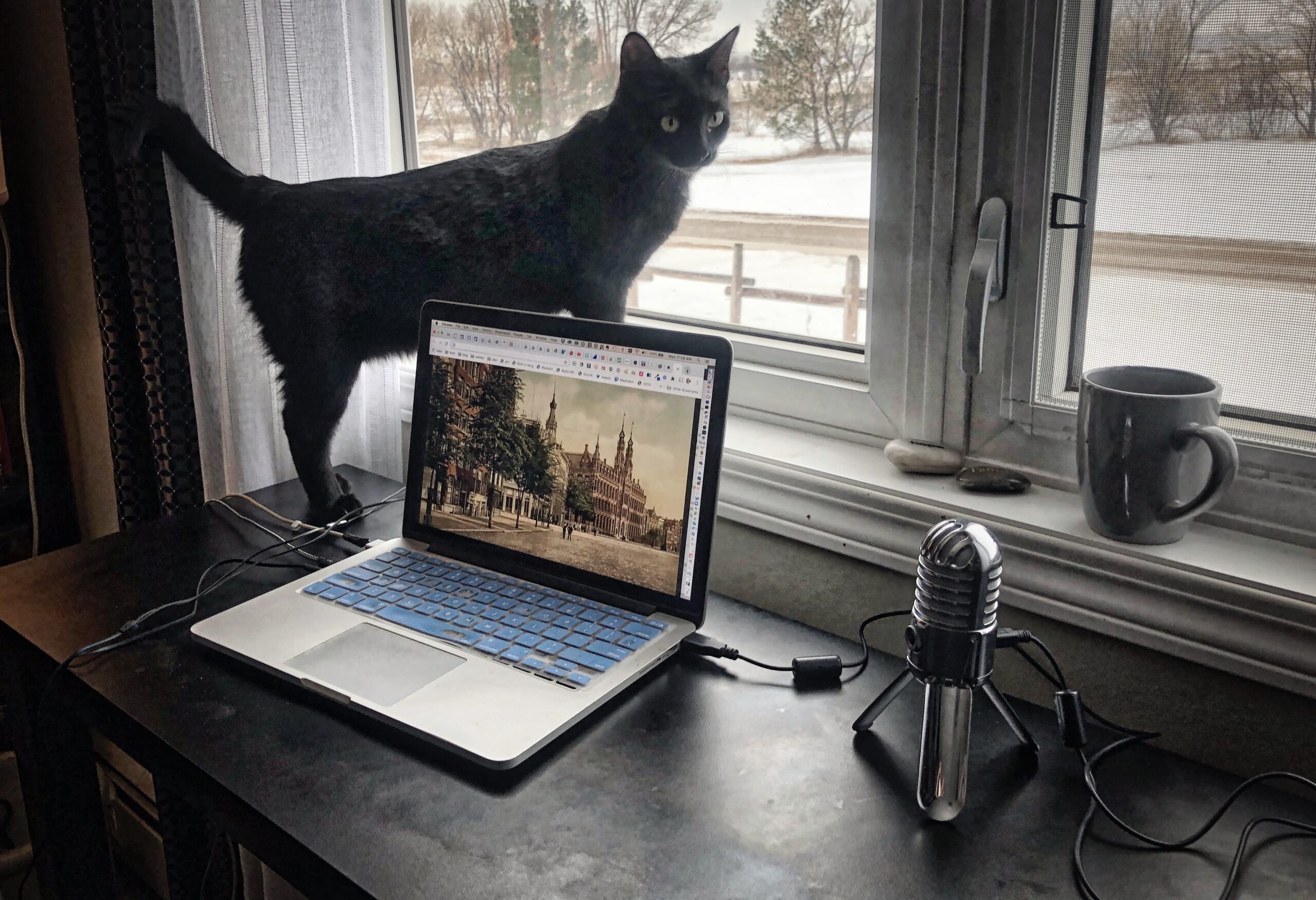
catcasting

Even this Canadian cat is impatient with me. All right, I’m on it!

The categories below are pretty general. Some podcasts really do stretch across two or more of each.

I linked to each podcast’s web presence, rather than their presence on various platforms, because I still love the web.

I’m also excluding audiobooks.

Here we go:

Higher Education

Design Thinking 101 – my Georgetown colleague Dawan Stanford hosts discussions on the many ways design thinking can play out.

EdSurge on Air – this education reporting and analysis team also has a podcast.  They cover K-12 and post-secondary education. (my appearance)

EduFuturists – a British team looks into ed tech.  I think the emphasis is on K-12.

FutureU – interviews with people researching and/or leading changes in higher education.  Jeff Selingo and Michael Horn are genial, thoughtful, and energetic hosts.

Higher Ed Social – conversations about different aspects of education.

Teaching in Higher Ed – Bonni Stachowiak interviews a wide range of guests involved in postsecondary instruction. (my first appearance)

TOPcast – concerns teaching online.

Futures Stuff

The Disruptors – a look into visions of the future, through interviews with a wide range of people.  Matt Ward’s a fine host. (my appearance)

Flash Forward – a nice mix, with each episode focusing a particular “what if,” offering a story taking place in that world, followed by a discussion from the present.

Future of Everything – a look at emerging science and technology. From the Wall Street Journal.

Jim Rutt Show – the titular host interviews a wide range of people with thoughts pointing to possible futures.

The Portal – Eric Weinstein and other people bash around big ideas at top speed.

Secret History of the Future – two hosts explore interesting ideas.  From Slate/The Economist.

Seminars about Long-term Thinking – presentations to the Long Now Foundation on a variety of topics (history, science, culture) through the lens of very long-term thinking.

Spark – a CBC exploration of the future.  Norah Young is a great host.

Current Events and Politics

Analysis – a BBC program about political issues and current events, mostly from a British perspective.

Arms Control Wonk –  a group of experts probe current developments and recent history.

Behind the News with Doug Henwood – host and guests discuss current events (American and international) from a left perspective.

Best of the Left – a grab bag of left/liberal/progressive political commentary.  Uneven but very useful and generous in its inclusion of other podcasts’ content.

The Daily – each episode looks into a current story, then adds a summary of leading events.  From the New York Times.

The Dig – left-wing news analysis.  Part of the Jacobin world.

The Dream – a deep dive into the grift-heavy world of multi-level marketing.  This is important stuff, alas.

Economic Update – a look into major economic issues from current affairs from a left perspective.  Richard Wolff is very engaging.

The Foreign Desk – a deep dive into a different international dynamic or crisis with each episode.  I enjoy the host’s wry sense of humor.

Intelligence Squared – discussions about current events.

Intercepted – furious discussions about current events from a left/civil liberties point of view.  Part of The Intercept media world.

Little Red Podcast – good podcast about contemporary China.

NPR News Now – a very very short (<5 minutes) headline-level sketch of news, updated every few hours.  Very handy.  National Public Radio.

On the Media – analyses of contemporary journalism and related issues, from a liberal perspective.

Popular Front – an examination of war and conflict, especially irregular struggles.

QAnon Anonymous – a very useful update on, and investigation into, the Q conspiracy movement.

Radio Open Source – not about technology, but a wide range of current events and culture, with a strong Boston-area flavor.

Useful Idiots – a contrarian and left view of current events.

The World Next Week – a thoughtful reflection on international relations from the Council for Foreign Relations, looking ahead to new developments.
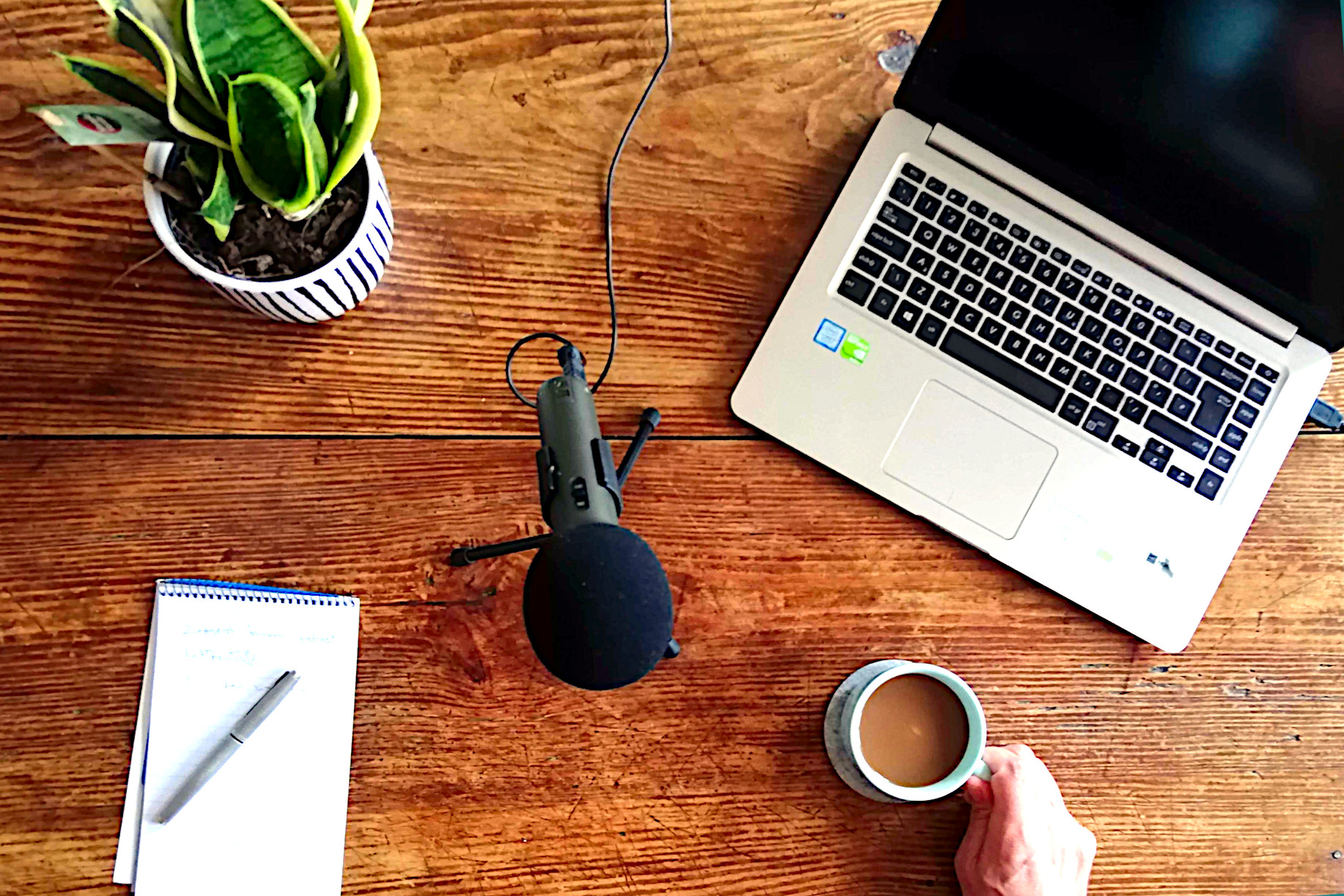
podcast setup, by malias

Science and Technology

a16z – a look into emerging technology from the perspective of Silicon Valley venture capital fund Andreessen Horowitz.

Engines of our Ingenuity –  short, well done monologues on technology, inventions, and people.  Every single episode has a transcript and references.  Did I mention they’ve done more than 3,200 shows so far?

Morbidity and Mortality Weekly Report (MMWR) – very useful updates on public health.  US Centers for Disease Control.

Nature Podcast – discussions on science.

Podcast-19 – a useful program about the pandemic with deep dives into data. From FiveThirtyEight.

Radiolab –  fine storytelling about unusual ideas in science.

Reply All –  looks into the digital world, pulling out cultural or whatever stories it finds interesting.  It’s energetic, friendly, and trend-focused.

Techdirt – conversations about various digital topics. This can include rich details about technologies and policy.

Climate Change

Drilled – an exploration of how the fossil fuel industry fights against climate change activism.

Matter of Degrees – a good discussion of many elements of climate change.

Economics and Business

EconTalk – interviews with major economists conducted by a puckish, provocative MC.  Every single episode has an annotated, hyperlinked transcript completed with time markers, references, and suggested readings: bravo!

Slate Money Podcast – very useful, both informative and engaging, with a healthy amount of disagreement, although I miss Cathy O’Neill.

ThinkCast – an energetic look into emerging business ideas.  From Gartner.

History

Behind the Bastards – stories of terrible people, mostly mass murderers and/or grifters.  Robert Evans hosts with a mix of historical curiosity, moral passion, and a cruel sense of humor. Comedians and sometimes journalists guest.

Fall of Civilizations – looks into the collapse of societies throughout history.

Hardcore History – excellent, thoughtful, detailed explorations of intense historical events, from ancient Persia to the Cold War. Host Dan Carlin is mesmerizing in a growling, thoughtful, passionate late night radio way.

History Extra podcast – interviews with writers covering a range of historical topics with something of a British perspective.

In Our Time – superb, high-speed conversations about history, science, and culture.  One of my favorites.

The Memory Palace – short, moving, lyrical glimpses into the past through very curious stories.

Revolutions – excellent, accessible, rich history of revolutions in Britain, America, France, Haiti, and south America, among others.  Mike Duncan is very good, offering well organized and compelling presentations laced with a mordant sense of humor.  Currently he’s on the Russian Revolution and doing a fine job.

Stuff You Missed in History Class – each episode covers a historical incident from a wide range of time, with an emphasis on relatively modern and western subjects.  Hosts Holly Frey and Tracy V. Wilson are splendid: deeply knowledgeable, humane, funny.

Storytelling, Nonfiction

Astonishing Legends – an enormously entertaining look into paranormal, true crime, and generally weird stuff.

Risk! Personal stories about, well, risky stuff: sex, drugs, violence, madness, fun, and horror.  It’s as if the Moth showed up at your door at 3 am, drunk, half dressed, waving a stick of dynamite, and insisting that you have to listen.

Rumble Strip –  a podcast about Vermont life.

The Story Collider – good personal stories about science, performed Moth-style.

Genre Fiction: Science Fiction and Horror

Hypnogoria – Jim Moon reads classic horror stories and talks about the genre.

King Falls AM – two hosts of a small town’s community radio station are the protagonists. Like Welcome to Night Vale, but less lyrical, more hyper and goofy. (thanks to Ed Webb)

The Magnus Archives – excellent British horror. Each episode is a single recording from the titular archives, a first-person relation of some creepy event.  All stories knit together into larger arcs involving the archives, their hapless staff, and their own mysteries.  Excellent audio performances.

NoSleep – scary short stories, initially told as campfire tales, and now as something like anthology horror.  Excellent MC-ing.  Very funny riffs on sponsors.

Our Opinions are Correct – two science fiction authors talk about the genre.

Pseudopod – horror short stories read aloud.

SFF Audio – the indefatigable Jesse Willis hosts readings of and discussions about classic and little-known science fiction and fantasy stories.  I’ve been a guest a bunch of times.

Starship Sofa – science fiction stories short and long, plus poetry, science, discussion, and the awesome MC-ing of Tony C. Smith.  The first science fiction podcast to win a Hugo award, and the first denizen of the District of Wonders.

Stellar Firma – improved science fiction about two incompetent planet designers. Hilarious and clever. Somehow from the same creative mad folks who build Magnus Archives.

Tales to Terrify – horror stories long and short, plus some commentary and bouts of ghost hunting. Also in the District of Wonders.

Starship Sofa – science fiction stories short and long, plus poetry, science, discussion, and the awesome MC-ing of Tony C. Smith.  The first science fiction podcast to win a Hugo award, and the first denizen of the District of Wonders.

Tales to Terrify – horror stories long and short, plus some commentary and bouts of ghost hunting. Also in the District of Wonders.

Weird Tales Radio Show – discussions about horror, fantasy, and science fiction.

Books

Beyond the Book – a look into the book publishing industry.  It’s clearly biased in favor of strong copyright policies and practices, a bias I don’t share, but the program is also very informative.

Reading Envy – a librarian and her friends discuss what they’ve been reading.  I’ve been a guest several times (2014, 2014 again, 2015, 2016, and 2017) and still Jenny allows me back.

Other

Conversations with Tyler – economist Tyler Cowen talks with people about anything that interests him.  Plenty of topics and bright folks.

Reply All – stories about and around internet culture.


….and over to you.  Are you listening to these, or any others?

(podcasting photos by Cogdog and Gideon)
Posted in podcasts | 15 Comments

The CDC links in-person university operations with COVID spread

What does the coronavirus mean for colleges and universities? How did campuses handle this public safety emergency?

I’ve been researching how the pandemic impacts higher education since COVID first appeared in Hubei province.  Part of my work reverses that equation, asking the question: how do campuses impact their communities through their handling of the virus?

CDC logoThis month the United States Centers for Disease Control (CDC) published a devastating answer. They found strong links between large universities conducting in-person operations and massive COVID-19 spikes in surrounding communities.

Let’s take a look at the report, then discuss what it could mean for higher education’s future.

First, for context: the novel coronavirus continues to gnaw at the human race.   There are now 96,877,399 cases worldwide, according to the World Health Organization (WHO); 98,424,940, as per Johns Hopkins.  The virus has killed 2,098,879 (WHO) or 2,113,938 (JHU). (Did we really pass that two million dead milestone without notice?) In the United States, the subject of today’s post, 24,512,618 people have been infected to date, or about 7.5% of the total population.  408,697 have died. These numbers are from the CDC, which has several times admitted they are conservative undercounts.

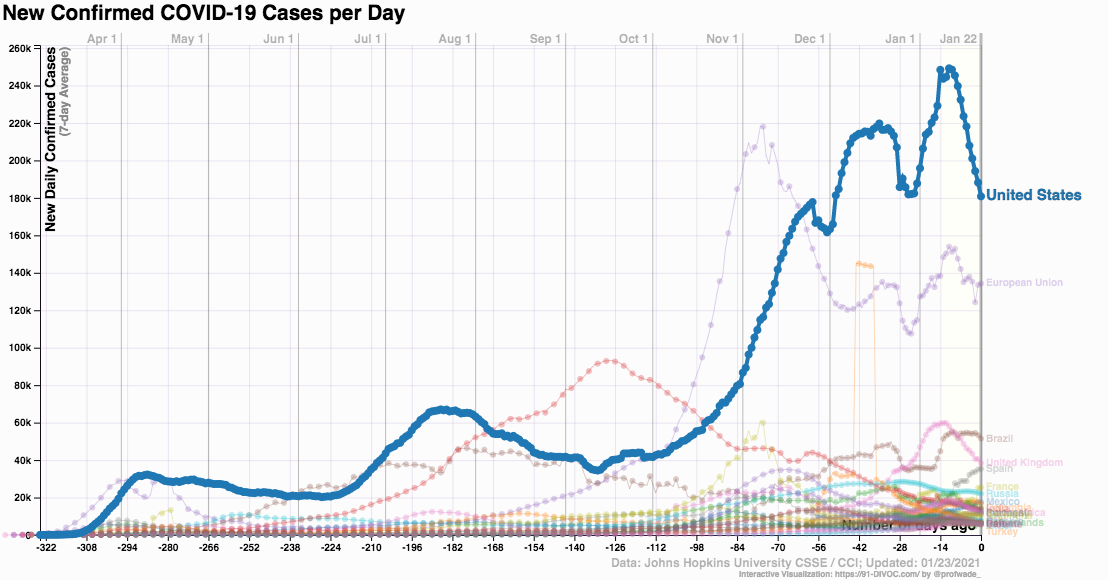
The numbers seem to be building to some degree.  The University of Washington’s IHME project estimates a worldwide total of 3,349,426 deaths by May 1, 2021.  Several nations have seen nightmarish winter outbreaks controlled, or at least dropping to plateaus, according to 91-DIVOC:

coronavirus cases by nation US _ 2020 Jan 23_91-COVID

In that context, what have American universities been doing, and with what impact?

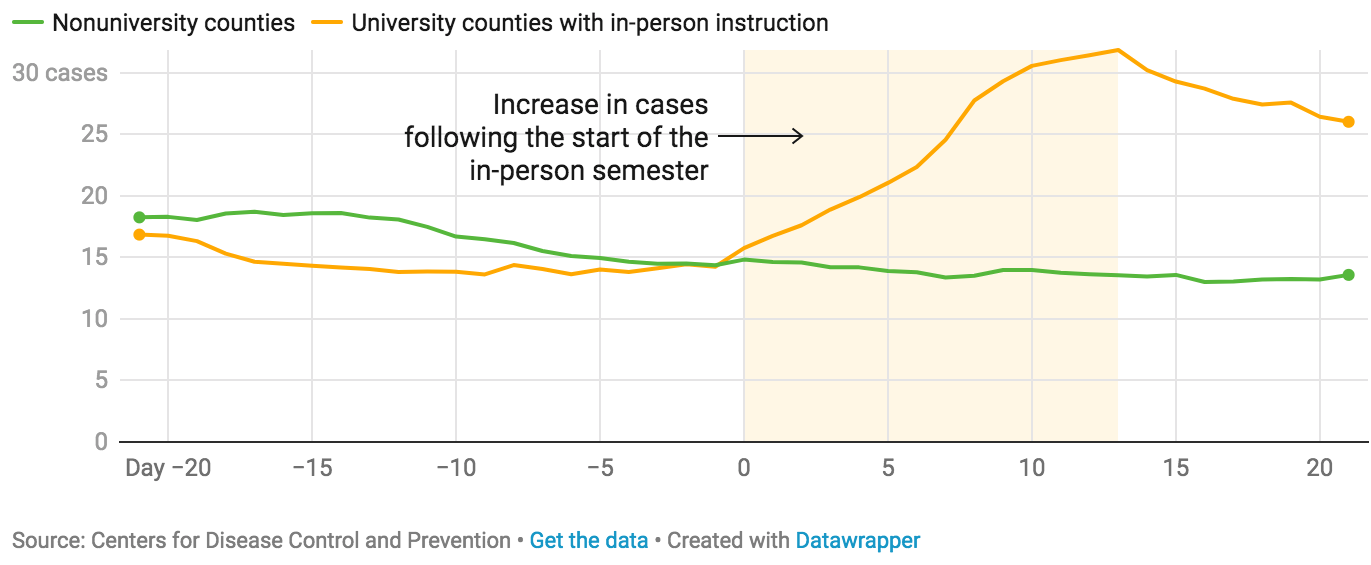
The CDC team looked at a group of very large universities (those with more than 20,000 students), then checked their operational strategy (in-person versus online) against COVID infections in their host counties during the start of classes.  Their findings are stark:

U.S. counties with large colleges or universities with remote instruction (n = 22) experienced a 17.9% decrease in incidence and university counties with in-person instruction (n = 79) experienced a 56% increase in incidence, comparing the 21-day periods before and after classes started…

COVID-19 incidence, hotspot occurrence, COVID-19-related testing, and test positivity increased in university counties with in-person instruction. [emphases added]

In other words, if a large university shifted education online last fall, its county saw a drop in COVID cases. If, in contrast, the university opened its doors and hosted face to face activities, infections spiked upwards.

Here’s a visualization of the data from the Chronicle of Higher Ed:

coronavirus cases university counties CDC 2021 Jan_Chronicle of Higher Ed

How do we interpret this research?

On the one hand, we can react to the report with a great deal of caution. The CDC held back from casting blame directing, preferring to show correlation rather than causation, although the case for causation looks pretty clear.  The closest they get to casting aspersions is this line: “the concurrent increases in percentage positivity and in incidence in these counties suggest that higher levels of transmission, in addition to increased case discovery, occurred in these communities.”

We can also bear in mind that this research describes only one segment of American academia, the very large campuses with the capacity for on-site, in-person education. That’s just 101 institutions, albeit huge ones, out of circa 4,400. And we can recall that the report addresses only the start of the semester (“these results might not be generalizable to counties with smaller colleges and universities”).  It looks like a learning curve was – appropriately – involved. We can also add that the mechanism of infection does not seem to be classrooms, but housing, both on- and off-campus (“Congregate living settings at colleges and universities were linked to transmissions”).

On the other hand, it looks like the decision to hold in-person education led straight to spreading COVID in these universities’ communities. That means the face-to-face experience yielded stress, illness, and likely some deaths in surrounding populations.   The choice to do so furthered the pandemic’s spread and flew in the face of public health. Put that way, the findings are damning, at least for those 79 campuses and their decision-makers.

What do we do with this report?

The CDC offers some advice for higher ed. Lisa Barrios, one of the researchers told the Chronicle of Higher Ed that “Colleges and universities with in-person classes should be considering ways that they can increase their mitigation efforts.” The report goes into more detail:

Testing students for COVID-19 when they return to campus and throughout the semester might be an effective strategy to rapidly identify and isolate new cases to interrupt and reduce further transmissions… Colleges and universities should work to achieve greater adherence to the recommended use of masks, hand hygiene, social distancing, and COVID-19 surveillance among students… including those who are exposed, symptomatic, and asymptomatic…

College and university administrators should work with local decision-makers and public health officials to strengthen community mitigation…

They also add this point about inequalities:

Increasing testing capacity and engaging in other COVID-19 mitigation strategies might be especially important for colleges and universities in areas where transmission from students into the broader community could exacerbate existing disparities, including access to and utilization of health care, as well as the disproportionate morbidity and mortality of COVID-19 among populations with prevalent underlying conditions associated with more severe outcomes following infection.

Curiously, the CDC does not advocate for online instruction.  Which is strange, since this report makes that strategy abundantly appealing from a, well, disease control perspective.

We may also have to do some reputational damage control. If Americans think some universities – and these tend to be ones that make impressions – have knowingly caused illness, injury, and even death among their neighbors, it won’t just be hard right Republicans who look upon academia with dismay. I’ve written about this reputation crisis previously.

In self-defense, we may have to point to the work some research universities did to speed the vaccine, the development of which is surely a triumph.  We can also bet that this story doesn’t get much traction. It’s dry stuff, statistics and science, things which most media outlets struggle to convey. The CDC report also competes with many other stories, including the demise of the Trump administration and the rise of the Biden. In other words, we can hope that word of academia’s role in worsening the pandemic doesn’t spread – unlike the virus did, in 79 American counties.


Posted in coronavirus | 3 Comments