Curricular analytics: one project and many questions

What are curricular analytics and what can they add to higher education?

Yesterday the Future Trends Forum met with Gregory L. Heileman, associate vice provost for academic administration and professor of electrical and computer engineering at the University of Arizona. He’s also project lead for the Curricular Analytics effort, and that’s what we explored for an hour.

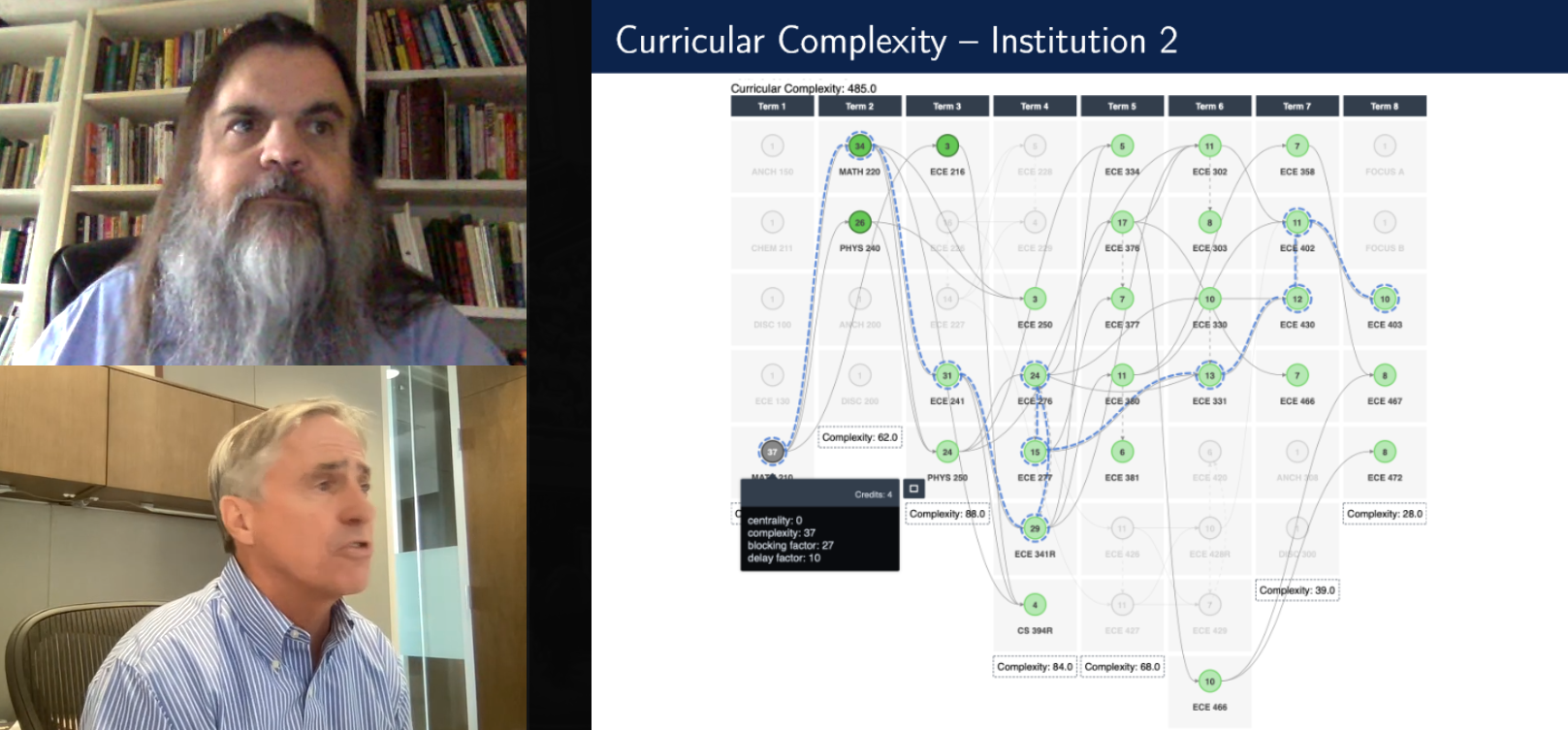
CA analyzes the different routes undergraduate students can take through university curricula, measuring relative complexity in order to better shape advising, majors, and course catalogs. It generates visualizations of student pathways, including metrics, such as:

Forum_Heileman_instituition 2

Sample visualization on the right. That’s Dr. Heileman on bottom left.

You can find out more on the project site, including uploading your own curricular data for processing and visualization.  There is at least one scholarly paper breaking down the approach and data.  There is also a Github site with plenty of files to download.

Naturally we recorded the whole session:


I would like to say a few things about the session, which went differently than many Forum Thursdays. There was a good amount of presentation, as Greg needed to show people the various visualizations in order to explain what CA does. That’s a break from tradition, as the Future Trends Forum is normally focused entirely on face to face discussion, but it worked well here. Participants had plenty of perceptive questions and comments, which Dr. Heileman handled very well.  Maria Anderson, founding CEO of curricular analytics service Coursetune and excellent Forum guest, weighed in. Overall it felt like a rich workshop or tutorial, and might point the way towards more Forum events along these lines.

I mentioned plenty of questions and comments and meant it. Yesterday was one of those sessions where we ran out of time before getting to all of them, so I’ll follow my usual practice of copying them here, lightly edited for anonymity and typos, and in the chronological order they appeared during the hour-long session:

Students often fail to see the larger point to their educational efforts. How can we leverage your project to encourage them to contextualize their education? What about opportunities for interdisciplinarity?

I might be jumping the gun, but how does bringing these insights forward allow institutions to make substantive curricular or policy shifts.

Students who go to elite schools have already learned how to succeed in academia no matter what you do to them. It’s not really a fair comparison to say that elite schools give students more freedom.

Has your work unearthed common reasons for curricular complexity? Governance? Faulty culture? Etc.?

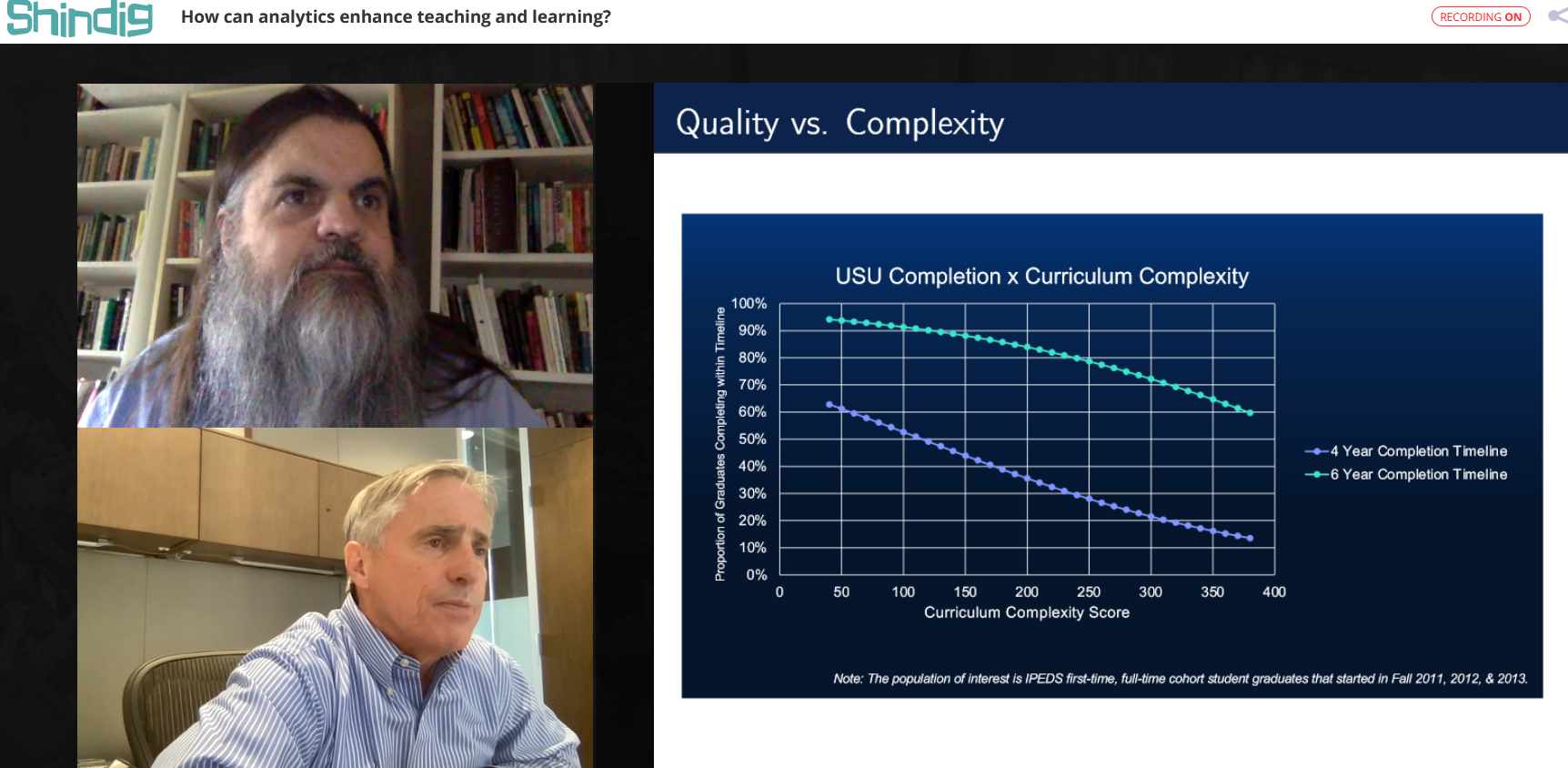
Forum Heileman quality vs complexity

Do you think the downward trend in high school graduates will push institutions to streamline curricula?

How might we move from a culture of “weeding out” students at the intro level & instead open the door for more opportunities for students more investment in completing a degree/getting an education?

Have career outcomes or paths of these graduates been mapped to the curricular complexity of their alma mater? And is there any relationship?

Did the restructuring and pathway of using an “Engineering 101” course also benefit students who might have had previous experience in math or engineering? Diversity and reinforcement sounds promising

How is Instructional Complexity calculated? How is it different than Structural Complexity?

I hope participants can use comments on this post, or comments elsewhere, to continue the discussion.

One more link to share: in response to questions about campuses running into restrictions imposed by disciplinary associations, professor Heileman referenced a paper he co-authored with the very perky title “ABET Won’t Let Us Do That!”

This is the first time the Forum has focused so clearly on data analytics.  It won’t be the last.

Happy to hear your reactions in comments below!

Posted in education and technology, Future Trends Forum | 5 Comments

Looking ahead to higher ed in fall 2021: struggling towards normalcy

Earlier this week my family took in a videoconference hosted by the University of Vermont, where Owain is a history major. The UVM team was very clear on one point: the return of a pre-COVID educational setting by fall 2021.  Students will be required to be on campus in Burlington.  There will be no remote classes, no online education.

This brought home to me on a personal level that at least some of American* higher education anticipates a return to normalcy this fall semester.  I’ve been looking into this, and wanted to share some forecasting notes today.

Campuses planning on an entirely in-person fall experience are apparently betting that COVID-19 vaccines will triumph over the summer in what I’ve called “the race between vaccines and variants.”  This lines up with the Biden administration’s campaign for enough people to have gotten shots that July 4th will be celebrated without masks.

The data point in that direction, so far. Vaccinations are getting into people, despite many logistical problems:
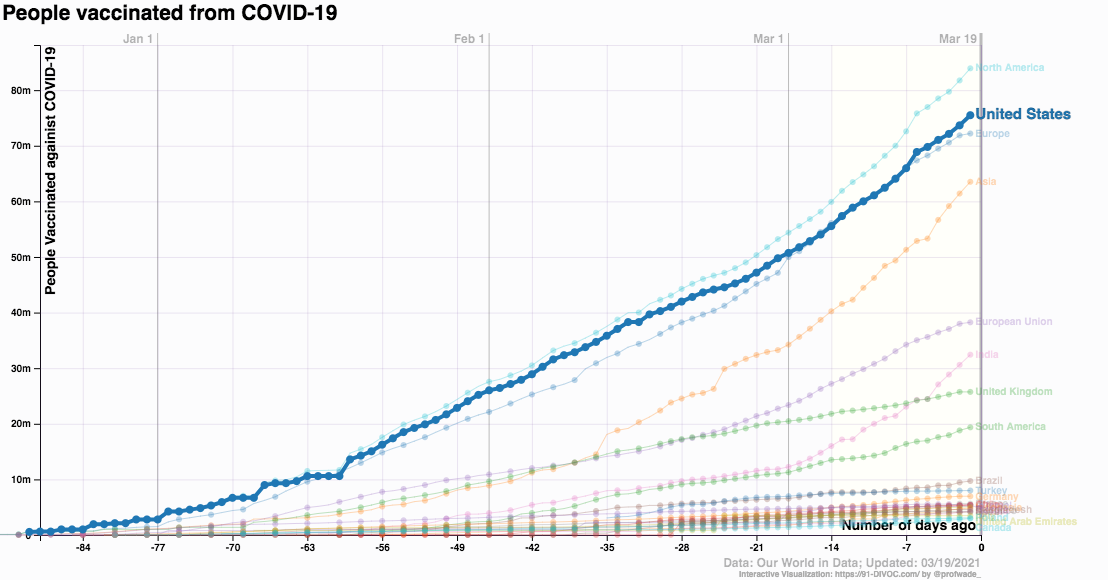
coronavirus vaccines by nation -US-2021 March 18_91-divOC

Partly as a result, infections are declining:
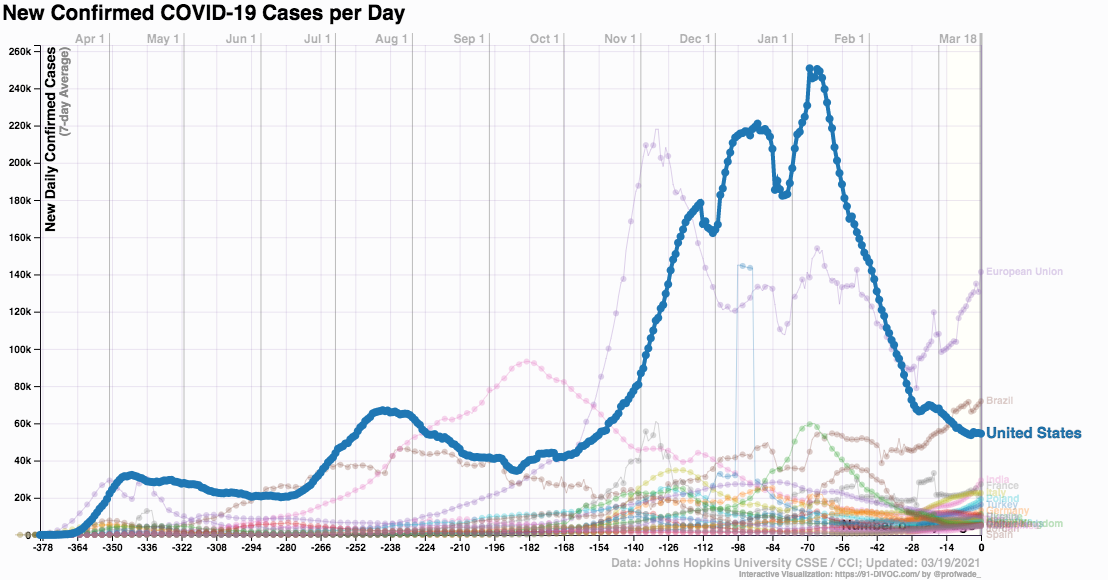
coronavirus infections by nation-US_2021 March 19-91-DIVOC

One caveat: while cases plummeted from mid-January, that curve took a hit in March and now seems to have either slowed down or hit a plateau. I hope the current slew of idiocy openings don’t breed a new spike.

At some point the infection situation will drop below pandemic levels.  I don’t see any move to eradicate COVID. Instead, we seem to be headed to living with it, much as we live with other infectious diseases (flu, AIDS, etc.), through a mix of public health strategies, a lack of media coverage, and acceptance of certain amounts of injury and death.

So if all goes according to plan, what might a post-pandemic fall semester look like on college and university campuses?

1: The more likely academic trends and developments

These are trends, topics, and problems whose outcomes seem relatively predetermined or constrained.  Relatively.

Post-traumatic communities: students, faculty, and staff setting foot on campus in August and September will have lived through one and one-half years of national trauma.  Some members of the academic world will have experienced illness, long-haul tissue damage, or economic hardship, or a mixture of these. Additionally, people will have seen others deal with all of these, plus witnessing deaths of family members, plus realizing that the pandemic slaughtered more than 600,000 people.

As a result campus communities will likely have to cope with trauma and its aftereffects.  Colleges and universities have the opportunity to help them recover by providing access to care. Administrations may be pressured to do more.

Depressed financials: while many institutions were badly hit financially over the past year, losses were not as great as I and others forecast, thanks mostly to several federal aid packages from both political parties.  Overall, state governments seem to be trying to spend a bit more on public institutions, albeit with exceptions, naturally. Yet hits did occur and enrollment did drop in 2020-2021, hence the loss off 650,000+ academic jobs.

Depending on their individual situations, a number of colleges and universities will struggle to balance the books and pay bills. This may drive more program cuts, campus mergers, and closures.

Online meetings: from office hours to committee meetings, presentations, and consultations, 2020 taught many academics that these could be done decently – or better, in many ways! – through video. We could see a quiet maintenance of these virtual habits even as people physically gather.

Loss of learning: to some very hard to quantify degree students may have fallen behind in learning during the pandemic. Traditional-age undergraduates starting their first post-secondary years this fall may have had a weaker senior high school year than most. Continuing students may have missed curricular items that campuses could not offer virtually, such as those requiring in-person, hands-on practice.  Some faculty may feel that their students didn’t learn at a pre-COVID level during the past year.

As a result campuses have several options. They may devote resources to enhancing learning in 2021-2022, such as through paracurricular centers (teaching and learning, writing, numeracy, etc). Faculty may lower expectations to a degree during fall classes.  Remedial classes might be offered as well.

COVID curriculum: I coined this term nearly a year ago to refer to an increase in student demand for pandemic-related classes and degrees, most notably the full range of health care topics.  NPR agrees, but prefers their “Fauci effect” nickname.  Either way, there are signs that this increased demand is occurring (one example).  The pandemic’s enormous catastrophe may push that enrollment forward in fall 2021.  The flipside of this forecast is that other fields will lose out, especially if total enrollment remains lower (but see below).

Athletics: clearly American higher ed will do absolutely anything to keep playing college sports, including spending huge amounts of money and/or risking COVID spread. If I’m right about this, then we should see a massive push for athletics to go full tilt in fall, especially the high profile and occasionally money-making sports of football and basketball.

2: Open questions

These are trends and topics whose expressions in fall term are harder to pin down and have a greater range of possibility.

Online and hybrid classes: how many students will demand online classes or hybrid access to in-person ones?  Depending on how successful the 2021 public health campaign is, there may be a number of students who prefer online learning because of convenience (balancing study with work and family) or not being convinced of a campus’ safety measures.

Which campuses will insist on entirely in-person education, and which offer online and/or hybrid and/or HyFlex options?  How open will departments and other units be to remote work?

Toggle terms: depending on how the virus plays out this fall, some campuses may decide to throw the switch and order students to shelter in place if infections spike.  Other campuses may be ordered or pressured to do so by local or state health authorities.  It’s hard to anticipate numbers on this score, given so many viral variables: mutations, different local conditions, students partaking in superspreader events, etc.

Enrollment: will it continue ticking down as it has done every semester since 2012? If the Biden administration’s Department of Education follows the Obama team’s anti-for-profit strategy, we could see that sector lose students – and those are then lost to the rest of higher ed, typically. Some would-be students might not feel they can risk in-person education. Or will there be some bounceback after fall 2020 and spring 2021’s steeper drops, as people sign up for classes without fear of infection?
Openings coverCommitment to improving teaching: one of the Georgetown Opening‘s findings was that much of higher education determined to improve teaching during the pandemic semesters.  This was partly to address complaints of low-quality online teaching and partly to make in-person education work despite anti-COVID measures.

Will this commitment extend to fall 2021? It might not. Faculty switching from online to in-person teaching may feel more confident and ask for less support. The absence of plexiglas and masks may similarly restore instructors’ sense of their quality, and perhaps senior administration will share that sentiment.  Additionally, campuses might have a hard time allocating funds to instructional designers, faculty professional development, and paracurricular centers given so many other crying needs from 2020-2021.

On the other hand, how many instructors returning to physical classrooms will find themselves exploring new techniques and approaches? Lessons learned from online teaching can often inform face-to-face instruction. A desire for equity may also drive some to change their pedagogy or decolonize their curricula. We could, in other words, see a persistent drive to improve education once the pandemic situation eases.

Efforts to address racial inequalities: as with improving educational quality, academia rededicated itself in 2020 to grappling with racism.  How might that play out in fall 2021?  Again, our Openings research found many scholars unsure of momentum here. Will the Biden administration encourage more racial justice work, or will the absence of the antipathetic Trump take away some energy for such efforts? Will structural changes get under weigh and support continued work, or will 2020 become a flash in the historical pan, a brief moment of racial rethinking that faded too quickly?

Women and research: non-COVID-related research suffered during the pandemic as scarce resources were prioritized and as coping with the disaster meant losing research time in favor of caring and recovery.  Female scholars suffered this more strongly than did males, since to the former fell the lion’s share of family and home-based care work.  If we experience a return to normalcy in fall 2020, will colleges and universities not only devote resources to recovering research progress, but also target women for more support?

Socialization: a popular thought is that students socializing online lose the opportunity to learn how to interact with people in person.  To the extent that this is true, the pandemic semesters represent a loss in social learning, especially for traditional-age undergraduates. How will campuses respond?  They could host expanded residential life programs aimed at catching up for lost time. Campus mental health capacity could add “learning how to interact better with humans offline” to their already crowded service agenda. Faculty may decide to increase small group and team work exercises.

Campus design: how will a college or university’s built environment change by fall 2021?    Months ago I imagined transformed architectural spaces under the assumption that the pandemic lasted three years or more:

Architecture, cities, and the overall human-built environment have changed somewhat by 2023.   Insofar as renovations and new construction occurs, buildings have bigger openings to the outside through wider windows and doors, more galleries and porches, all aimed at facilitating social distancing or externally circulating air.  Inside buildings there are larger hallways and fewer, yet larger, rooms.  Rooftops are more widely used.  Fast food restaurants have more drive-throughs and fewer dining rooms – they are, in effect, for pickup only.

Yet fall term 2021 proceeds with just one and one-half COVID years.  That’s not a lot of time for major alterations to buildings and the construction of new ones. If the pandemic ceases by autumn, to what extent will a campus look different? Will we see those wider doors and windows, those enlarged rooms, or will the 2019 physical plant simply continue?

Job placement: will academia’s methods for pointing students towards employment change in fall 2021? How will changes to the labor market (higher unemployment, certain industrial sectors sapped, others booming) elicit academic responses? Groups like The Taskforce on Higher Education and Opportunity represent some innovation in career support. I am not sure how widespread such rethinking and transformation will be.

The Greek system: fraternities and sororities played a prominent role in spreading COVID in academic communities and surrounding areas (for example) (another example) (another example) (example) (example) (example) (example) (example) (example).  Will campuses that allow Greek systems to function rethink that stance or come up with new policies?

I posed this question in August, and that post has a more substantial argument than what I’m making here. Events haven’t invalidated it. On the one hand, we can see that some fraternities and sororities took steps that clearly worsened the pandemic. On the other, the Greek system is buttressed by hefty amounts of money, not to mention serious support across and adjacent to academia.  Additionally, I suspect many academics who might dislike those houses have resigned themselves to their continuation. Will COVID alter that picture?

Assessing and administering students: Wesson Radomsky (a splendid Georgetown LDT student) asks us to think about some aspects of instruction:

Will faculty members decide to grade like it’s 2019, or maintain pandemic modes of assessment and administration?  What will departments and chief academic officers prefer?

Policing the campus perimeter: Robert McGuire wonders how campuses will police who’s allows on site:

If campuses insist on proof of vaccination, what will they require?  Many vaccination services issue stamped or stickered cards; is that the badge of entry?  Or will the United States stand up a vaccination passport scheme in time for fall residence hall move-in? Some could maintain the not-very-useful temperature check instead.  And what should campuses do about students – and staff, and faculty – who are not vaccinated yet see themselves as having a rightful place on the grounds?

Study abroad: how might these programs change?  For example, will certain destination countries block or otherwise make entrance difficult for American students, given how badly this nation bungled COVID?) and length of stay.  Or campuses could select hosting areas depending on how they are at present handling the virus.

Stepping back a bit from this more detailed themes and issues, will colleges and universities continue to push hard on innovation overall as they did in 2020, or will they fall back?  How many academics will greet an in-person fall term with a sigh of nostalgic relief and dust off fall 2019’s playbook?  How many will see fall 2021 as an opening to new possibilities?

*I’m focusing on American higher ed in this post for reasons of time.  I need to pry loose more time to cover other nations on this topic.

(thanks to Owain Alexander, Phil Long for ideas)
Posted in coronavirus, future of education | 10 Comments

How might American academia respond to rising tensions with China?

What does the growing struggle between the United States and China mean for higher education?

Here I’d like to continue my exploration of the question. This post is a direct follow up on my last one. For more on the issue, check previous blog entries (here, here, here, here) as well as our book club’s reading of Ministry for the Future.

To recap: so far most indicators point to the Biden and Xi administrations alike pursuing policies of maintaining or increasing great power rivalry. This has implications for the world in general, and for higher education in particular.

Today I’ll use an important Bloomberg News item to anchor some thoughts, then will extrapolate further using other sources.

In this post I do not attempt to assess the validity or morality of the policies and strategies involved. Instead I want to identify their details, then explore their implications and choices for academia.

Nick Wadhams reports on key details of America’s China strategy, starting with the role of technology:

The Biden administration is moving to put semiconductors, artificial intelligence and next-generation networks at the heart of U.S. strategy toward Asia, attempting to rally what officials are calling “techno-democracies” to stand up to China and other “techno-autocracies.”

There’s a lot going on here. First, this foreign policy move directly involves a group of academic departments, starting with computer science and possibly including business and communication. It places them right in the path of geopolitics.  To those disciplines we might add biology and the life sciences, given this US Air Force wargame emphasizing a Chinese biological attack.

Second, note the opposition of “techno-democracies” and “techno-autocracies.”  That’s a major claim on global policy and political ideology, calling for the creation or understanding of two international blocs aligned on their use of technology. Academically, this is obviously a matter for political science, not to mention area studies and modern history.

Wadhams expands on this technology-based global alliance idea:

“There’s a newfound realization about the importance that semiconductors are playing in this geopolitical struggle because chips underlie every tech in the modern era,” said Lindsay Gorman, a fellow for emerging technologies at the German Marshall Fund of the U.S. “It’s an effort to double down on the technological comparative advantage that the U.S. and its democratic partners.”

It’s an approach partly based on denying China access to certain technology for as long as possible, looking to quash Chinese juggernauts like Huawei Technologies Co. and even taking a page from the Communist Party’s playbook by boosting government involvement in key industries when needed.

Think very carefully about what denying China access to technologies means for higher education.  A key function of academia is sharing access to knowledge, both from the accumulated corpus of human scholarship and newly derived findings.  We share through research and teaching, albeit unevenly and in opposition to countervailing forces like paywalls and the ivory tower tradition.  So how should sharing-inclined colleges and universities respond when the federal government asks us to not behave this way on particular topics and for a specific audience?

This could play out in different ways. Universities could step back from open access in scholarly communication as a first step to hoard knowledge, but that’s easily circumvented by a credit card. Should universities provide faculty members with tools for keeping their discoveries offline? Should the relevant scholarly societies host dark archives of papers and monographs, with materials accessible only to certain interested parties? On the pedagogical side, should academic deans and department heads ensure that professors don’t teach certain content, especially to Chinese students? In fact, how does a department teach cutting edge topics in technology and at the same time keep them away from Beijing?

Thinking through the latter necessitates a strategic level choice about student recruiting. Will the Biden team encourage campuses to cut back on enrolling Chinese students? Could the feds offer a serious amount of financial support to colleges and universities, as might be in a new bill, then tie that help to campuses pursuing appropriate anti-China practices? Recall that Chinese students are the leading population of foreign students studying in America, counting for roughly one third of them. If we do cut back, how do campuses handle the financial hit?  At the same time, how do we manage to fully staff our research teams without those bright grad students?  Each college and university could face difficult choices on this point.

Such recruiting and research choices might play out differently for public and private institutions.  Public universities are, by their nature, subjected to state oversight. States don’t conduct foreign policy, but are sometimes a way for the federal government (which does) to convey policy preferences.  We could imagine, hypothetically, public universities in clearly Democratic states, such as SUNY or University of California campuses, responding favorably to a Biden administration imperative along these lines.  In contrast, that way of influencing private colleges and universities is lacking.  There are other ways for the government to influence them, of course: public pressure, reaching out to key donors and alumni, personal connections to presidents or trustees, national funding, etc.

Popular pressure might play a role as well. Pew reports that anti-Chinese feeling is rising within the United States.  Note in particular this finding about American attitudes towards Chinese students:

Pew_us-views-chinese students_0-27-1

That’s a majority of Americans – across the three most numerous racial demographics – backing restrictions on Chinese students.  Also, throughout that Pew report we read of American anxieties about Chinese research, especially in technology and digital fields. This kind of public attitude can be expressed against higher ed in order to cause campuses to change policies.

Some academics may also support such measures.  In that above Pew research college graduates are almost perfectly split on restricting Chinese students.  How many alumni and current students will urge faculty and administrators to cut enrollment back, or limit Chinese students to taking certain majors? For example, this report from an American university identifies six Chinese universities where faculty conduct digital research that that country’s military can use. Will we see similar American academic research calling on fellow academics to shun Chinese partnerships?

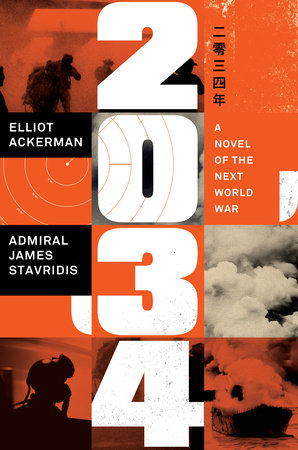
2034 novelAlong those lines, there has been a steady drumbeat of popular culture stories imagining a Chinese military success over the United States, decisively enabled by successful cyberwar (for example). How many people within the military-industrial complex, within foreign policy, within the Biden administration, share this particular fear? Will there be enough political will to encourage or compel academia to play a role in blocking such a disaster from occurring? For example, in screening Chinese students from studying certain aspects of computer science?

More, how many academics will share this specific fear?  Imagine, for example, political science faculty lobbying a dean to get computer science to not publish certain findings.

How many academics could afford to resist such calls, coming from inside or beyond the academic house? Recall that the preponderance of American faculty are not afforded tenure’s protections, and might in fact see following the anti-China lead as a way to maintain current employment or to win new contracts.  Remember, too, how many non-elite institutions have been suffering from multiple pressures: those from macroeconomics, demographics, failing business models, enrollment shifts, cuts to state support, etc.  How much room will they have to maneuver? Indeed, how many will readily see following federal direction as a shot at improving the odds of their survival?

buy zenegra online buy zenegra no prescription generic

Back to that Bloomberg article and the intersection of national alliances with academia:

Several people familiar with the administration’s planning, and especially that of Kurt Campbell, the National Security Council’s Asia coordinator, say he foresees a broad approach that puts greater emphasis on a few key partners such as South Korea, Japan and Taiwan, while offering incentives to bring chip fabrication back to the U.S.

Chips figure in plans to bolster the Quad — a once-sputtering alliance of the U.S., Japan, Australia and India that got a boost of support during the Trump era — including by eventually bringing more technology production to South Asia…

buy flagyl online buy flagyl no prescription generic

Biden’s supporters say his strategy will include working more closely with other countries. And it’s looking to strengthen existing partnerships that were rarely utilized. Chief among them is the Quad and the belief that India may be newly willing to set itself against China given recent tensions between the world’s two most populous nations.

This offers a different set of choices from what we discussed above.  If the Biden administration wants to shift American energies away from China and towards these other nations – Australia, India, Japan, South Korea, and Taiwan – should the academy follow suit? That is, do we double down on recruiting students from those nations, perhaps to balance losses from China? Should chief academic officers encourage their faculty to seek research partners from the Quad et al?  Should provosts also expand academic study of those nations, including area studies and language programs, in order to contribute in our way to the strategy of assembling a global “techno-democracies” alliance?

buy aurogra online buy aurogra no prescription generic

  Establishing a university partnership with India, expanding Japanese language teaching, hosting Australian writers and so on may appear as patriotic moves.

Speaking of the Quad, here’s a tweet from this morning:

Back on the domestic front, some in Congress are aligning with the president. Wadhams doesn’t specify party dynamics, but we might guess Democratic senators and representatives are following the lead, perhaps joined by Republicans who see anti-China as a bipartisan foreign policy issue.  To wit:

The [anti-China, technology-grounded] approach is already getting a positive response from Congress, where lawmakers are proposing a number of bills aimed at bolstering U.S. technology, such as the Chips Act, which would offer incentives to bring chip manufacturing back home, and the Endless Frontier Act to invest more broadly in technological advancement.

For academia, such Congressional activity could play out in several ways.  First, imagine senators and/or representatives writing higher education incentives and disincentives into various bills, including whatever happens to the Higher Education Act reauthorization. Second, as each Congressional senator and representative is a state politician, they can exert some form of influence on their state’s government, which can them impact higher ed in multiple policy and legal ways.  We could imagine, for example, a China hawk urging her state government to not support academics who are “soft on China” and to punish individual professors deemed to have assisted Beijing.

Back to the technology question, Wadhams introduces an economic theme:

China has essentially forced the U.S. to start breaking off elements of business and technology relations in a pattern known as decoupling. China has essentially erected its own Internet infrastructure, barring many U.S. media outlets and social networks such as Twitter and Facebook, and has shown a willingness to use the size of its market and its economic might as a weapon to make other nations fall into line.

Such a business and technology divide hits higher ed in several ways.  Decoupling at scale will likely injure the American economy, as Tom Lairson and others observe, which will add more financial stress to a higher education sector already massively strained.  On a practical level, as long as Chinese students study in the United States and Americans work with Chinese colleagues such a technological divide will make learning and research materially more difficult, including duplicating tools and dealing with divergent standards.  (I’ve already experienced this with some of my Chinese students who, having returned home, were blocked from accessing some class-related sites and software.)

Now, all of the preceding discussion is based on a single, rickety assumption: that American higher education will follow the Biden China policy. Obviously this is unlikely at a national level.

buy synthroid online buy synthroid no prescription generic

American colleges and universities have various levels of autonomy, as do their members, depending on their private or public nature, tenure status of faculty, financial clout, political resources, and so on.  These institutions are famously hard to corral.

Moreover, it is not difficult to imagine dissent.  Progressives may criticize an increasingly strong anti-China policy as racist. Researchers and instructors can object to externally imposed restrictions on their practices, and cite academic freedom.  Faculty, staff, and students opposed to war and military enterprises may object to such a new Cold War as dangerous. Financially minded campus leaders may dread economic impacts on their institutions.  On geopolitical grounds some academics might see an anti-Beijing policy as just wrongheaded, perhaps preferring one aimed at another threat (Russia, Islamicists).

The preceding discussion also rests on the assumption that this is an accurate read on the Biden and Xi administrations’ actions for the near and medium term future. I could easily be wrong. Biden might be opening hard in order to set up negotiations, or he could die and a president Harris take policy in a different direction. The Chinese government’s grasp on power might slide.  Climate change could loom so large as a thread that Beijing and Washington decide to partner, rather than feud, in order to address that pressing crisis.

But if these assumptions play out, what then? What becomes of the academy?

(Thanks to many friends for conversation. I will follow up with more on this theme.)

Posted in future of education, politics | 3 Comments

Supporting diversity, equity, and inclusion in higher ed IT: a conversation and resources

Yesterday the Future Trends Forum met with Deborah Keyek-Franssen, Associate Vice President and Dean of Online and Continuing Education at the University of Utah.  We were especially interested in one particular aspect of her work, for which she won a major EDUCAUSE award. She was cited for:

her dynamic and visionary leadership to promote positive relationships between the academy and the IT community and for her research and advocacy in support of diversity, equity, and inclusion (DEI) across the IT practice.

Our conversation ranged widely, starting with the possibilities of the post-COVID university.  I wanted to share two parts of it here.

First, people shared a great deal of resources, starting with site to help students and faculty succeed with remote/emergency/online learning:

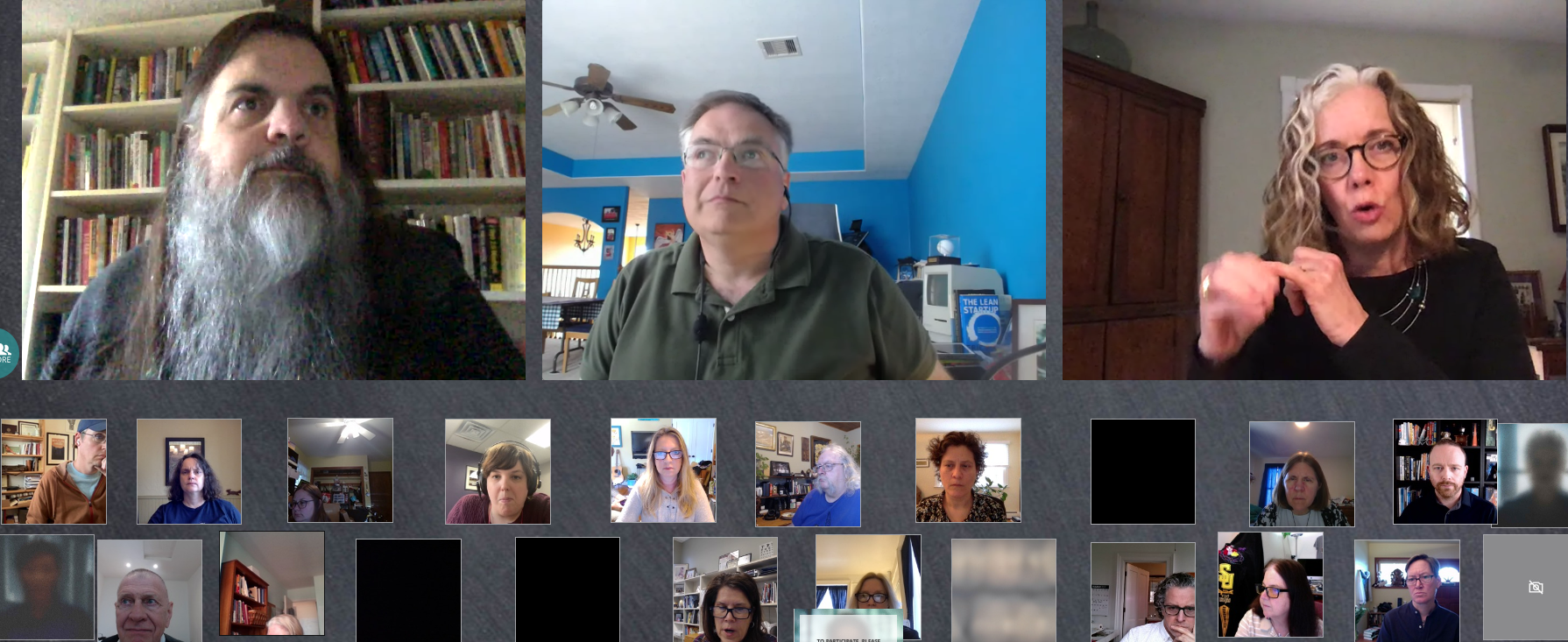
Forum_Keyek-Jenssen Tom hands in motion

Resources on issues of bias and discrimination within technology:

We also mentioned the EDUCAUSE Top 10 IT issues for 2021 and the Canvas Commons.

Second, I wanted to share the full recording:

Many thanks to dean Keyek-Franssen for being a splendid guest.

(thanks to Caroline M Coward, Rebecca Frazee, Jody Greene, Tom Haymes, Melanie Hoag, Joe Murphy, Rachel Niemer, John O’Brien, Mathieu Plourde, and Andrew Zubiri)

Posted in Future Trends Forum | 5 Comments

Getting my second COVID vaccination

On February 14th I received my first COVID vaccination.  This week, on March 8th, I got the second one.

I’d like to share my impressions here for a few reasons, starting with my customary transparency.

buy tadora online buy tadora no prescription generic

Perhaps this little account will be useful as a historical document. More importantly, I hope it encourages people who have chosen not to get a shot to do so, and also to get state, city, and county organizations moving.

tl;dr – successfully got the shot, which gave me a nasty cold, then I was fine.

On February 23, after some anxious waiting, I received an email giving me dates and times to sign up for my second shot. I picked the earlier slot and waited some more.

buy doxycycline online buy doxycycline no prescription generic

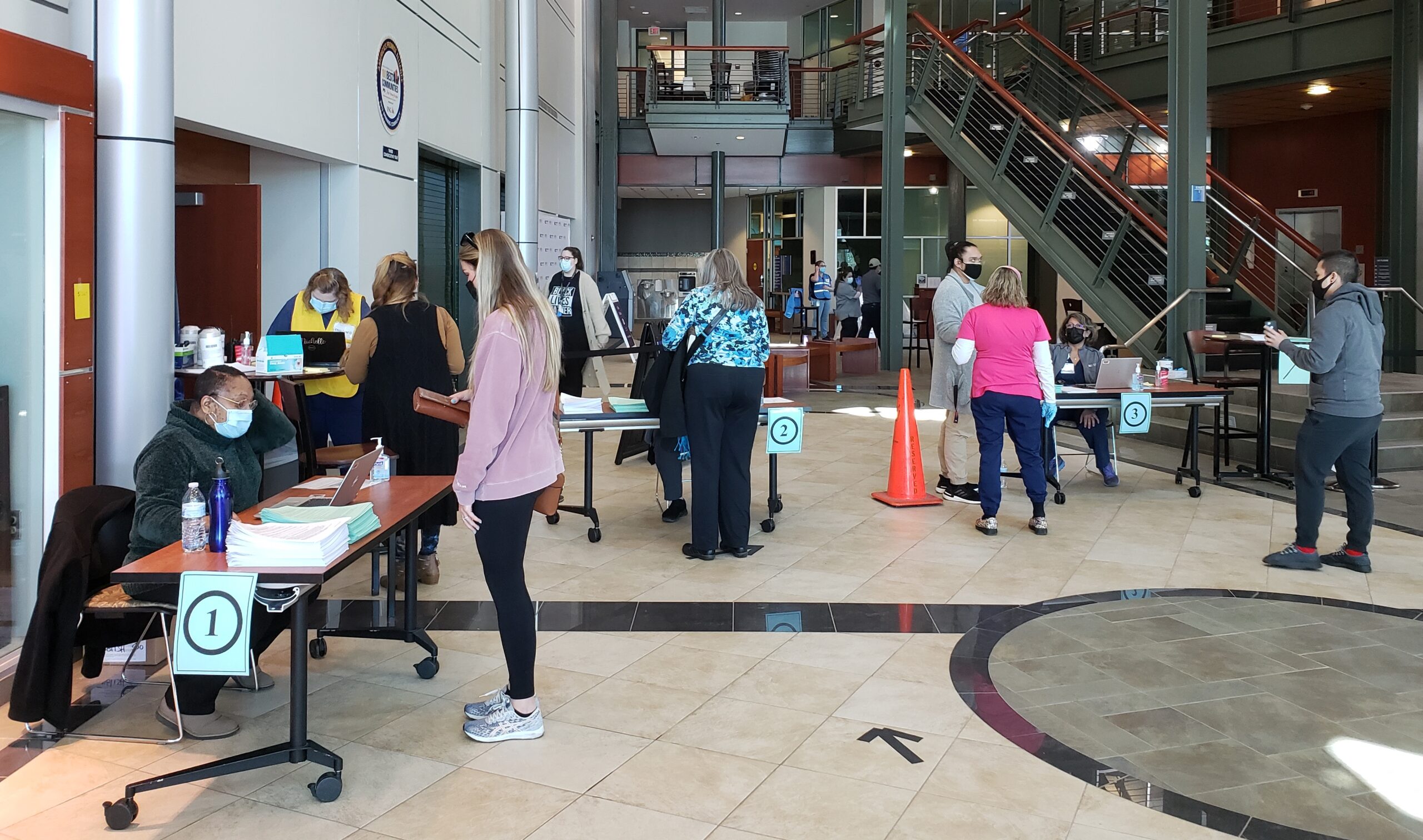
On this past Monday I drove from home to the Edward L. Kelly Leadership Center, which turned out to be less a bureaucratic node for the county’s K-12 schools and more of a conference center, a modern, spacious, comfortable, and very large site.

Well placed signs and several minders herded us inside. Check-in was easy. There were more reception desks than would-be patients, so I was registered quickly.

corornavirus vax 2_entrance hall

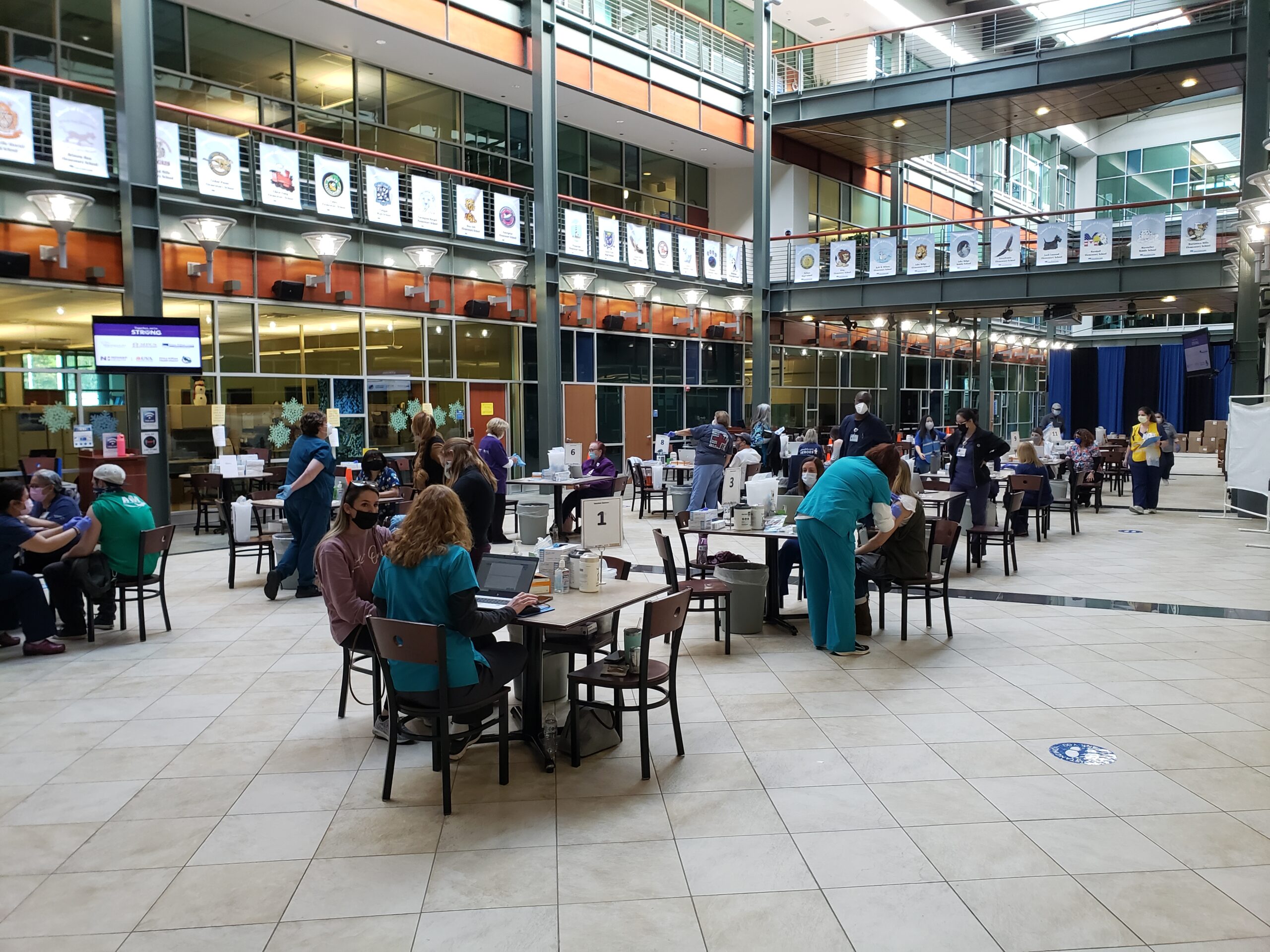
After that, no line awaited me.  Instead, I was pointed to an airy hall filled with vaccination stations, each staffed by two people.

corornavirus vax 2_stations

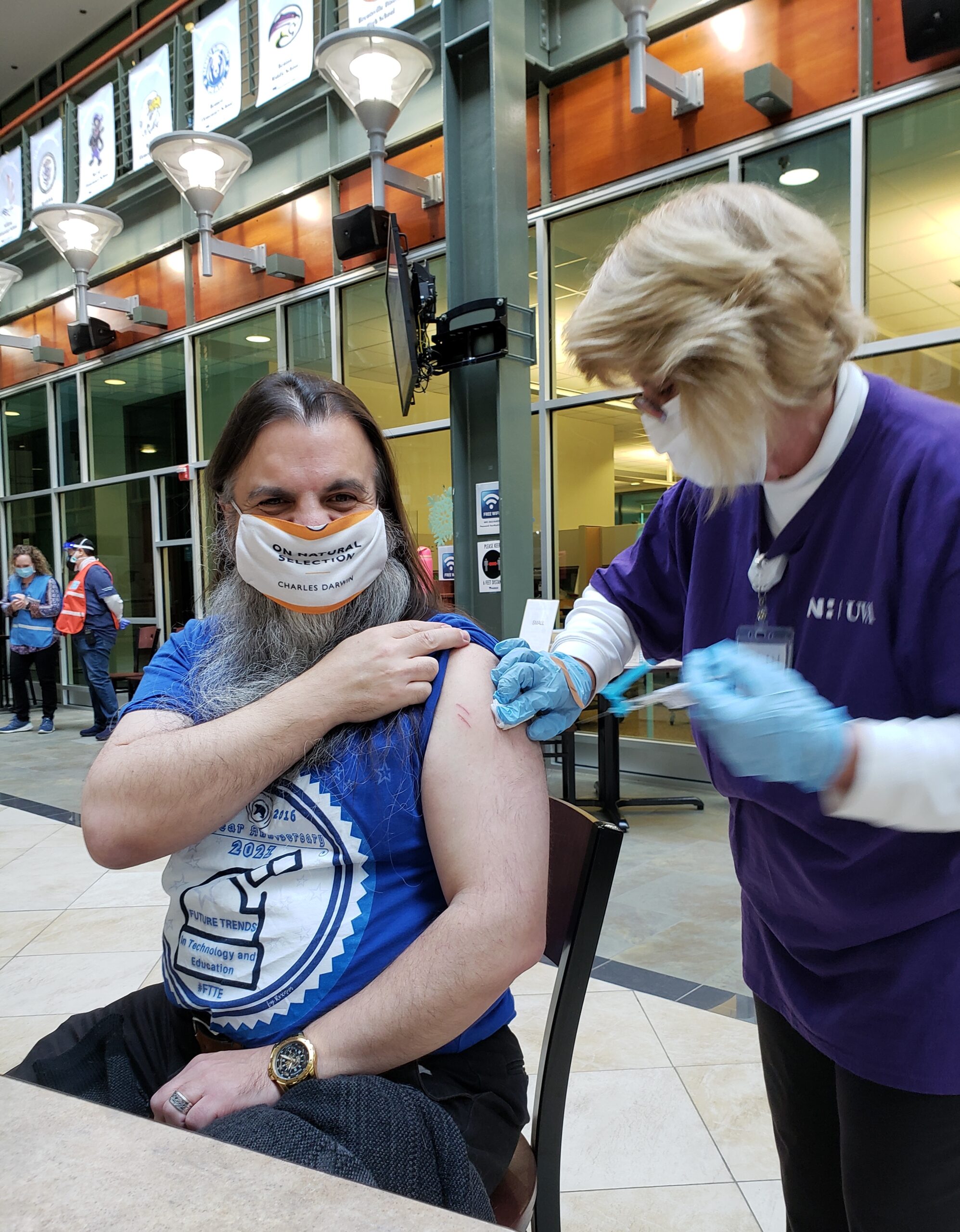
Another minder pointed me to my table, and the pair there immediately set about giving me the Pfizer jab. The first needle had something wrong with it, and so the staffer carefully noted the wasted dose.  Then in went the second needle, recorded for posterity by the other helpful staffer:

corornavirus vax 2_jab

T-shirt courtesy of Roxanne Riskin

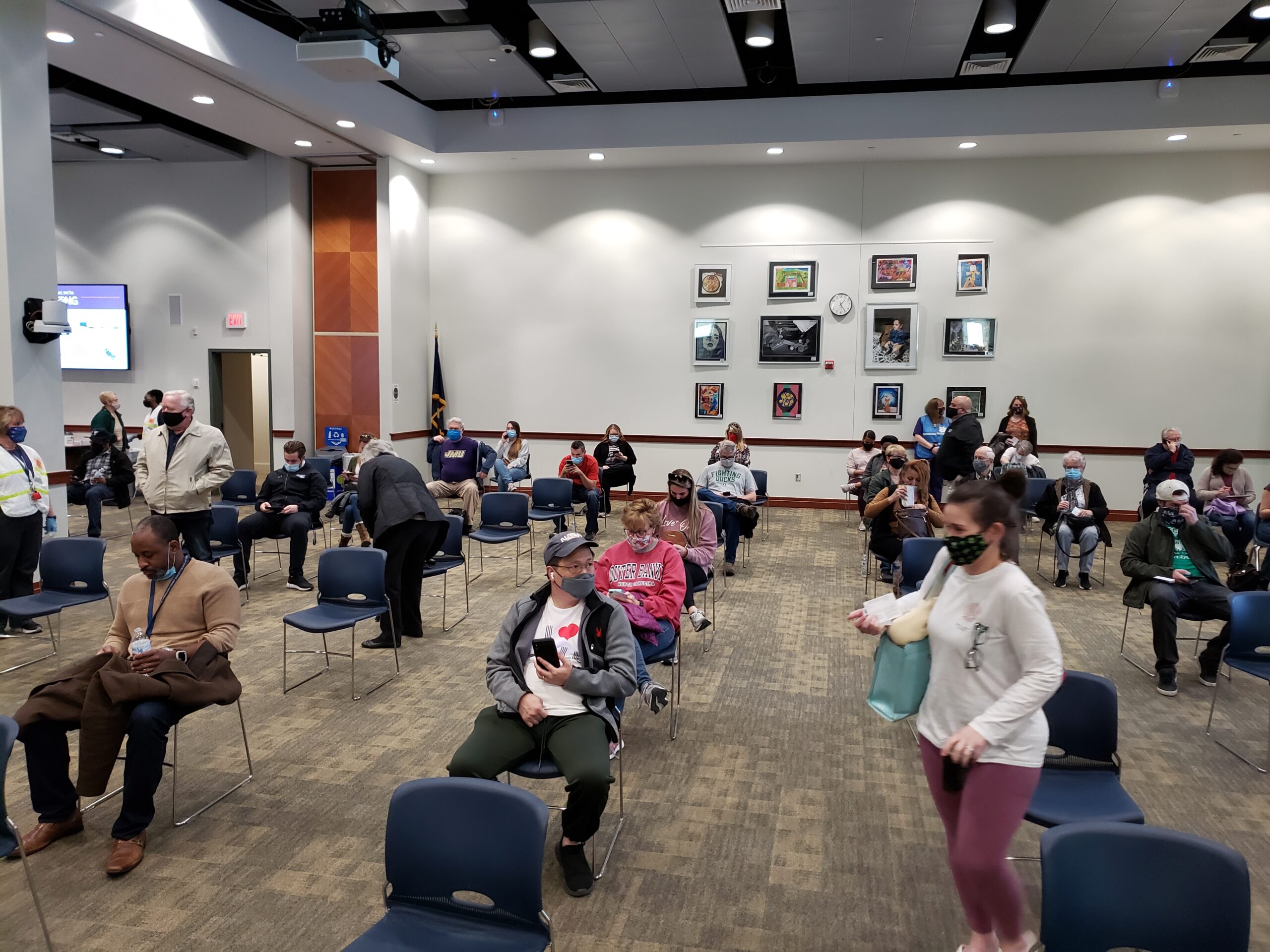
Mission accomplished, band-aid applied, they quickly shooed me into the next room, another big hall.  There another staff member pointed me to some chairs and asked me to wait for 15 minutes in case of any immediate and dire reaction.  Other people waited there, mostly quietly.

corornavirus vax 2_post shot waiting room

I settled in with my Android phone to read more of Braiding Sweetgrass.  After 15 minutes passed and nothing else happened save my arm being slightly and unsurprisingly sore, I took myself to the exit stations lined up at the front of the hall.  The nurse (I think) there gave me detailed instructions as to what to do should any reaction occur, gave me flyers and a sticker, then patiently answered my questions.

corornavirus vax 2_exit table

I thanked her and exited the building into the sunny if chilly afternoon. Then I drove home.

For the first couple of hours I worked on my laptop and didn’t notice any reaction.  My concentration and energy felt normal. Yet gradually a head cold built up, complete with a dripping nose and Wagnerian sneezes.

buy flagyl online buy flagyl no prescription generic

  Things worsened in the evening, so I went to bed early, feeling very cold and hot in alternating waves.

I slept for 11 hours.  Normally I get 6-7, so this was a huge change. My wife reported that I was super warm at times and felt feverish, but that faded by morning.

The rest of the day I felt that I had lower energy than normal. I did several videoconference sessions, including a class, but nobody thought I looked ill.

By yesterday I was fine.  At no time did the injection site bleed or swell up.  Indeed, the cat scratches around it look much more intimidating.

That’s my experience.  I’m fully vaccinated.  I hope the rest of you are able to get the same.

Posted in coronavirus, personal | 2 Comments

When COVID hit higher education: one year ago this week

The COVID-19 pandemic has raged long enough that we now have one year anniversaries.  As vaccines race against variants, we can look back a year to see what we were doing and thinking at the terrible thing began.

What did March’s first week look like in 2020, here on this blog?  As a work of futuring, what did we get right?

March 3rd, 2020 I posted a news round-up and some forecasting thoughts. (My first post on the topic was early February) Here’s the Johns Hopkins dashboard screenshot from that day:

coronavirus 2020 Mars 3_JHU

Not even 100,000 infections.  Just over 3,000 deaths.  For comparison’s sake, the same dashboard today shows 116,697,629 cases and 2,590,877 dead.

That year-ago blog post also describes the first lock-downs and quarantines, especially around China. Travel recommendations and bans, ditto the western Pacific.  Academic conferences were canceled.  Academic research dug in.

I looked ahead for what COVID-19 could mean for higher ed:

Campus emergency plans and exercises seem to be being updated and tested.

How many members of a given academic community lack sufficient access to health care?

I wonder if campuses or on-campus projects are planning on asking governments for financial relief…

I would like to draw attention to two big, overlapping, and potential developments: a big push online for colleges and universities and a boost to video.

[C]hallenges[:] my readers know that the digital divide means unequal access to bandwidth, which can limit use of video and large files.  Faculty are not universally schooled, practiced in, and happy about teaching online.  Campuses may lack sufficient staff to enable a big, fast online push.  This is also happening during the middle of academic terms in many instance, which makes the transition even more difficult.

Video may pose particular challenges.  While humanity loves video, most are not skilled and practiced at creating it.  Think of awful webinars you’ve been exposed to, for a sample of how low the quality can be.  And we still don’t view video as an adequate substitute for in person connection, generally; we may deem rushed online education to be a poor experience.

Those thoughts are actually pretty close to what would shortly unfold.  And so is this:

This [the pandemic] could simply keep going.  Students, faculty, and staff may feel increasingly nervous about being in face to face meetings and will prefer to work and study remotely.  We already have access to a lot of the tech, and maintain some of it in house: campus hosted or leased LMS, document hosting (Google Apps, Office 365), email, some video solution (Elluminate, Connect, Shindig, Zoom, etc).  Networked hardware is fairly widespread, if unevenly.

I shared an awkward photo, but what’s prescient is the caption, repeated here:

Bryan: I voted! 2020 March

“Me this morning after voting, back in my office. I may be spending a lot more time here.”

Too true.  As was this:

Such an online migration is buttressed by a similar, larger move across society.  As people increasingly find face-to-face contact problematic, they will likely shift more functions and experienced into the digital realm.  Shopping in stores, where COVID-infected folks will be coughing?  Head to Amazon and Etsy.  Health care, where crucial workers are overexposed?  Anticipate a rise in various forms of telemedicine.  Want to see a movie or live concert?  The digital world offers plentiful riches.  2020 may well see the past generation’s digital migration accelerate, both in the world at large and within academia in particular.

One bit I got wrong had to do with elders:

If this data [about people over 70 being in the most danger] bears out – or, more importantly, if most people believe and act upon it – then we could see efforts to enroll senior citizens become more digital.  Which can be challenging, given that population’s tendency to be less digitally experienced as well as being likely to have less tech access.

I just haven’t seen so much of this as I’d expected.

March 5th, 2020 I asked readers to suggest ways we could work to mitigate the virus’ impact, especially in higher education.

To start off, I floated a few ideas:

  1. Holding video conversations about COVID-19 and education, modeled on the Future Trends Forum.  Host one or several experts (CDC, WHO, campus planners, HHS, researchers) and connect them with an audience in actual conversation.  Grab sponsors.
  2. Work with a nonprofit, government agency, professional organization, or business to host a video conversation aimed at their particular slice of academia.
  3. Start a podcast series updating us on the latest about COVID-19 and education.  It might have to be fairly frequent, given the speed of events.
  4. Run an email newsletter updating readers on the latest about COVID-19 and education.  Each issue would be smaller than FTTE, which is monthly.
  5. Launch a public research project on how campuses can best use the digital world to protect their communities while conducting their educational missions.  This could include blog posts here, articles, video, audio, interviews, discussions, etc.
  6. Keep doing what I’ve been doing with blogging and Twitter.

All of that turned out to be too ambitious.  I did some: 1 and 6, plus sharing FTTE for free. And that’s what people preferred, in the poll.  But the rest ran into the stark limits of my own time.

Commentators offered some fine ideas.  Joe Murphy suggested analyzing cooperation.

I’m noticing that I’m not seeing any discussion of cooperation, anywhere. All the solutions seem to be based on some form of hunkering down and focusing internally. And given physical quarantine, maybe that’s the best we could hope for… but it seems like now would be a really good time to talk about inter-institutional disaster preparedness and business continuity.

Gigi Johnson was optimistic and pointed to one project.  Yet looking back over the year, there seems to have been a lot more hunkering down and a lot less cooperation.  Well, with one dark exception.

Davin Heckman presented other ideas:

volunteer to provide care for the ill and elderly in the case of community outbreak. If you aren’t in a high risk group, the best thing you can do is to make yourself available to help others if medical resources are thin. Buying groceries, checking in on people, bringing them to get care if they need it, etc.

Jailbreak content behind firewalls so that everyone has access to it, until the crisis subsides.

A more specifically “academic” thing we could is for those who have access with people who have caught the virus is to record anecdotes of the sickness and recovery. I think ethnography could go a long way towards giving a clearer picture of what the typical case is like. People are too fearful right now due to the uncertainty. People should be cautious, but try not to be scared. And maybe academics can help with circulating information in an honest way.

The first one proved to be too dangerous for such a virulent infection.  The second, jailbreaking, didn’t happen that much, from what I can tell. For the third, well, I’ve been trying to do so on my own, here at this blog as well as on social media.  Much more important is this University of Connecticut project journaling project:

coronavirus U Conn journal example

March 6-7, 2020 This post focused on news and analysis.  I’m not sure that those news round ups were of use, or if they were just depressing or, worse, superfluous. They are useful to me today as historical data.

I also shared pointers to work from other people, like the the Coronavirus Tech Handbook and Remote Teaching Resources for Business Continuity.  I’m glad to see those still up.

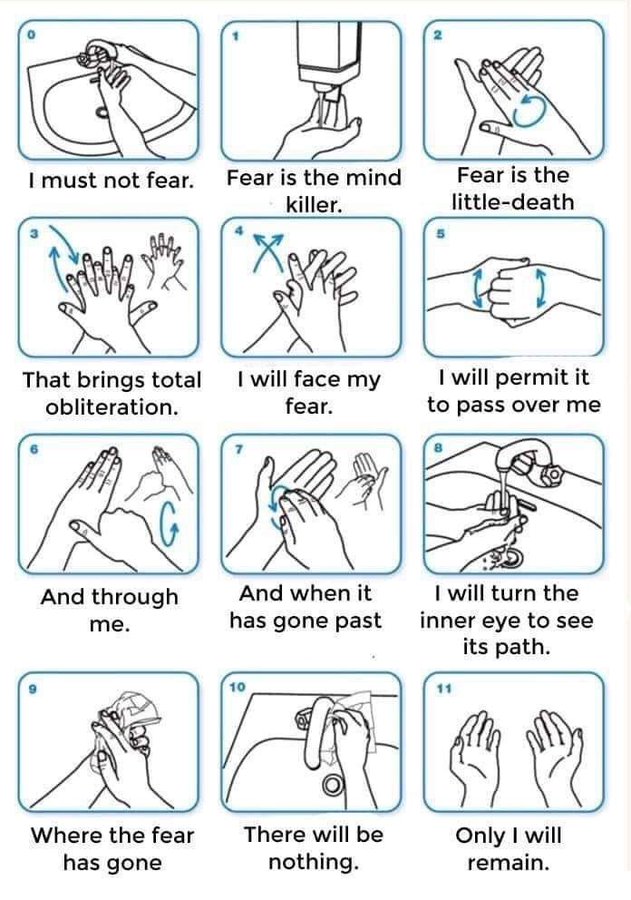
And some humor!  Do we all remember not only the insistence on hand washing, but being able to joke about it?

coronavirus Dune washing

(It’s a reference to a fictional meditation in Dune.)

So what do these blog posts and related discussions tell us?

Painfully (or so it seems to be) they point out a time before two and a half million people died, and millions more would be stricken with chronic damage. It wasn’t an innocent time, save in the sense that America and other nations were already fumbling the crisis on multiple levels, as we now know.  Three months after COVID appeared in Hubei province and so many were just starting to respond.

On the academic side, these posts remind us of academia’s twin impulses of drawing inwards and reaching out, of hunkering down versus collaborating.  There are hints of the struggle to come over college sports.

As a forecaster, these posts generally please me.  Many of those themes did come to pass.. I did overshoot with the senior students part.  And I didn’t identify some things, like Trump’s spectacular chaos, or the role of social media in helping people spread awful stuff about the pandemic.  (Cue Daniel Defoe: “We had no such thing as printed newspapers in those days to spread rumours and reports of things, and to improve them by the invention of men, as I have lived to see practised since.”)

I also overdid it with what I could offer folks.  As some of you know I spent more of 2020 working 70 hour weeks.

Speaking of which, I hope posts like this are useful for considering what we’ve lived through.  Or will be so, down the road.  Want to share your own reflection about early March 2020?


Posted in About, coronavirus | 2 Comments

Newsletters I’m following in early 2021

Email newsletters are enjoying a renaissance now.  A growing number of people are either starting to write them or have shifted their writing practice to newsletters. Several platforms have appeared and won both writers and readership, such as Substack.  Business models are in play.

newsletter aaron_davisI’ve been reading these for years.  I haven’t written any, although people sometimes describe the FTTE report as a newsletter (I don’t think it is, given format and periodicity).  I have Thoughts about how newsletters work and what they mean for the future of technology and culture, but I’d like to start off by putting forth examples. So in the spirit of my podcast listening posts (most recent), I’d like to share a sample of the newsletters I’m following.

To be clear: I’m not defining newsletters beyond “email communications that call themselves newsletters.” I’m not including emails that are just announcements lists, or blog posts received through email, nor blog post comment updates.

This list is pretty heterogeneous.  Some of the writers oppose others in the same category. That’s because my research is broad-ranging.  Inclusion on this post doesn’t necessarily mean endorsement of all views expressed in a newsletter.

I’ve broken these down into categories, then alphabetized entries under each by author or title. Then I added a few sketchy remarks to each.

EDUCATION

Credential Engine – updates on academic credentialing.

The Edge – reporting on developments in academia from The Chronicle of Higher Education’s Goldie Blumenstyk.

Educational Pathways – George Lorenzo examines higher education.

FutureEd – glimpses of education’s future from Georgetown folks that aren’t me.

The Geyser – keen analysis of scholarly communication.

Hechinger Report – thoughtful and heartfelt reporting on education.

Anya Kamenetz – an energetic range of education news and analysis.

Michael Horn – a look at higher ed from a business perspective.

latitude(s) – examines global higher education.

Observatory of Higher Education – from Tecnológico de Monterrey, exploring technology, education, and innovation.

One Thought To Start Your Day – Alex Usher’s incisive, data-driven, and sometimes very funny analysis of higher education, starting from Canada.

Teaching – a focus on teaching practice, by Beth McMurtrie and Beckie Supiano, of the Chronicle of Higher Education.

Thought Shrapnel – Doug Belshaw’s musings on technology, organizations, work, mind, and learning.

University Business’ newsletter – a sample from UB.

University World News – a scan of global academic developments.

Audrey Watters – a rich mix of educational technology news items, critique, advocacy, and history.

newsletter by foam

CULTURE

Astral Codex Ten – I never really followed the author’s previous project, a blog/discussion site called Slate Star Codex, so I wanted to see what all the shouting was about.

The Borowitz Report – cute satire of current events.

Freddie deBoer – musings on culture from a literary-left perspective.

Notabilia and Katexic – delicious delving into language and literature by the fiercely creative Chris Lott.

Old Anima – George Lorenzo thoughtfully looks at aging.

Anne Helen Petersen – writing on various cultural issues, so far as I’ve read.

SCIENCE AND TECHNOLOGY

Axios Space – short news blasts about space travel and technology.

Box of Amazing – miscellaneous notes on technology.

Nature Briefings – updates on current science.

POLITICS AND CURRENT EVENTS

Axios China – very condensed pointers to Chinese developments.

Bloomberg Prognosis – a look at COVID’s progress through the human race.

The Hustle – an energetic and attitude-drenched look at current events and culture.

Morbidity and Mortality Weekly Report from the United States Centers for Disease Control – data and research into how we die, what kills us, and related topics.

Noahpinion – various takes on a wide range of current topics.

SupChina – another look into Chinese affairs.

newsletter by Dacian Dorca

TK News – Matt Taibbi’s fine written and skeptical approach to current events.

United States Census – I subscribe to several of these, each of which provides data about a swathe of American life.

ECONOMICS

Axios Markets – highlights of the economic world.

CLIMATE CHANGE

Bloomberg Green – a business-oriented view of climate change and the environment.

Carbon Brief Daily – a summary of current developments and fresh science.

The Climate Crisis – Bill McKibben’s New Yorker newsletter, which is usually one half his take on one climate story and another half interview with someone else.

Heated – Emily Atkin’s angry coverage of climate change and who’s driving it.

THE FUTURES

Axios Future – interesting snippets of future-oriented stories.

Centre for the Study of Existential Risk – occasional thoughts from a fascinating outfit.

Futurity Today – primarily science and technology stories from the University of Rochester.

Geopolitical Futures – notes about global politics.

The Medical Futurist – focusing on emerging health care.

Gerd Leonhard – a European futures scanner.


Are you reading any of these? Any others to recommend?

(images by Aaron Davis, foam, and Dacian Dorca)

Posted in digital literacy, technology | 10 Comments

US-China tensions continue and academia is very involved

Last weekend I participated in a simulation game about a potential US-China-Taiwan conflict. It was very well done, created and hosted most ably by a group of George Washington University students.

Nearly 10 bright folks ran the show as facilitators and umpires. Roughly 50 people played, representing a range of actors (in poli sci parlance), each slotted to a specific office or function in the Chinese and American governments. I played in the US Secretary of State group. We tried to protect and rescue civilians, which mostly worked. We also struggled to de-escalate the crisis, and ultimately failed in the final minutes as things turned ugly.

Why do I mention this?

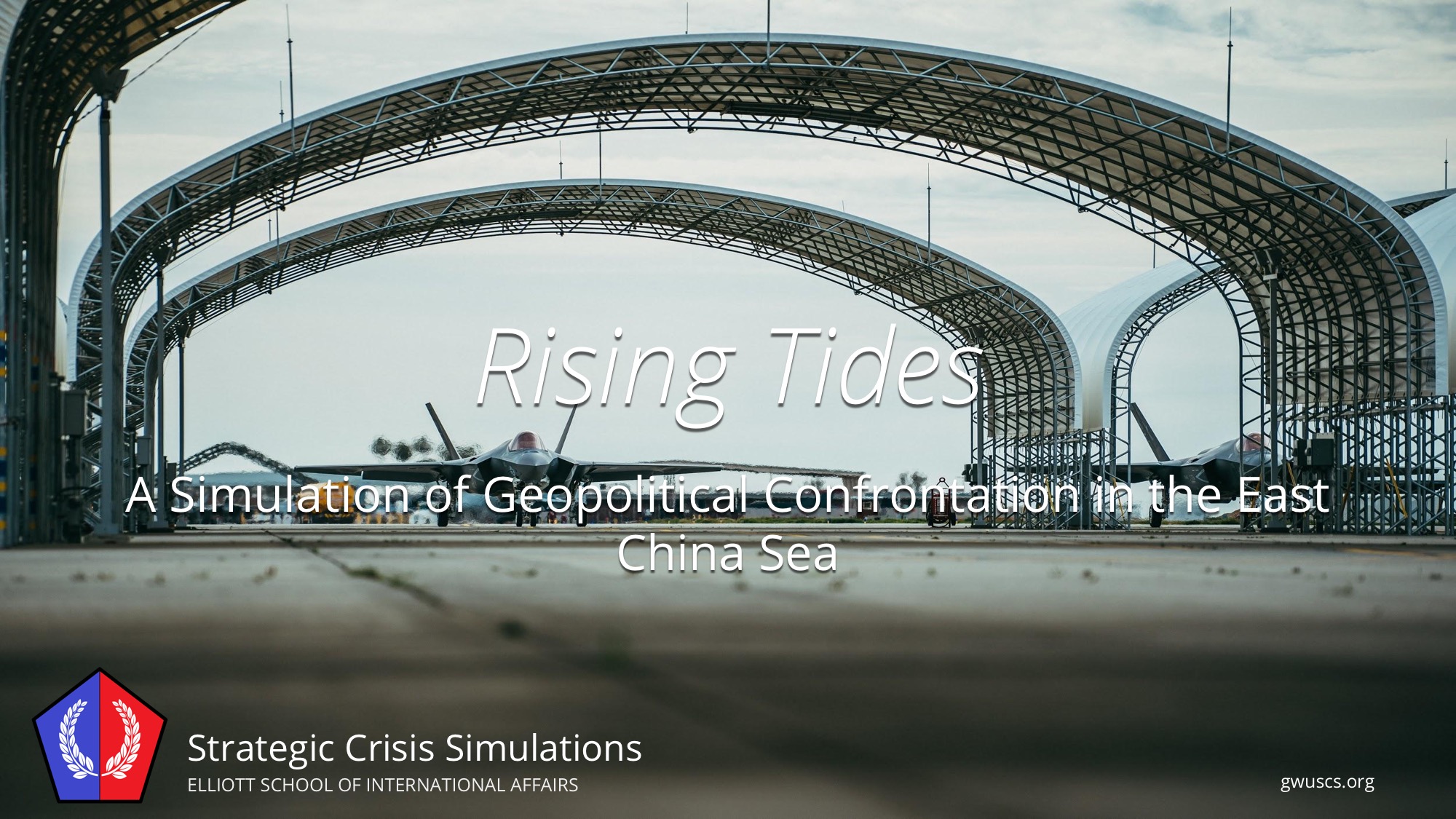
Rising Tides Intro_Briefing opening slide

Partly because I have a long-running love for using games in education. But today I’d like to use it to resume another theme of mine, the continuing trans-Pacific geopolitical tension between Washington and Beijing. This is important to me for general futurist reasons, and especially because of what it means for higher education.  I’ve written about this topic previously (here, here, here)* and it also came up during our reading of Ministry for the Future.

tl;dr – there’s a strong possibility of a new cold war, and academia’s involved.

Let me start with some background.

Over the past few years – really nearly a decade – US-China tensions have ratcheted up.  The Obama administration famously pivoted to Asia, encountered problems with Beijing over territorial claims and intellectual property violations, and tried to arrange a vast trade alliance which pointedly excluded China.  The Trump administration played a key role in creating more tension, of course, through waging a trade war and blaming COVID-19 on China, when Trump himself, never a fan of consistency, wasn’t personally admiring president Xi Jinping.  At the same time some of China’s policies have elicited global outrage, namely its treatment of the Uighur population and its growing surveillance regime.  The nation’s strategy of rising in the world, including its intercontinental One Belt, One Road project have also led some to expect, and practice, policies of tension.  Both nations collaborate deeply economically, but also compete with each other.**

The recent transition to a Biden administration opened up possibilities for changing relations with China, and some conservatives have charged the new government with being too friendly to Beijing. However, so far it seems likely that Biden is continuing an anti-China stance.  He is maintaining a Trump policy targeting Chinese technology firms.  Biden called on businesses to re-source critical supplies, often away from China and Chinese influence.  The official White House summary of Biden’s first call as president with Xi emphasized not friendship but a litany of problems:

President Biden affirmed his priorities of protecting the American people’s security, prosperity, health, and way of life, and preserving a free and open Indo-Pacific. President Biden underscored his fundamental concerns about Beijing’s coercive and unfair economic practices, crackdown in Hong Kong, human rights abuses in Xinjiang, and increasingly assertive actions in the region, including toward Taiwan. The two leaders also exchanged views on countering the COVID-19 pandemic, and the shared challenges of global health security, climate change, and preventing weapons proliferation.

For its part, China Daily described Biden’s approach to China as one that “smacks of Trumpism.”

Some key Congressional leaders back this strategy.  Not all do. One group considered the government’s prosecution of Chinese nationals to be potentially racist. Conservatives, as mentioned earlier, consider Biden too weak on China.  One Republican proposed legislation to cut federal dollars to universities and colleges deemed to be too close to China. On the Democratic side, Senate Majority Leader Schumer is calling for increased National Science Foundation funding, aimed squarely across the Pacific,

to increase research in areas like artificial intelligence, machine learning, robotics and the manufacturing of semiconductor chips to make the nation more economically competitive with China.

The bill, Schumer said at his weekly press conference, will “take the key cutting-edge industries and make American investments so we will outcompete China.”

Which brings us straight to higher education.  If Xi and Biden continue leading our nations along a collision course, what does it mean for academia?

At the institutional level, we could see the number of Chinese citizens studying in American colleges and universities drop, both undergraduate and graduate students. This could have serious financial impacts, given that China has been the leading source of international students for some time.  We could also see researcher collaborations fall similarly. Each nation’s research output may suffer from that lack of shared brainpower.  Additionally, universities will lose some of the international intellectual talent they’ve depended on, as Roger Schonfeld points out.

The 20th century Cold War gives us some historical insights. At times – not consistently – both nations encouraged academic study of the other for strategic gain.  That might lead to, for example, more support of American faculty researching and teaching Chinese language, politics, business, culture, strategy, etc.

At other times political actors in both the USSR and USA viewed academic interest in the opposing nation as subversive or disloyal, which might foretell similar attitudes in the 21st century. Such a closed attitude might play out in terms of international academic collaboration. Much as Moscow and Washington often discouraged scholars and students from working across the Iron Curtain, we might see a similar blockage arise over the next decade.

Academic fields which address fields deemed to be of the highest strategic importance are most likely to come under scrutiny and control: AI, robotics, 3d printing, nanotechnology, advanced neuroscience, and others sometimes lumped under the Fourth Industrial Revolution rubric.  Relevant departments may have access to more resources as well as being subjected to increased political control. What happens to open education resources (OER) and open access scholarship in this model?  If universities scrutinize funding sources and are more open about them, as Karman Lucero recommends, how will that impact work?

I’ve been casting this as a bipolar dynamic, but it’s important to see the struggle as one situated within a global context.  First, China and the United States may seek to compete with each other through alliances and proxies, like OBOR or NATO, which can then impact academia. A multilaterally-inclined Biden administration might build an anti-China liberal democratic alliance, which could then drive international academic work. Imagine study abroad being strongly shaped by national priorities, for example, or certain research partnerships either encouraged or discouraged to fit into these multinational contests. How many academics would feel that such an alliance is one to support, in opposition to China’s practice of rising authoritarianism?

Second, nations and their universities will also act autonomously in relation to the Beijing-Washington struggle, especially in response to those nations’ individual policies.  Consider, for example, Australia’s government encouraging academic Antarctic research as part of a drive to compete with China on that continent.  Nations around the OBOR network may weigh their future participation in it, and joining China’s growing research might could play a role in those decisions. How will European academics and publishers view China, as a potential business partner or strategic threat?  Will civil society pressure local academics over alleged support for Chinese policies against Uighurs?

I think it is possible that US-China tensions could ratchet down or at least continue with an emphasis on a mixture of collaboration and competition if both countries agree to it for a single cause: addressing the climate crisis.  It’s possible that each leadership may come to view climate change as an existential threat of the highest order, and one that would be better met with increased collaboration rather than maintaining am adversarial relationship.  If this occurs, we could see a resurgence in student and faculty connections, albeit focused on climate issues: oceanography, civil engineering, Earth science, etc.

The past several months have shown small signs of what might unfold.  The United States Department of Justice arrested an MIT professor and a University of Florida researcher for not sufficiently disclosing ties to Chinese business and government.  A Chinese researcher pled guilty to stealing American research.  In December a Justice official stated that one thousand Chinese researchers had left the nation “amid a stepped-up investigation by the department of alleged espionage by scientists ‘secretly’ affiliated with the Chinese government or military.”  The European Commission ruled that member nations could exclude China from sensitive research efforts.

Taken together, these academic and geopolitical indicators point to a scenario where the United States and China compete more deeply and aggressively. Higher education within those nations and in other countries is already part of that dynamic.  This geopolitical struggle may exercise a strong force on academia over the rest of this decade.

(thanks to many friends for discussions on this topic, including Roger Schonfeld and my supporters on Patreon – join them!)

*I am curious why the US-China struggle isn’t widely discussed in higher education, at least in the United States.  One explanation might be that Americans disregarded China for decades – for example, Branko Milanovic notes that futurists tended to ignore that nation in the middle and late 20th century (source, 155ff).  Decades of isolation didn’t help, and nor does the embarrassingly small amount of classes available in Chinese language, history, and politics.

Another reason might be that American higher ed tends to shy away from international geopolitics. We are happy to get involved (at least expressively) in domestic politics, but transnational issues are beyond us.  It’s true that US academia tends to focus on itself. Yet we have played active roles in 20th century wars, when mobilizations affected our populations in large scale and visible ways, and did host opposition to the 2003 US invasion of Iraq. Many institutions were outraged at the Trump administration’s Muslim ban. And academia is concerned with the ultimate global issue of climate change.

Why is this topic so marginal in American education’s purview?

**There is much, much more to say on this score. We could speak of the Thucydides Trap, the changing ideology of the Chinese Communist Party, the role of lobbyists and think tanks, Hollywood’s pitch to China, and more.


Posted in gaming, politics | Leave a comment

Redesigning a university: a discussion with president Paul LeBlanc

How can we redesign a university?

Yesterday the Future Trends Forum met with an extraordinary campus president to learn from his experience. We hosted Paul LeBlanc, head of Southern New Hampshire University, and had a wide-ranging, rich, and speedy conversation. The audience was deeply engaged.


Participants generated a huge amount of comments and questions, and Paul answered as many of them as we could handle in one hour. Here are the ones we couldn’t get to.  I think they offer a fascinating series of prompts and approaches to SNHU and the topic in general.

(They appear in chronological order, so you can track them with the video below. I edited them very lightly to anonymize questioners, to fix typos, and for clarity.)

When you delegate responsibility (and authority), how do you think about accounting for mistakes/mitigate risk, which with people’s education and therefore lives could be quite dramatic?

Potential of academic innovation within shared governance model?

What lessons can you take from instructional innovation that you can transfer to organizational innovation?

Follow up – what about the student experience. Are you going as far as a lifelong subscription model? Or some variant of an iterative engagement, where the endpoint isn’t a degree per se?

What plans are there for [competency based education, or] CBE to be adopted more widely at SNHU? What can we do proactively to encourage the new Secretary of Education and his staff to allow schools to pilot CBE pathways?

For traditional institutions who are trying to leverage what they see as a new opportunity in the online learning sphere, how do we help them understand the importance of thoughtfully designed online learning (vs. remote learning) from a systemic standpoint?

Has Covid shown that we’ve hit “Peak Head” (cognitive work) and need more Hand (making and manual work) and Heart (health and care work). Need rebalancing of HE curriculum?

We (or our legacy processes) seem to be our own worst enemy. How do we both recognize the value of past processes, and yet move past cognitive lock-in to modernize ourselves?

How many students are on those committees?

Related to creating Community of Practice groups to “stop changes being top-down”, what questions did you ask to assess credibility and passion?

The growth of SNHU into a leader in online education has been amazing! What is SNHU doing to establish itself within the local community and reach out to local students including the refugee community?

There is, perhaps, no greater hierarchy in academia than tenure. What do you think will be the effects on universities as tenure continues to erode?

Do you feel a strong CBE learning environment carries different technology needs than a more traditional format would (CBE LMS, portfolio, etc.)? What technologies do you see as most promising?

What role does research play in your faculty load?

I understand SNHU may be evaluating courses to also award credentials/badges along with credits. Can you share a little more about that?

On the student experience side, specifically advising areas (academic & career), what are KPIs that you pay attention to? How do you see those changing in the near future?

Do you require your adjuncts to be certified to teach online (is that something you run them through or is it a requirement prior to hiring) and how do you handle faculty development in digital environments?

I hear many higher ed leaders talk about “lifelong learning”. Yet, their focus seems to remain on degrees. What are your thoughts on the role of continuing education in the redesign of the university?

Going back to your comment about debt to earnings for certain programs, how do you balance the problem of student debt against the social value of broad liberal arts education?

M Q continued: I wonder specifically about arts and humanities programs that whose graduates often reach income potential much later than their peers in other discipline areas.

How can we move away from the credit hour model? What can we do to help educate and motivate the new ED secretary to restart pilots of CBE pathways?

I remain concerned that SNHU has (seemingly) given up on the value of lifelong networking. I also don’t hear much about opening minds and lifelong learning in CBE. 

If we see such dramatic increases in student success and outcome if we present flexible learning models, how do we transition more towards flexible education loops with just-in-time learning?

If you could change one federal policy / law surrounding education what would it be?

I have a toddler. What do you think higher ed will look like when he’s ready for college?

The full recording is now on YouTube, and embedded here:

PS: the Forum’s new site is live and growing.

Posted in Future Trends Forum | 7 Comments

From the Kara Sea to the college quad

Thinking about the intersection of higher education and climate change sometimes can be daunting in its scope and complexity. Sometimes small, individual stories are a good way into the topic.

Today’s case in point: a Russian gas tanker just traveled successfully across most of the Arctic Ocean bordering Asia.  Twice.

Arctic route Sabetta to Jiangsu

This is such an extreme route that Google Maps refused to plot a course. “Sorry, we could not calculate directions from ‘Sabetta, Yamalo-Nenets Autonomous Okrug, Russia, 629705’ to ‘Jiangsu, China'”

Why does this matter?

It’s the first time someone has traversed this route. It shows that Arctic sea ice is withdrawing and thinning. Global warming is weakening that polar ice cap so much that what was once impossible – sailing north of Siberia in February – is now doable.  This ties into one of the huge stories of our time, largely unnoticed, the opening up of the Arctic world.  A field of scientific, commercial, and geopolitical contestation is emerging right now.

But what does this have to do with higher education?

Think about a range of future connections.

Research Polar studies is being radically transformed.  For a parallel, imagine what would happen to linguistics and communication departments if humans suddenly developed telepathy.

Other fields also address the transformed Arctic. Think of Earth science as a whole, from oceanography to meteorology. Political science (new tangles between nations), history (which nations touch the Arctic? Canada, Russia, the United States, Denmark, Norway, Iceland…), and economics (new trade routes which means changes to current ones) also weigh in.  Add to this many engineering challenges, from shipping to port construction to new platforms and petroleum engineering.

Campus endowments At some point colleges and universities with endowments will face investment choices around the changing Arctic. An increasingly accessible seabed may provide sites for mining. Ports around the Arctic Circle can grow. Climate change may, in this case, literally pay off for higher education.

Campus politics How will academic populations think and act about the warming Arctic?  I’ve already mentioned two ways we can respond, in terms of research and finance, yet we could also see climate change activism turn north. Would activists who oppose endowments invested in fossil fuels oppose the same groups spending money in polar development?

Alternatively, would some campus populations want to join a rush to the pole? There’s certainly an intellectual excitement in grappling with the topic. You can get a related thrill in this Rosatom video, which openly brags about the gas transportation mission:

It is awesome to watch a mighty icebreaker just slide through vast sheets of ice.  It gives off a buzz of successful engineering and exploration.

But note that that’s a Russian mission. There’s a touch of national and also former Soviet pride there in the name of one of the ships, 50 Year Victory (50 лет победы). Will such Arctic efforts elicit proud support on campuses within the same nations?  Imagine, say, a new American ship that navigates from Prudhoe all around the Arctic and back. How many students or academic departments will use an image of that as an inspirational screensaver?

Such competition could then elicit pushback. Would a Norwegian campus encourage its Arctic experts to compete with those from Denmark? Could Canadian or American campus activists urge their fellows to not engage with a polar region dominated by Russia, if politics run in an anti-Moscow channel? International tension could play against international research and student exchanges.

Other connections are possible. Such individual stories can help us think about where climate change as a whole may be heading.

Posted in climatechange | 4 Comments