Last week The Nation published a review article by Columbia University professor Andrew Delbanco. The piece surveys a range of books about higher education in the present, along with some futures work. Happily, it all starts with my Academia Next:
In January 2020, just days before the first case of Covid-19 was identified in the United States, Bryan Alexander, a scholar at Georgetown University known as a “futurist,” published a new book, Academia Next: The Futures of Higher Education. Alexander made no claim to clairvoyance, only to “trend analysis and scenario creation.” But one of his scenarios showed startling foresight:
Imagine a future academy after a major pandemic has struck the world…. Would distance learning grow rapidly as people fear face-to-face learning because of perceived contagion risk?… How would we take conferences and other forms of professional development online?… Would athletes refrain from practice and play for fear of contagion, or would both institutions and the general public demand more college sports as an inspirational sign of bodily vigor in the context of sickness and death?
From there the author ranges across a stack of books and a score of topics, probing higher education for weaknesses and strengths. Delbanco returns to my work a few more times, once to cite the “Retro Campus” scenario, and another time to compare futurist work to “playing with a Ouija board.
The economics of higher ed are notoriously complicated and even shambolic. Approaching this Byzantine system requires a good amount of research and care just to get started. Which means it’s very easy to write badly about the topic.
Today’s case in point comes from Scott Galloway. I’d like to take it apart not to criticize the guy himself (no malice here, to pick up on his tagline), but to illustrate some common mistakes in his article which readers can spot and avoid. I take my job as a futurist to mean (among other things) that research about the present and recent history should be excellent, in order to improve forecasting. Let’s see about improving things.
The piece is a Medium article titled “Why the Cost of Higher Education Has Spiraled Out of Control” and it makes some good points. Galloway is right to repeat the common wisdom that published academic tuition has soared for some institutions over the past two generations. He’s right to echo many people who see the nearly $2 trillion in student debt as a disaster. Yes, accreditation is a powerful force. Calling out senior administration compensation as excessive is a popular charge, as is arguing for taxing excessive endowments. And I’m glad to see a professor from an elite institution complain that being exclusive runs counter to the democratic promise of access.
Yet the piece makes a series of mistakes that too many others fall prey to.
Confusing a handful of universities for all of higher ed. There are about 4,000 American post-secondary institutions, and they appear in a wide range of forms: public and private, liberal arts and community colleges, arts-centered and vocational, huge and tiny, to name a few. This diversity must be hard to grapple with, because writers so often like to pick on one slice of it, then generalize to the rest therefrom.
“Why the Cost…” has many examples. The title calls out higher education as a whole, but the first paragraph immediately slices it down to state-funded schools: “undergraduatetuition has risen nearly three times as fast: 6.7% a year at public colleges…” A few paragraphs later the author explains all of rising tuition by analyzing “[o]ur best universities” and “our great public universities,” and “the top 200 schools.” Why does this matter? Because different sectors, systems, and individual campuses have different pricing structures. And because community colleges – the largest slice of American higher ed – have far, far lower published tuition that most other institutions, which makes the article’s argument at best an overreach.
To be fair, the article offers this graph of prices, which displays several tracks, although the article on picks on one:
And at the article’s end Galloway changes tack and addresses other schools, citing “local public institutions, including two-year schools, that charge modest tuition…” It’s too late in the piece, but welcome.
Missing tuition discounting. Yes, the published tuition rates have increased. However, a good number of students and families don’t actually pay those prices. They pay less, even a lot less. This is because colleges and universities use various tools to cut those prices for certain students. Scholarships, grants, and other mechanisms let campuses charge less.
To recap what I and others have been saying for a while: tuition discounting has been going on for decades and is well known to everyone who looks at college finances seriously. In fact, it’s been increasing drastically since 2000. The median discount for first-year students is around one half – that is, if a school publishes tuition of $60,000, its median student pays $30,000. Here’s a recent finding from the profession group devoted to campus business and finance officers:
Why is this? Partly it’s to attract certain individual students or types of students. Tuition discounting makes an institution more appealing to, say, sports stars or underrepresented minorities. Another reason is to respond to escalating income and wealth inequality. If one part of American society soars in wealth, a college or university can soak them for full price. Then that subvents those on lower economic levels. I’ve heard this current steep tuition discounting practice described as a means test, and that’s not a bad analogy.
So yes, published tuition has risen. But what people actually paid – there, the picture is quite different.
Not seeing the actual enrollment picture. Galloway’s piece makes a different mistake, one that’s very popular to commit. “Kids are still getting into college (total enrollment has kept pace with the growth in graduating seniors)…” This assumes college students are recent high school graduates. Such a view contains some truth – some people do jump from high school to higher ed in a few months – but misses the large number of adult learners attending college. Depending on one’s data, this can be one quarter or one third of all enrolled students.
Also on the enrollment side of things, that quote seems to say that total enrollment is rising. As readers of this blog and my most recent book, Academia Next, know, the opposite is true. American higher ed student numbers peaked in 2012 and have declined every year since.
Confusing goods and services. A very popular argument compares published tuition to well known commodities, like tv sets. Galloway leads off by looking at the price of gas.
Why is this a problem? Because higher education as an economic function offered to students is a service, not a good. Services behave differently in the market, especially services famously resistant to the efficiency improvements which drop the price of goods. Moreover, the market often prices services to reflect the credentials of who provides them, and higher ed is very well credentialed. I don’t just mean faculty, but also staff, who increasingly work with graduate credentials.
Note how all of the blue items (decreasing prices) are goods, like toys. Then see how many of the red ones (rising prices) are services: health care, nursing, and tuition.
(Three quick caveats: first, remember what I said above about actual tuition after discounts. Second, some goods increased, and we might be rightly angry that they have done so. Third, I’ve heard various critiques of this chart’s details; I’m not sure if they are correct, but the broad curves seem pretty convincing.)
If we talk about higher ed as a service sector, then the conversation changes. We can compare it to, say, health care or law to see how those fields’ prices have changed, and look for any lessons to apply or ideas to be inspired by.
Not engaging other explanations for rising tuition An essential part of academic writing involves considering previous research into one’s topic. I know that Medium pieces are not scholarly papers, but even there it pays to address well known arguments in the space, which Galloway’s article avoids.
For example, it’s pretty widely understood that American states gradually reduced per-student funding to their public universities since circa 1980.
There are several reasons for this, and defunding takes various forms, yet the overall picture is clear. Without going into too much detail, the argument goes that losing state money while educating more students (until circa 2012) meant state colleges and universities turned to student fees to make up the difference. Hence the (published) tuition takeoff. I’d like to hear Galloway’s take on this. Would he call for states to reverse course and increase support?
Another argument is the famous “amenities arms race,” whereby colleges and universities spend themselves mad by building up elaborate residence halls, climbing walls, wellness centers, lazy rivers, gourmet dining services, etc. Personally, I find this overstated, especially as the main chunk of campus budgets go to personnel compensation, but it’s a popular explanation and worth addressing. Should colleges withdraw from the race?
Personally, I’m persuaded by Archibald and Feldman’s argument that higher ed’s published prices are expensive because we have a lot of highly credentialed professionals. More staff and senior leaders have more degrees, which we tend to reward with higher compensation. We insist that full time faculty should have the highest degree possible, the PhD. Now, this doesn’t account for the humanitarian disaster which is the adjunctification of the professoriate, where we are happy to pay people with advanced degrees poverty wages (and wages only, no other benefits), which is a weakness.
I’m also persuaded by the importance of state defunding. And I think we should also bear in mind rapidly rising medical costs for full time staff and some students (again, not for adjuncts). (I do plan on writing this up at some point.)
There are some other problems in the Medium piece which are not quite so evident elsewhere. In the article and elsewhere Galloway calls for a massive increase in enrollment, but this runs smack into the reality of a decade’s decline in students taking classes. Similarly, his call for starting up a bunch of new schools falls short on that issue (why make new institutions when the present ones are seeing their market fade?). He needs to address this. Also, I’m not sure what “putting schools on the hook for a portion of the bad debt” would look like – ISAs? – and the article doesn’t elaborate.
Yet the key thing for me is not these local issues, but how “Why the Cost of Higher Education Has Spiraled Out of Control” embodies so many popular mistakes. Focusing on published tuition instead of the discounting system, overemphasizing parts of the whole ecosystem, comparing higher ed to the wrong economic category, and not engaging with the actual conversation around academic economics… we would all do well to avoid these. Higher education needs better discourse.
In December the Omicron COVID-19 strain was rapidly rising. Colleges and universities had to plan for the upcoming month. How should they react?
In that same December I and some friends started tracking those plans with an eye towards those moving most or all classes online, which I’ve previously dubbed “a toggle term.” Our open and collective spreadsheet ran continuously, with people adding data and updating its accounts. Today I’d like to summarize what we learned by looking at how two national higher education systems, those in Canada and the United States, responded.
One caveat: our data is provisional. We’re going on what people volunteered online. No institution backed this effort nor contributed their research. The spreadsheet probably missed some cases. The data below are conservative, most likely underestimates.
Today, nearly at the end of January, it looks like roughly 160 colleges and universities in North America moved classes online for part or all of that month. About 40 of those campuses are in Canada, while around 120 in the United States. I don’t know if any Mexican campuses followed suit; no data hit the sheet.
You can see some geographic differences at play. Note, for example, the relative lack of campuses online in the American southeast and upper midwest/high plains areas.
For Canada, that’s 40 campuses out of around 436 total, or circa 10% of the nation’s higher education institutions. (source). In the United States the proportion is lower, with 120 out of 4,000 yielding just 3%.
If these numbers are even roughly correct, they tell us that most of Canadian institutions and especially those in the United States decided that the Omicron wave was not a sufficient danger to shift classes online as we did in spring 2020. Other decision-makers surely played key roles here, including local, state/provincial, and national governments, plus funders and members of a given campus’ community.
The steps each campus took to mitigate on-site infections varied. A scan of Inside Higher Ed notices or a glance at the Eduvation listing show a range of strategies: vaccines mandated or recommended, boosters required or encouraged, masking optional/required/a good idea, social distancing, etc. Some delayed the start of spring classes.
How effective were these measures? Did they prevent the spread of COVID-19? How many academics were sickened, injured, or killed? How many off-campus cases occurred as a result of viruses spread by faculty, students, or staff? Did our January 2022 decisions worsen the pandemic, or have any impact at all?
Individual institutions can assess their own cases, and some will do so publicly. But as a sector, sadly, we have no idea in the United States. As I’ve written earlier, data gathering is a mess. Each campus can publish different content on their dashboards, different data, formats, timing, etc. Some can stop updating one or just not offer a dashboard at all. No third party is doing this kind of fine-grained and massive data gathering. Perhaps moving classes online saved some people from debilitation or death. Maybe this toggle term was superfluous. We really can’t tell.
I hope Canada does better. They’ve taken the pandemic more seriously than most in the United States so far.
Given this January, then, what’s next? How will campuses plan their February and spring operations?
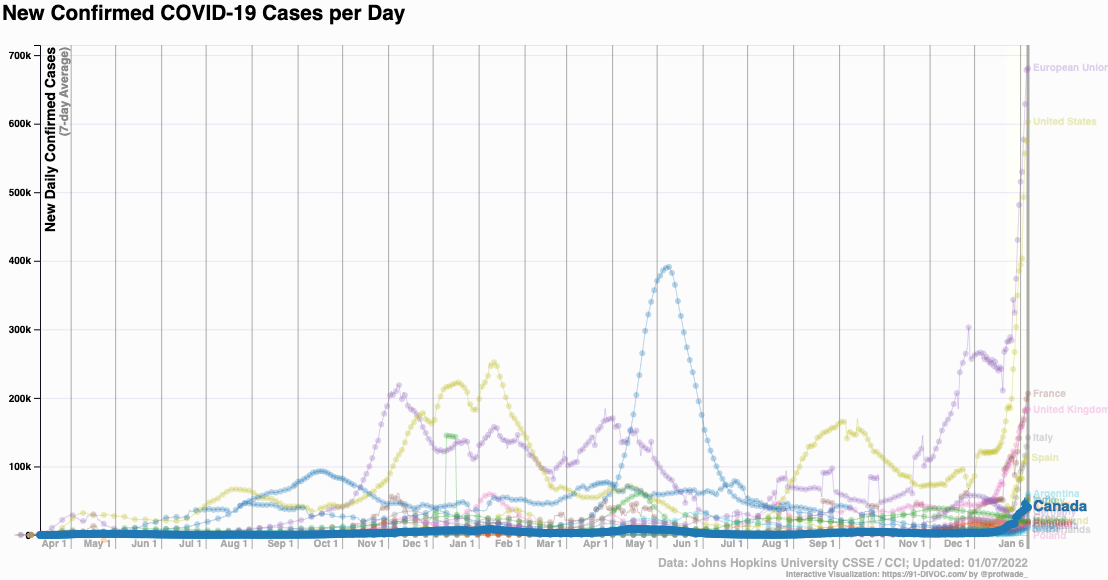
A rising consensus holds that Omicron has peaked. It spread rapidly, infected huge swathes of humanity, and now is running out of new and vulnerable bodies to inhabit. Cases are starting to drop. Our World In Data makes the trend quite clear in terms of infections:
Hospitalizations, a lagging indicator, rose seriously over the past month:
Perhaps American hospitalization has peaked. Or, given the timeline, both nations will see their numbers decline shortly.
Deaths, lagging further still, similarly rose over the past month:
Hopefully that downturn in Canadian deaths represents a serious downward slope.
My intuition is that higher ed wants badly to move on and that Omicron’s peaking – if that’s what we’re experiencing – will translate that desire to planning. We should expect fewer toggle terms starting next month, absent local conditions.
However, COVID continues to mutate and this could change up such plans. Already an Omicron spinoff, BA.2, has appeared. The persistence of vaccination refusal in the developed world and vaccine access in developing nations means there are plenty of unprotected bodies for COVID to inhabit and develop within. We may well see a Pi, Rho, etc. variant as dangerous as, or worse than, Omicron and Delta appear. In which case colleges and universities return to the toggle term option once more.
I suspect that if a Rho wave rises and pushes hospitalizations, long COVID, and deaths up once more, most colleges and universities will prefer in-person operations, at least for classes.
Let me close on a personal note. This past month I have been teaching one class, a Georgetown University graduate seminar on education and technology. We have met online, as per campus directives. Tomorrow’s live class will take place on Zoom. The week after, we shift to the in-person experience. I’m excited to see my students in person. I’m happy to have access to Georgetown’s great resources: a fine classroom, the lovely library, a splendid media center. I look forward to seeing colleagues. I know Georgetown has done a serious job of requiring vaccines, boosting, and masks. At the same time I worry about my trip into campus on the Metro. I’m simply anxious about being around other people.
The difference might not be so stark. Students will have the option of attending virtually, so the seminar will be in HyFlex mode. Which they are very well positioned to take advantage of and to study, given the seminar’s topic.
How was your January academic experience? What do you anticipate for the rest of this unusual spring? And what data should we add?
(thanks to Jody Greene and the many people who contributed to the spreadsheet)
On Thursday the Future Trends Forum kicked off a series of sessions on this rapidly emerging topic. This first meeting was so rich that I wanted to share it here. Hopefully this post will provide questions, ideas, and materials for educators interested in the topic.
The hour went quickly. We began with our guests introducing web3. Vriti Saraf, the founder of k20 Educators and cofounder of k20DAO, along with Scott Meyer, an entrepreneur and former professor, co-authored “From Web3 to Ed3 – Reimagining Education in a Decentralized World“; for us they sketched out several key terms and ideas. Then our community started in with questions and pushback and we went all over the place, together: credentials, centralization vs decentralization, privacy and cryptography, the purpose of education, Web 1/2/3, commodification of education, adjunctification, climate change, the history of education reform ideas, does web3 have any use at all in the academy, and many connections. People posed dilemmas, celebrated enthusiasm, criticized the whole thing, wondered about implications, compared experiences, shared resources, made jokes, and kept turning to the basics.
Second, the Forum community had a lot of questions – too many to get to in a single hour! So here’s the lot, in order of their being posed, including some that we addressed directly or indirectedly, and lightly edited for clarity:
Is educational change a technology problem or a curriculum problem?
We hear so much about NFTs. Many love the idea (and have made $) but there is a considerable number that have concerns, especially related to climate change. Love to hear your thoughts.
In many states, there are bills being written right now about how to ban critical race theory and/or anything else that parents want to “opt out” of. How do you protect a baseline education if you are decentralizing education?
This seems to rub up against the increasing commodification of higher education. Have we started seeing institutions looking at implementing aspects of web3 in their current ecosystems?
Aren’t we just commoditizing teaching and learning in this model? Shouldn’t digital age education enrich the learning experience, not fragment it? How does Web3 address this contradiction?
Followup: Can NFTs eventually use alternative energy resources?
What about NFT Credentials… what can they add to “digital credentials” (open Badges).. ?
How do you see these innovations affecting the equity gap in education, especially around technology and technological access? Are there things we need to do now to close gaps so all have access?
I would imagine that web3 could be a major disruptor for higher education and could get really messy at the beginning if we’re not careful.
Sales and marketing have supplanted communication for mail, email and all web experiences. Does web3 start to address the cruft and get us back to usable communication venues?
I believe an essential function of (especially public) education is to build shared community. How would the web3 world build community in a way that would help lead to understanding/cooperation?
A lot of your examples are about “ownership.” What about how web 3 might change pedagogy?
Isn’t NFT just gilding the lily? It’s just proof of ownership of a ‘virtual’ classroom with lectures. How does that increase learning (vs. credentials)?
Who controls the awarding of the credentials? How can we trust that the credentials are valid? Same problem as now – but thrust into the NFT space.
Who is asking for ed3?
Have you guys spent any time in a registrar’s office with the person who does transfer articulation? I’m not sure what we’re talking about does anything to solve the fundamental problems they face.
Are we now just living in a golden age before AI has discovered how to crack any block chain?
Third, our conversation sparked some Twitter threads. This one explored ways of structuring academic credentials:
Verifiable Credentials (SSI) vs NFTs. The former is more privacy-preserving and gas fee-free if implemented off-chain. The latter has gained, as it seems, much higher adoption than VCs have ever dreamt of and is being used for things beyond ownership claims. https://t.co/OhcObRfj7s
GREAT conversation on today's Future Trends with @BryanAlexander on how Web3 can impact Higher Ed. Really puts the "future" in Future Trends. GREAT comments and ideas in the chat. Thanks to the guests @VritiSaraf and @MrScottMeyer for helping me begin to wrap my head around this
Fourth, the chat room was very energetic. As one participant noted: “This chat is on fire… beats a Discord channel !” Here’s most of the text, anonymized and slightly edited for clarity, with the permission of participants. I moved around some bits to identify major topics which emerged.
Introduction and first thoughts
Seems like a big marketing opportunity was missed when “web3” wasn’t “w3b”… Think of the CPU cycles that could’ve been saved by shortening the name by one character…cycles that could be repurposed to mining and minting…
Agree that Blockchain is a tool that we really don’t know how to use and is way too resource intensive.
Does RSS fit into this ecosystem
i think rss is the grandfather of all this tech. a protocol just like much of what is getting built in the web3 world
It is interesting how RSS/feeds faded a little bit as this emerges
old and current tech offer too many opportunities for breeching privacy
Where would you recommend someone start if this entire conversation is way over their head? Is there a particular seminal text or web location that gives the background of this topic. I am thinking of something like Educaus’s 7 Things publications.
teaching, learning and verification do not need a multibillion $ endowment
DAO = decentralized autonomous organization. Think COOP digitally
So in K-12, parents and students can create a DAO which would be the evolution to the charter movement?
right. Or even more targeted. A parent group interested in arts education that helps bring in the best lessons in that space
So a DAO is a corporation or co-op but for people annoyed by following laws on such legal entities? Just like cryptocurrencies are money for people who don’t want to follow securities rules?
On blockchain and energy:
mining is migrating to the places with the most excess energy.
But Scott that’s not where the energy is used in blockchains, it’s in computing hashes!
But proof of stake is like “the rich run the world” built into code!
Layer2
not having buildings, sports fields and commuting will save even more carbon, if you have a DAO university
NFTs in education
What about NFT Credentials… what can they add to “digital credentials” (open Badges).. ?
NFTs are non-fungible tokens
NFTs not related to microcredentials. Art world uses NFTs to sell their art.
I’m not sure if I’m interpreting correctly but NFT/blockchain gives opportunity to own part of share of ownership? (like buying stocks for the company)
This idea of decentralization of the credential I assume would require a group to agree on standards, skills based hiring and a shift of courses to be skills based
essentially. Think of selling items or services to receive crypto.
Good way to think of NFTis just as a file type. it can be used as a piece of art or a ticket or a credential
File type or URL pointer? I am trying to understand this.
Not really, NFTs are about publicly announcing one’s support for a particular artist (or whoever claims a particular digital artifact), the property rights are a completely different matter and have to be negotiated separately.
Could have DAO created courses in parallel to campus based programs as well as DAO university
Kathy yes! a smart uni could get into this and leverage much of what they already have to a huge new market
Sounds like NFT has a lot of potentials
NFT cuts out middle men? Does that mean the potential future will belong to “creators”? What if I’m not a creative?
You can be an owner and if you are a learner I would argue you are a creator of knowledge
Are tokenized assets the same as an NFT? How do they differ?
None of this is moving learning forward. It’s just extending the traditional school into a different medium.
in some cases, yes. Bittopia exists.
Bittopia u is starting from the ground up
Need the education itself being offered through variety of platforms/forms
At the end of the day, reputation will win out in societies obsessed with credentialling. John Doe University is always going to lose out to Harvard University. That name is where the value is.
the opposite is possible. smart orgs, like Bittopia u, know there are more low income students globally that could participate in education and pay a little than richer ones that pay a lot.
It’s about skills, not sheepskins.
most people don’t need a Harvard to exist
Money from web3 in education
Is this the final commodification of education?
exactly
uber -> taxis
to me it feels like the first ownership of education
I see the potential for the NFT’ization of HE becoming like the gold rush. It could get really messy at the beginning with hordes of people trying to make a fortune off of an open market
that’s already happening
True
I have always thought of digital as a means to deepen the educational process. Instead, we’re seeing more and more of it being used as a mechanism for credentialling.
How are students in higher education learning about financial blockchain?
Join us at W3C Vc-EDU to learn more about how education verifiable credentials work.
Professors used to get paid by number of students (on campus) and like tutors – this is virtual, accessible version in the long run
i already own the materials in my class but so what.
are you able to monetize your materials in the current ecosystem?
I get paid by a university to teach a class so yes… I’ve founded multiple corporations, it’s not a huge deal. I could incorporate and sell my IP but who is buying? Marketing is hard.
Did folks see Signal founder Moxie Marlinspike’s post on web3?
yes, great read. This rebuttal by Packy McCormick is a great companion piece
your head is becoming decentralized!
What we need is a way to promote collaborative and democratic learning.
oversight by whom?
That’s exactly what will happen just like every application of these technologies.
my head gets increasingly decentralized as a I get older
In the beginning there is no doubt it will only widen the divide and there would be winners and losers. This article is great to explain.
how would it work if skills taxonomies are defined differently.. if I get an NFT in crtiical thinking but it’s defined differently than how an employer is defining it how can it scale?
So if instructors are going to be on their own, that means no work rules, no paid sick leave, no parental leave, no pensions, right?
the interesting part is it would be transparent so the employers would be able to go see the work or the definition but will they? maybe doubtful. it’s a great thought experiement
ASU’s big announcement today is banking on large parts of the world wanting an ASU-associated certification to hold cache in their local communities.
There are networks like Open Skills Network and Credential Engine helping to collect information about skill & competency frameworks and how they are being applied in education and employment.
Great question about taxonomies defined differently. I think we faced similar problem with badges
the rebuttal by Packy is really to ProfG. merciless critique of Web3 🙂
yes, but he ties it all in with Jack and Moxie too, a fabulous reading!
Open Badges has properties to reference skills & competencies. Open Badges 3.0 will have an option to do single skill assertions too as well as aligning with rubric related results.
The “centralized” university provides libraries, tutors, spaces to study, computer equipment… How does decentralization help with the support that some learners need?
head explosions are common in web3
My head explodes at least 25 times per day
It’s a pain to clean up after head explosions.
I leave the wreckage behind me
Wreckage tends to catch up with you. :-0
That E.M. Forster quotation…
Which Forster quote?
“only connect” remember when we thought connection was good in and of itself?
I’m totally new to this, but any time extreme decentralization is proposed I wonder who will protect the consumer/ individual’s interests and ensure quality or equivalence of credentials?
Adjunctification and web3
Are we talking about the adjunctification of higher ed? I’m an adjunct and some of my peers live in their cars or are on the edge of homelessness.
I saw the adjunctification question I wanted to hit. It is such a HUGE opportunity for teachers where they can earn in the proceeds from students and connect with students anywhere
Large profits to the few, big losses to everyone else
I’m doing this right now, try to make money doing it. Good luck.
More practical questions about education and web3:
content vs format vs delivery vs proof – all need to be rethought in web3
it’s not metaphor. it’s new types of Digital interactions performing certain functions.
Attending class is not the only the only way to learn. Cripes!!! Web 3, microcrentials, whatever. It’s what you’re able to do, your performance of a skill, that matters. You can sleep for 4 years and get a college degree, even at Harvard.
I know some who did.
Credentials aren’t really being stored on a blockchain.
most of my students attend my class without learning anything
as always your humor is on point
would we see a rise of the need for improved assessments that demonstrate you do actually know what you said you learned ?
Learning is a complex package of activities. Just showing up to class doesn’t mean you internalize anything
already need confirmation that demonstrate knowledge
Check out rabbithole.gg which proves completion on the blockchain
The army used to use a “training wallet” that was to transport experiences to SCORM devices.
When was that?
Army and SCORM? early 2000s. My Old Dominion military students carried them. Of course, SCORM was its own nightmare.
Though SCORM is a warning technology for assuming Web 3.0 automatically will work.
I think analyzing the use cases will be critical to moving forward with this idea
I am obsessed with the tech and its opportunities but I must say we are just talking about the technology and how exciting it could be but we don’t talk about the problems it can actually solve that centralized tech can’t.
I don’t think this is a really gret example. I get emails from teh alumni association pretty much every day. It’s not hard to find peers from my university community. There’s Facebook groups, linkedin pages, ….
Open Badges 3.0 will be Verifiable Credentials that will be signed by issuers and issued to decentralized identities belonging to learners to store on their wallets. No blockchain needed but may be used for for Decentralized Identifiers.
If one gets a “physical” copy of their “thing”, seems to me that would not allow for updating or any other change. [total newbie here]
I was able to network a bit by sharing my educational credentials on LinkedIn, but of course who knows if I’m really a dog?
great point. For me it’s access, affordability and accreditiation. i think it will be both! we will have the current higher ed system + decentralized approaches for people who right now can’t get that
How about we create artifacts to demonstrate that we know what we’re doing? The problem there is authentication, not certification.
On the chain, I can have a signed affidavit that I’m not a dog…maybe from my vet?
isn’t the problem that a lot of people don’t complete their university education not how we document and record what happened?
When I played trombone all that mattered was how I sounded (and if I showed up on time sober).
precisely. Sober is good.
Private keys can be backed up.
Dang, sidetracked, arrived late, lost an already bad connection, finally back on with atrocious…may have to give up altogether…
Or when my USB-A key no longer plugs into my USB-D computer.
For FutureTrends – this is a GREAT topic. THANK YOU BRYAN!
So does the corporation replace the university in judging credentials…
I guess we are assuming perfect security in this conversation, the distributed identity out there can never be hacked or altered.
Great point. With everything being centralized it’s almost impossible to use different learning experiences as composable blocks that I can put together to form a credential
question – is web 3 friendlier to mobile?
I don’t think that’s true. I have students every year in self defined majors. UC Santa Cruz.
The Bologna agreement does this in the EU
awesome, gonna look into that
And they used to not give grades at UC Santa Cruz. How did we know what they learned? Through observation of performance.
I was thinking across institutions
Would people owning their credential improve completion rates?
there were written evaluations like a letter of recommendation from every class
I talked about how we can think about using digital to enrich learning, not commodify it in this article.
Why do we need to change that? Reputation matters!
Is my A+ from Harvard more valuable that your A+ from Long Beach State? Maybe yes, maybe no. They they’re different.
quick side note – love these questions and side convos!
Some confusion by some about copyright and NFTS (see Dune purchase). I wonder if decentralizaiton will impact copyright.
place to continue this discussion when Bryan is done?
we have the #FTTE tag on Twitter.
check out what bored ape yacht club is doing. when you ownt eh nft you own the IP. you could build your own tv show with their ip but when you sell it you no longer have the rights
my students are challenged to complete the classes required for their major. I’m interested in how this helps them but I don’t see it.
do you think they would if the nft gave them access to something interesting?
would decentralization leave behind individuals with lack of “mobility knowledge” (e.g., knowledge about what skills are needed to get higher paying jobs)
not that w3 will fix any of this, but the A+ needs to mean something. When Harvard rep is attached, it carries weight.
Excactly!!!!
Bingo!
that’s not true btw
National University of Singapore is in first place as a result of its multiple blockchain research centers, its frequently hosted blockchain-themed conferences, its many blockchain clubs, its company partnerships and its masters program in digital finance
Where was that quote extracted from – 7% of world is educated and 93% do not possess post higher education
There is a fundamentally philosophical problem when you introduce a concept designed for economic exchange into something whose power derives from its qualitative impact on our lives.
because $$$ >> learning
why put a portfolio “on the chain” how about just keeping it on your own machine or thumb drive
Extrinsic vs Intrinsic motivation?
Yes, a running theme on the Forum!
Exactly. Remember the Vivarium??
This is where I am looking in my own work as an educator
lots of great opportunities for creative teaching and learning in this context. endless flexibility
$20 for your amazing lecture
love this one!
LOL
if your portfolio is on the chain, then if my portfolio also has bored ape NFTs in it, we can find each other and network…
oh wait, there’s someone online bidding $15, sorry maybe next time
yay, let’s network our apes!
I think we need to spend more time discussing the purpose of education. Not everyone agrees it’s pedagogy. Scott briefly talks about this in the article.
great way to do experiential learning
Carol Dweck- growth mindset
Good link!
the question of “what’s it for” is key
is it for getting a job or becoming a more well rounded person, etc. much like thinking about liberal arts v polytechnic, etc.
Very True. But many make assumptions about this as if all are on the same page and have the same access.
@vriti, @scott, @bryan: it seems like this discussion is all predicated on the neoliberal worldview: “wallets,” the university’s “business model,” “ownership of the IP of textbooks/tweets/etc.” … it’s just such a toxic worldview that hasn’t benefited ed
love thinking thru that
agree that this is not about web3 but about new way of thinking about education and delivery
Technology will not solve that problem.
I’m coming away more skeptical about this TBH
technology isn’t interesting until it’s boring. love that quote from clay shirky
@Vriti – there you go! But I disagree the sole problem is technological. But it’s as old as Dewey vs. Thorndike.
I wonder if there is opportunities with students as producers and student created content that they can own and share outside of the clasroom
What are some ideas for how web3 improve opportunity for underserved & low socioeconomic communities?
and the metaverse was a dystopia, as he points out!
Trump University NFT is going to the moon!
We need Networked Improvement Communities, not city-states of learning.
YES!!!
Thorndike gives those in power control.
Just need some successful examples of it in action
So much great conversation here
i wonder if we have that will/interest to do that now Bob. great discussion
Thank you everyone for your ideas and input
Great session!
Let’s continue the conversation!
Huge applause for all!
thanks, @vriti, @scott, and @bryan!
Thank you! Great information for this newbie!We’ll continue with more guests and conversation over the next few months.
Looking back on this… One way of looking at the session is that it was a collective and emergent learning experience. Not quite a class, because while we had two experts as guests, we also had a lot of knowledge sharing among participants. Another way of viewing the hour is as a snapshot of the web3 project in time, seeings its ideas, projects, and problems in mid-appearance on the historical stage.
The subject was larger than the session. We could easily have continued for another hour, and we didn’t even touch some major web3 points, notably virtual reality and Facebook/Meta.
So we’ll keep going. I’m arranging more Forum sessions on web3 over the next few months, woven into our other topics and alongside guests focusing on other issues.
I’d be delighted to hear your thoughts about the whole thing. Who’d you like us to bring on stage next? Which ideas should we focus on? And is documenting and summarizing this Future Trends Forum session a useful thing to do?
As higher ed slides into year three of the pandemic, some of us reflect on what we’ve learned from the experience. These reflections are important and can be useful, but too many repeat popular mistakes and don’t help us as we work and plan ahead.
Today’s case in point is an odd article in Insider Higher Ed. “HyFlex Is Not the Future of Learning” starts off by complaining about that form of teaching, then becomes a general complaint about online learning.
I’m writing not to pick on the column for its own sake. Instead, as I’ve done before, I want to identify some of its tropes and arguments as ones that are visible elsewhere, and which we need to get past.
A quick summary: Loyola University New Orleans English professor Christopher Schaberg describes hearing a faculty colleague present on some of the difficulties in teaching in HyFlex style. Schaberg describes HyFlex, then argues for its problems, pointing to popular dislike of it at his institution. Next he praises the on-campus experience, in contrast to online learning.
So what went wrong?
To begin with, the article fails to connect with or even name anyone else’s work on the subject. I’ve seen this for decades in the ed tech space, commentators speaking or writing as if they’ve been the first to come across or reflect on a given technology or problem. It’s a weird slip, and one which looks less excusable every year as the sheer amount of scholarship and general media about ed tech keeps growing. For example, it’s easy to find this free and open ebook on HyFlex co-edited by Brian Beatty, who coined the term, did important work on it, and is unnamed in Schaberg’s piece. Our Future Trends Forum session connected Beatty to hundreds of people, and is freely available on YouTube:
If that’s too much content, EDUCAUSE has a two-page, concise intro. My point is that academic writing about academic technology should do a better job of acting like they’re entering ongoing academic discussions.
A second problem comes in the article’s view of who’s involved in post-secondary teaching. Professor Schaberg is the only named person, and represents the (small) tenured faculty population. He also includes students, which I applaud. There seem to be other faculty involved in conversations, as committee members.
Missing is any faculty member without tenure, including adjuncts and contract professors – i.e., the majority of the American professoriate. Teaching HyFlex as a tenured professor is a different thing than teaching that way for below minimum wage, and with less support in other forms.
Speaking of support, no staff appear in the article. There are no technicians to install, test, maintain, and troubleshoot the microphones, speakers, screens, and cameras needed for live videoconferencing. No instructional designers appear. There is no mention of help desks to assist the professor and his students. The article’s author is apparently alone in attempting HyFlex teaching. If that’s true, he has my full sympathy, should definitely call for more support, and write about this in the article. If that support is actually present, just invisible in the text, then the human beings who help make ed tech happen should appear.
Again, I’m not writing here to pick on this one article. It’s because these gaps in writing about the reality of academic labor – the enormous population of off-tenure-track faculty, the importance of support staff – are all too common in conversations about higher ed. Including those within academia, where we should know better.
A third problem is the old one of taking a piece for a whole. The article discussed HyFlex in higher education in contrast with face to face learning, which the author praises. I don’t object to that praise, as I also appreciate the in-person education experience. I also enjoyed the DeLillo passage. The problem is that the piece cites a liberal arts campus as an example of post-secondary education as a whole.
A moment’s thought shows the problem here. Residential liberal arts colleges number around 100 in the United States. That’s about 2.5% of the number of American colleges and universities now operating. I’d like to be generous and add schools which offer some form of residential liberal education, such as those with embedded programs within larger universities, and I’d still only have a minority. Commuter colleges are left out. Schools where most students don’t live on site aren’t mentioned. Put another way, a charming liberal arts campus is indeed a fine emblem for higher ed, but only for a slice of it.
One more problem occurs and it’s one I found disorienting at first. The article starts by criticizing HyFlex, yet the second half might not be about that. Listen to the problems Schaberg identifies in that final section: the digital divide; students not having a good physical location to be on camera; missing the physical campus. These aren’t HyFlex problems, but issues with online teaching.
Listen to this description of class problems:
students and instructors alike seem to have endless tasks: a constant deluge of boxes to tick, videos to watch, assessments to mark. They pile up in the timeless void of the phone screen or the computer desktop. Midnight deadlines become an infinite regress. And while coursework would seem to be tidily organized under our learning management apps, in files and folders and subfolders, all of it pulls everyone involved further away from the college experience.
First, those are class design problems, and need to be solved before a class starts. Second, that describes online learning. There’s nothing inherently HyFlex about it. Same with this passage:
higher education is trumpeted as a grid of apps piped into everyone’s personal phones. Instructors are directed to “deliver” their lessons in discrete chunks and units.
At one point the professor refers to “the vague ontology of remote learning.” Setting aside my critique of the usefulness of that phrase (it’s not vague at all), it’s again about, well, remote learning.
I can write to this not only because I’ve researched these issues for decades, but also because I’ve taught HyFlex classes and led hybrid conference sessions for years. I think the first time was in the late 1990s, when I gave an in-person talk to educators in northern Sweden, and dozens of folks from across Scandinavia joined us through a virtual world and live video. As a presenter, it felt odd… then it clicked, like peering out through bifocals, knowing I can shift between them. Or like being in front of a room that’s very rectangular and extending to my left and right. I treat them as a unitary thing, but I make sure to address both sides or levels.
Over the past two years I’ve taught a series of HyFlex seminars at Georgetown. For them of them I was on campus in a well-equipped classroom. Some students were with me, in person, while others beamed in from other locations. I made a point of hailing both subpopulations, giving extra attention to whichever felt less engaged at a given time. We used Zoom for video and I made a point of keeping the chat open, responding to or reading from the chat to boost comments and students. I would DM remote learners support, questions, or signs of care. Together we used other software for more synthetic work: Google Jamboard, Google Docs, Miro, etc.
At times I taught from home or on the road. Some students met in that fine classroom while others were remote, like me. Again, I had to do that bifocal thing, but from the remote vantage point. I caught in-person cues between people in person, on camera and responded to them. I gave more attention to those who seemed not as fully present.
I’ll write about this another time, with more details, if folks are interested. The key points are 1) it worked, and 2) the Inside Higher Ed piece stops being about HyFlex reality halfway through. If the author wanted to complain about online learning in general, he should have written two articles, or else flagged this transition. What’s the general error I find here? A lack of analytical precision in writing about ed tech. In 2022, especially after two years where all of higher ed was immersed in the field, we can do better.
To sum up: we learn from this four mistakes to avoid in writing about educational technology in higher ed. We should openly engage with ongoing debates, describe the actual human labor involved in teaching, not mistake one bit of higher ed for the whole, and be precise in our description and analysis of ed tech.
I write this as colleges and universities reel from COVID and too many struggle to maintain themselves, while academia’s reputation declines and enrollment drops. We can and should have better conversations about higher ed. Given the stakes, we shouldn’t do otherwise.
This week my spring 2022 seminar began. It’s a master’s degree course for Georgetown University’s excellent Learning, Design, and Technology program. The topic is education and technology.
In this post, I’d like to share some course materials and my thinking behind it.
In other LDT classes I’ve included technology within our topics in various forms, examining its implications in many domains. Here I want to dive into tech for teaching and learning, focusing on pedagogy and support, for the entire semester.
These seminars are mostly discussion based. I resist lecturing, and prefer instead to prod students with questions to get them talking and thinking out loud. I will deliver short (<3 minutes) rants minipresentations on topics as we encounter them, and also to introduce some parts of the class. We also spend time learning how to use some technologies, and that’s a mix of my showing them things, them trying them out, and me helping individuals.
Another way the class works is by combining hands-on learning with academic research. Most class session involve a focus on one technology or tech-enabled teaching issue, so we read scholarship and other professional writing about it, then actually use the stuff. For example, during the digital audio week we explore the pedagogical affordances of podcasts and audiobooks, then put together tracks using Audacity, importing clips from Freesound, and uploading sample results to Soundcloud and Canvas. While learning about the web for learning, they’ll edit a Wikipedia page and use Hypothesis to annotate web pages.
About that reading: I’ve cut it back a bit since the last time I taught this, based on student feedback and pandemic stresses.
Other student work: every week students share their reflections on that week’s topic. Initially they do this through Canvas, Georgetown’s learning management system. As the seminar progresses, they will use technologies they study to create these reflections. Back to our podcast example: the week after they’ll record their spoken words and upload them to the LMS. After our gaming week, they’ll use Storyboard to make a hypertext game about their reflections. In addition to that, they have two midterm assignments: a short analysis of one educational technology, then an annotated bibliography for their final project. That final project is either a detailed analysis of one ed tech or a detailed lesson plan using some ed tech. Additionally, each student will teach the rest of us one tech. And finally, they all design one class, including topic, readings, and exercises. These last parts stem from my classroom democracy belief, as does our opening class assignment of collaboratively determining class norms.
Some of this is liable to change. Right now the class is online, due to COVID-19. Georgetown has classes in remote mode through January. Perhaps we’ll meet in person after that. This will matter for the week on AR/VR/XR, since Georgetown has good amounts of gear we can use in person, but I can’t assume all students will have access to same from their individual bases. I’m not sure about some of the tech overall, for which I might find substitutes. For example, I’m looking into alternatives to Audacity. And I may tweak readings and exercises based on how the students are doing: their progress, how their interests intersect the syllabus.
There’s a great deal of continuity with the last time I taught the class, back in 2021. That’s because most of it worked well, based on my judgement of individual sessions, informal feedback from students, and from class evaluations. Repeating materials and assignments always gnaws at me, as I want to make things new! But I remind myself that a) they’re new to these students, b) they seem to work, and c) I can modify on the fly. I’ve also expanded some points, like concept maps and the campus enterprise environment.
How did college and university enrollment do in fall 2021?
The National Student Clearinghouse Research Center has been tracking this closely. They do essential work. They have already released one estimate for fall 2021, which I wrote about here. Today they published their final report, which I’ll summarize and discuss now.
tl;dr version – total higher ed enrollment declined 2.7% in fall 2021, continuing a pandemic drop as well as a decade-long decline trend.
Let’s break it down.
One caveat: to repeat, these are total numbers. Whenever I write about total enrollment someone will respond, “Well, my campus grew.” Or: “My state did fine.” Of course. America is a big country and its higher ed ecosystem is diverse. The reality is uneven. These numbers are top level. Your local results may vary. The Clearinghouse announcement is clear on this: “total fall enrollment increased in only four states: Arizona, Colorado, New Hampshire, and South Carolina.”
To begin with. there were persistent differences between undergraduate and grad students. The total number of undergrads went down 3.1% compared with fall 2020. That’s a cut of 465,300 students. For some perspective, 14,441,432 took classes in fall 2021. In fall 2020 14,906,750 did so. In fall 2019, that number stood at 15,467,001. In contrast, graduate student numbers actually rose slightly, by 0.4%, which is consistent with a long term trend. (For total numbers of that population, 2,860,932 students took grad classes in fall 2021. There were 2,871,734 in fall 2020 and 2,772,873 in fall 2019.)
Numbers differ by institutional type, but all were hit. “Every institution sector saw undergraduate enrollment drops,” as the report notes.
[T]he largest numerical drops [took place] at public four-year institutions (251,400 students or -3.8%) and the steepest percentage decline at private for-profit four-year colleges (-11.1% or 65,500 students). Community colleges saw smaller enrollment drops (-3.4% or 161,800 students) than in the previous fall, but the number of associate degree-seeking students enrolled at four-year institutions fell much more steeply compared to the previous year (-11.0% at public four-year, -6.2% at private nonprofit four-year, and -11.9% at private for-profit four-year institutions).
Public institutions were hit significantly harder than private ones:
Private nonprofit four-year undergraduate enrollment decreased by 2.2 percent or 58,700 students this fall. Public institutions (two-year and four-year combined), which enroll three out of every four undergraduates, showed a 3.1 percent decline or nearly 398,600 student losses…
Key point about community colleges and associates degrees:
Enrollment declines at community colleges were less severe this fall (-3.4% or 161,800 students) than in 2020, but the number of associate degree-seeking students enrolled at four-year institutions fell much more steeply compared to the previous year (-11.0% at public four-year, -6.2% at private nonprofit four-year, and -11.9% at private for-profit four-year institutions).
“less severe.” Remember that community colleges have been hammered very hard, even though they get little media coverage.
Broken down demographically, older students dropped more steeply than traditional-age ones:
Adult students (age 24 and older) saw the sharpest relative enrollment decline this fall (-3.4% or 210,800 students), largely driven by steep declines at four-year colleges (see Table 5). Traditional college-age students (18-24) declined by 2.4 percent or 254,100 students, with the sharpest declines in the public two-year college sector (-5.3% or 135,400 students).
Gender differences persisted, although both genders* enrolled in fewer numbers. 7,059,178 men enrolled, a -2.2% decline since fall 2021. 10,243,187 women took classes, a steeper drop of -3.0%. (Note that powerful 21st century trend of women outnumbering men within the student body. That’s 59.2% identifying as female, with only 40.8% as male.)
The Clearinghouse also breaks down numbers by course of study, either individual majors or groups of them. Interestingly,
[e]nrollment in each of the five largest undergraduate majors at four-year colleges fell steeply this year (Business, Health, Liberal Arts, Biology, and Engineering). Liberal Arts declined the most (-7.6%)… Among largest two-year college majors, Homeland Security, Law Enforcement, Firefighting, and Related Protective Services declined the most (-7.4%), while Computer Sciences and Engineering increased (+2.9% and +1.5%, respectively…)
Did any fields enjoy enrollment growth? Two did: “Computer Sciences and Psychology (the 6th and 7th largest majors) grew by 1.3 percent and 2.5 percent, respectively…”
What does this mean for higher education’s future?
Let’s begin by situating the data in documented trends. Taken together, these enrollment details are all part of the pandemic’s impact on higher ed. The Clearinghouse report sums the data since COVID appeared as “a total two-year decline during the COVID-19 pandemic of 6.6%, or 1,025,600 [fewer] students since fall 2019.”
The pandemic decline is, in turn, part of a longer trend. Total enrollment has declined every year since 2012, as I’ve been documenting. Here’s the Clearinghouse’s visualization of that trend from 2017, broken down by sectors:
In short, COVID continues to serve as an accelerant for the long-running enrollment decline. We must consider the likelihood that this trend will continue, depressing higher education student numbers for at least the next several years.
Could this enrollment decline trend pause or reverse course? I fear that this possibility is unlikely. First, the forces driving the 2013-2019 enrollment decline are still in play. Anxiety over student debt, the demographic transition producing fewer young people, declining immigration, rising political and cultural hostility to the academy, men avoiding education, the collapse of many for-profit institutions, the appeal of jobs which don’t require post-secondary credentials: while we can debate which of these factors has different levels of impact, they all remain firmly in place, if not growing ever stronger.
Second, we now know that the pandemic did not increase student numbers. The terrible financial crunch of 2020 did not drive people to classes, as has often been the historical case. Classes returning to in-person experience did not elicit a rebound after online education went mainstream. For a variety of reasons the pandemic depressed enrollment even further than it was already suffering. When the pandemic ends (say, by COVID becoming endemic, flu-like) we probably will not enjoy a tidal wave of new faces.
If this sour forecast holds, then academia confronts several problems. First, the overwhelming majority of campuses depend on student tuition for financial survival. Fewer students force institutions to scramble: to market themselves to rich families, to increase tuition and discounting, to close and open programs, and even to consider mergers or shutting down entirely. Given the comparative robustness of grad schools, we should expect more campuses to offer more MA and PhD degrees, programs, and entire schools. We should also anticipate more aggressive recruiting and marketing, especially to regions where the demographic transition hasn’t transformed their populations. Online learning may be key here.
Second, the declines in certain fields will cause immediate problems. As of this writing the Omicron-driven pandemic is raging across the United States, hitting the highest level of infections ever, with hospitalizations rising far enough to cause widespread crises within an already frayed health care system. The nearly 5% decline in Health Professions and Related Programs means a drop in the number of skilled graduates in those fields, when we need more of them so badly. Similarly, the even steeper decline in Homeland Security, Law Enforcement, Firefighting, and Related Protective Services majors poses a threat to a nation grappling with political unrest, controversy over policing, and a worsening climate crisis.
Third, a continued enrollment decline means the generally held American goal of maximizing access to higher education is failing, and failing badly. That failure will have impacts ranging from declines in public knowledge and literacies to adverse economic and health outcomes. It represents a historic reversal after massive growth from the 1980s through 2012. It means academia is producing fewer graduates for a society more dependent on information and knowledge skills than ever before. For a generation we’ve accepted a model where undergraduate education is a way to advance oneself economically. Have we decided that model doesn’t work too well, or do we think it’s just not for everyone?
Finally, if this trend continues, it poses a very awkward question. Are Americans gradually coming to a new consensus, that we don’t think so many people need this much college? If so, what are the implications for the 4,000 institutions which provide that education, and the many people who work in and adjacent to them? What would that consensus say about the nation as a whole?
*The Clearinghouse reports track only male and female genders so far. For more on that, see the report’s page 19.
A bunch of us have been tracking how some colleges and universities have moved or planned to move classes online this month, in response to the new pandemic developments. We started nearly three weeks ago and the dataset has been growing. Here’s a quick update.
First, the crowdsourced information has overwhelmingly been for US and Canadian institutions. I’d love to hear more about campuses in other nations. So far we see 131 colleges and universities with many or all classes online, in total: 36 Canadian, 95 American. None of these appear permanent or extending to the entire term or semester so far, so they count as toggle term cases in my framework.
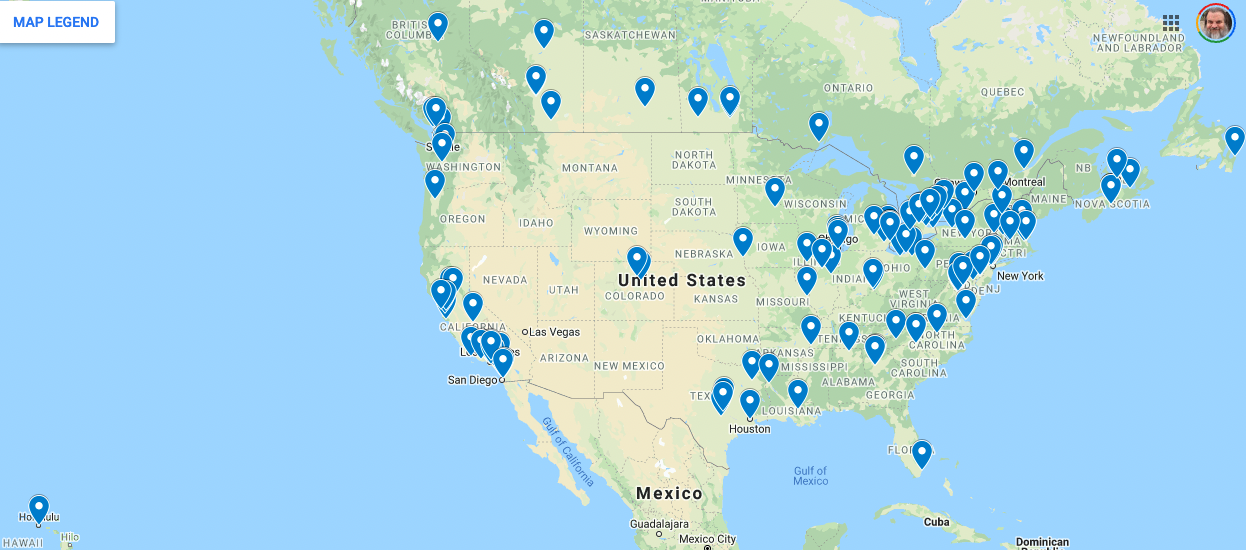
Second, I did a quick and dirty Google Map of the latest data:
Now it looks like the shift online is geographically widely distributed. The American northeast, west coast, and midwest around Ohio/Michigan have the thickest populations. The south, which didn’t initially respond, is now starting to appear. Across Canada, the toggle terms look to be simply widespread.
Third, while the map might appear to be crowded, these January toggle terms are in a distinct minority within the United States. Out of roughly 4,000 academic institutions, these pandemic shifts represent about 2.4% of the total. The overwhelming majority are either planning for, or are currently conducting, classes face to face. The manner of that in person learning – how much social distancing, where boosters are required, masks, shields, etc.
So it is possible that more campuses will follow suit and throw instruction online. It’s also possible that they won’t, either because their leaders see Omicron peaking, then falling, shortly, or because they deem offering in-person academic experience worth the cost.
That’s it for now. If you hear of any instances of campuses moving classes online this month, please check or add to the open spreadsheet here. And, as always, the comment box stands ready for your responses.
I’d like to start 2022 on a high note. After frantically grading impressive student final projects, I thought I could share some of their work from earlier in the fall semester. Specifically, I’ll describe a teaching game I’ve been developing and that my future of higher education seminar played. It was a terrific experience.
First I’ll quickly explain the game. Second, I’ll sketch out how play unfolded. Lastly I’ll point to some reflections and potential next directions.
One note: the students generously gave me permission to share the course of their play. I will not share their names, noting players instead by their roles. A second note: this is a sketch of a sustained and complicated series of game sessions. Much more went on that this single post can convey. My purpose here is not to be exhaustive, but to introduce how the game worked in late 2021.
I: Matrix University
The game is a matrix game. If you’re unfamiliar with them, they are a mix of tabletop and role-playing games. Players represent people or organizations who can make decisions or carry them out within a given situation. During each turn players attempt to make moves in their roles, writing or talking about their plans. A referee judges each move to see how they play out. What makes a matrix game different from many others is that each player not only has to make a case for why their moves make sense, but other players participate in determining if each move works. The overall result is a kind of collaborative yet competitive storytelling project.
I started making my own matrix game in 2020, a game that simulates the future of a university. Players take on key roles within the institution and each turn represents one academic year.
I envisioned this as a simulation for learning. Students would study their roles and the rules, then apply what they’d learned previously to play. They would also research topics that came up during play. Challenges they ran into could point the way for further study.
I first tested it out on a Georgetown University graduate seminar during fall 2020. You can find more information on matrix games from that link, too.
How I ran it this time: I revised the rules, role descriptions, and campus information, then shared them with students, along with an introduction to matrix games. I assigned them roles based on what I’d learned about them in the course of working together, either giving them positions which spoke to their strengths or which took them out of their comfort zones. Here are the roles we used:
University president
Provost or academic dean
Chair of board of trustees
Humanities faculty members
Science faculty members
Head of student athletics
Non-faculty staff, including the VP for information services (IT + library)
Undergraduate and graduate students
We could have expanded the number of roles in many ways, like adding a social science faculty representative, breaking down staff into different organizations, and so on… but were limited to the actual number of students in the class.
The university in question was fictional, with some goofy details. It’s named Exemplum University, of course, and this science-heavy school’s sports teams are the Particles. It’s a private, 2nd-tier, mid-Atlantic research campus. I chose this institutional type because it was close to the students’ experiences, and because it would be generic enough to apply and derive some general lessons. The 2nd research tier aspect was to set up a plot whereby the president wanted to lead EU into Carnegie 1 status. It was an American campus because we hadn’t had time in the semester to introduce other nations’ post-secondary situations, and I feared doing so as part of the game might overwhelm them.
In fact, each role had its own goals, relationships with other players, and some secret information, which players could decide to share as they saw fit. None of these were very creative. Instead, they were drawn from recent history and with an eye towards being as generic as possible. For example, the science faculty representative had this in their briefing:
Goals
Primary: to steadily grow your research profile.
Secondary: to increase the number of underrepresented populations in your classes and ranks. In particular, this means women in fields other than biology and health, plus blacks, Latinos, and Native Americans in general.
And also
Connections to the rest of campus:
-There are some Two Cultures tensions with humanists. They openly resent the greater share of resources you all tend to receive, especially from outside grants and some high-flying faculty. Additionally, some of your number dislike certain very political humanists.
I also expanded the random events deck to 65 cards. This I did not share beforehand, in order to preserve the element of surprise. The deck was entirely textual and pretty schematic, since I didn’t have time or budget to make the cards look lovely.
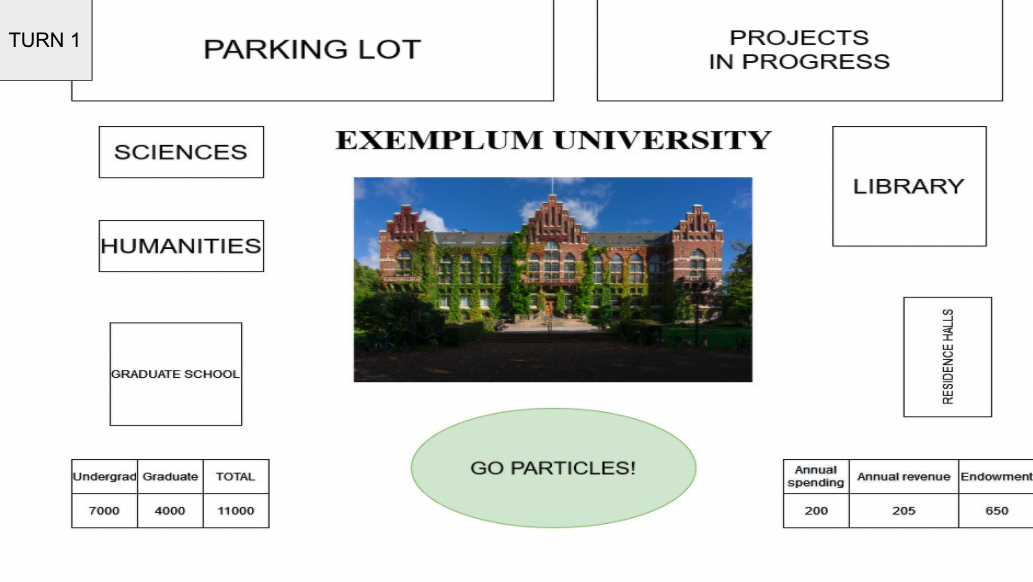
Finally, I shared a revised game board, like so:
You can see that it’s crude, of course, since I’m not a graphic designer nor did I have a budget for same, but it gets across the basic idea: a physical campus and key points of its organization. The parking lot does double duty as the physical parking spaces as well as a mental spot to stash ideas for future consideration. There are also some enrollment and financial metrics to watch. Lots of negative space is there as room for event markers to come, as you’ll see below.
II: The course of play
PREPARATION FOR THE FIRST TURN
As referee/designer/professor I made sure students had a week to read and think about this, while starting to make plans in their roles. I didn’t make any print materials, since some of the students were online (HyFlex classroom!), so instead used Google Sheets to store copies of the board and ready-made markers for events. During the class period I made sure students could ask questions, then gave them a little pep talk and fired up the Sheet on the projector/shared Zoom screen. I made sure the random events deck was ready – i.e., a big Google Doc with each card numbers, and a random number generator open in the next tab.
Then the scheming began.
TURN 1: 2023-2024
Each turn had three steps:
Update on university status.
Update on university and world events.
Player Actions determined, stated, and collectively resolved, each either by collective deliberation or by facilitator ruling. The sequence of players was randomly determined each turn.
On turn 1 the first step was mostly reminding students of EU’s status: enrollment, financials, etc. Then I “rolled” for random events. The first was the appearance of a new science lab, which had been planned before the game began. This boosted the sciences’ reputation on and off campus. I showed this graphically, on the game board, with a little marker (see below). The second event involved the federal Department of Education imposing new reporting structures, demanding that universities supply data on financial and learning outcomes.
Students took all of this in, then started talking with each other. A lot. About half an hour went by as they argued, planned, and politicked. They hobnobbed in the classroom, on Zoom, in the hallway, and on phones. I kept a close eye on them, making myself available for questions. Questions did come: who would I most likely approach for this? Can I really do that? At times the classroom was silent but for frantic typing noises.
Then it was time for their Actions. I “rolled” a player sequence and the president started off, pushing for an expansion to student mental health services while paying for it by cutting back athletics spending. This Action succeeded with much arm-twisting. The student representative managed to get more student workers included in the expanded mental health workforce. Another Action came from the scientist player, who convinced everyone to offer a virology program. The stung athletics director offered one more Action, a partnership with Meta (nee Facebook) to get virtual reality gear and training in order to create VR media of play and players. This succeeded. Everyone else passed.
TURN 2: 2024-2025
I began by updating the game board:
You can see some markers from events and Actions, like the new science lab and VR sports. I adjusted enrollment and financial stats, based in part on randomness and in part on a random event (you’ll see).
But what’s the fiery red box about? Ah, the players didn’t take any Actions to meet the new federal regulations. Washington was not pleased and said as much. (Students were abashed.)
Then I added random events. The first saw the humanities taking a cultural hit, which reduced their reputation in the world and a little bit on campus. The second was a new recession. Hence some of the changes to institutional enrollment and finances.
How did the players respond? After another round of negotiation and planning, the student player went first, floating the idea of expanded student support services, namely mental and academic counseling. Much politicking followed, with players bringing a good sense of their respective roles to bear. The final Action that resulted was to commence fundraising for an interdisciplinary Center of Excellence, which would include some student workers. The athletics director successfully won the hire of a new assistant coach, arguing that the lead coach would have to devote more time to fundraising.
Two other Actions were raised, but didn’t succeed: the creation of a major triennial humanities conference and the creation of a new, integrated data sciences unit.
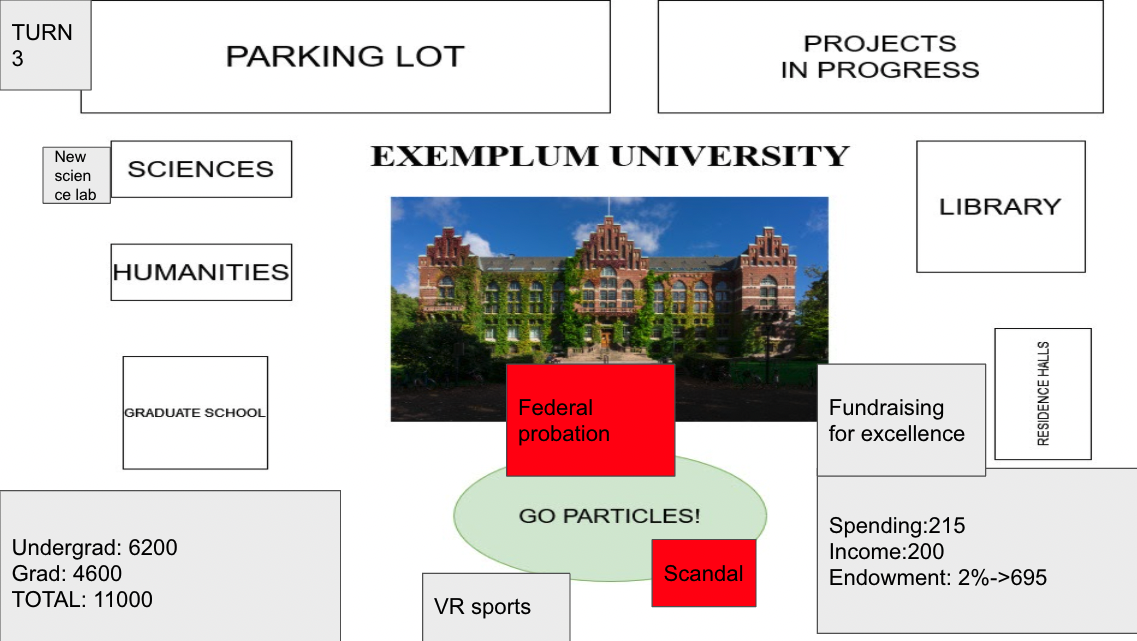
TURN 3: 2025-2026
This began with our update on university status:
You can see the science lab is still attached, as is the VR sports marker. There’s now a fundraising box, showing last turn’s campaign is under way.
But now there are two more fiery red boxes! Ah, the first one is because players failed to take the federal government’s displeasure seriously last turn, so now the Department of Education is threatened sanctions.
The scandal box is from one of the random events, which was a sports scandal. I shared the full story with the athletics player and the president, then left further information sharing up to them. The gist was local media finding out that the football coach was inappropriately getting favors for student-athletes, such favors including alcohol and the service of prostitutes. Additionally, there were charges that the coach tried to suborn faculty members to be extra lenient on student-athletes.
The second random event was less lurid, a 75% increase in library material costs.
Student Actions followed. They resurrected the data initiative from last turn to try addressing federal sanctions. In response to the sports scandal they launched an investigation. [There were several other Actions proposed but failed; my laptop had serious problems then, so my Google Doc of notes also failed at this point, for which I apologize.]
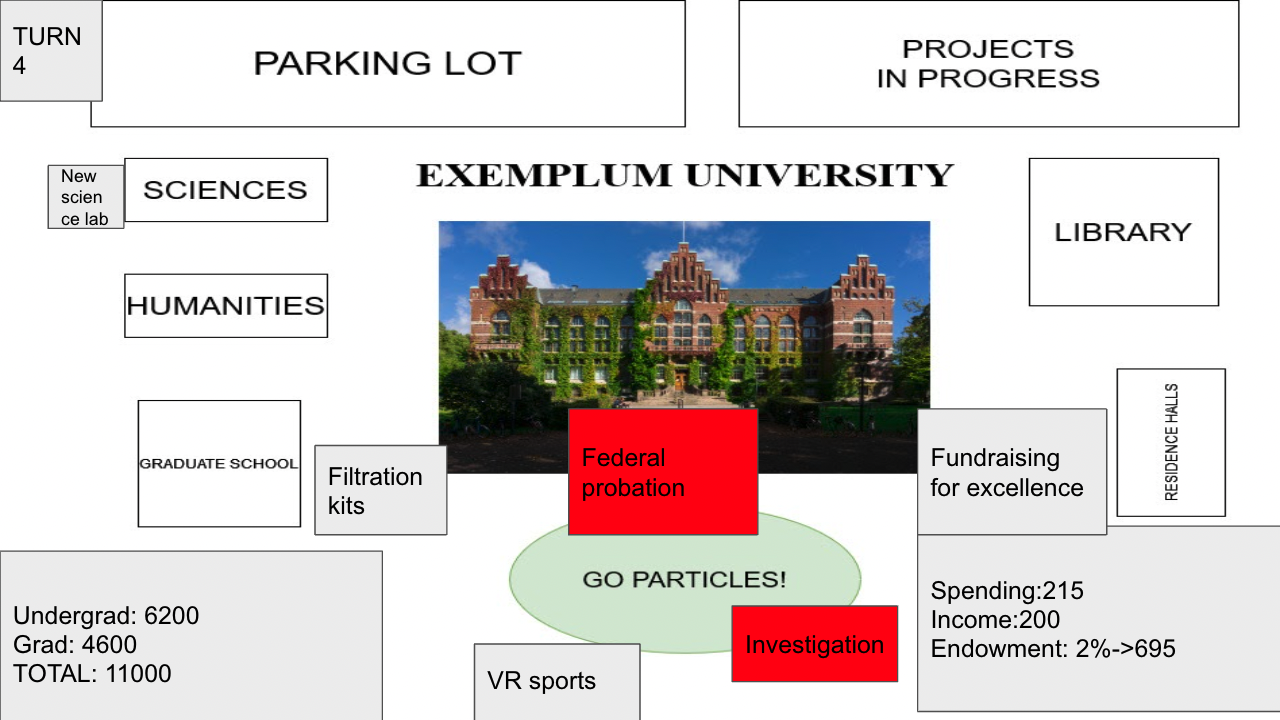
TURN 4: 2026-2027
We began as usual with a campus update:
Some of this is now very familiar to both readers and players, like the fundraising, VR, and science lab markers still in place.
Alas, two fiery boxes again! The feds were not satisfied by EU’s data initiative and want a more expansive operation. You can also see the coach scandal investigation going on.
Speaking of fiery, the climate crisis hit Exemplum in two different events. Repeated heat waves swept over campus, causing some water quality issues and heatstroke deaths. At the same time climate pressures drove migrations away from equatorial nations, creating a massive wave of refugees.
In the player Action phase, the student representative led off by proposing water filtration measures. A lot of politics followed, concluding with a consensus around providing filtration kits to students. (One of the faculty players encouraged the students to strike if they didn’t succeed; the president’s laconic response was “that recommendation will be hard to forget.”) Science faculty successfully won using the athletic department’s Meta VR gear for research purposes. The athletics player convinced faculty to host VR classes.
A lot of energy accompanied discussions about how to deal with the athletics scandal. At one point a consensus emerged to fire the head coach. Then the trustees player threatened to block major donations unless EU kept the (otherwise very popular) coach on.
III: Reflections and what next?
First of all, I was delighted by how deeply students learned and immersed themselves in the game. The presidential player emitted presidential rhetoric with disturbing skill. The provost learned just how much turns on their job, and how fragile it is. The trustee leader managed to yank the consensus around in a realistic yet cynical way.
Second, I enjoyed the students’ reflections. One observed that play humanized institutional structures. Another saw the structure of the game as making all players equal, even within a hierarchy. They wanted to play more rounds, which was gratifying. One suggested running the game through a semester, one turn per class.
Third, I was conscious of game design stresses and problems. Practically, depending on a single, wheezing laptop was obviously a problem (fixed by a hard reboot, but still). I underestimated how much time each turn took, and ended up compressing negotiations too much. I’m not comfortable with how the financial system worked, as students were a bit disconnected from it, discussing money in more abstract terms. Perhaps I should abstract economics out into a track.
Fourth, as much as we enjoyed Exemplum, research universities are only one slice of higher education. There should be scenarios for other institutions: community colleges, liberal arts colleges, state universities, arts colleges, and more.
Fifth, I’d like to game out the ways higher education engages the climate crisis. Should I just build this into event cards, or add more structures? Would it be better to build a separate game focused on the topic, or weave climate into other scenarios? I’m not sure, but would love to hear your thoughts.
So what’s next?
I’d like to take “Matrix University” further. There are a bunch of possibilities. For example, on Twitter PF Anderson and John Farquhar asked how to replicate this game.
Keep developing it with my Georgetown University classes, semester after semester.
Develop scenarios for different institutions and nations.
Set it up as a public, online game. Run it either synchronously or asynchronously. Invite folks to play it for all to see.
Post all materials online in shareable formats to see what the world makes of it.
Host games for academics at workshops or conferences.
Boost the design. Hire someone who actually knows visuals to make things look better. Outsource production of the board, cards, and pieces to produce at least a demo version of a boxed game.
Digitize the thing. Create a computer game version.
Make a solitaire version. Here a player would lead Exemplum University (or whichever campus) through years of challenging crises. The States of Siege game paradigm might be one to built upon.
Much depends on supply (my time and resources) and demand (who’s interested in this? what would they prefer?). What do you think?
And kudos to my very patient, creative, and smart seminar students.
It’s customary at year’s end to look back at one’s career or life over that period. 2021 was a wild year. It came right after an epic 2020. 2022 also looks challenging…
I don’t really have the time this week to write about all of that, since I’m working full tilt through the holiday.
But I can pause on this last day of this year to look back on how this blog fared in 2021. What did it do? What ideas floated to the top? What functions did it serve?
Subjectively, personally, on a qualitative level, I love blogging here. This is a fine place for me to write in ways I don’t do elsewhere, to stretch and explore mentally while also sparking discussion. That’s how we thought about blogs, back in the day… and it still works for me.
But let’s dig into some data. We can start by determining the most popular posts out of 87 entries in 2021:
What does that list tell me? That the majority of these posts concern the pandemic and its impact on higher ed, so that theme is one people value, compared to the rest of the blog. I’m glad some people find the COVID resources post useful. Otherwise, two list items concern challenges to higher ed’s strategy and finance, which is a theme I’ve been working on for a while. One post engaged with tv media. And one is for the book club.
All of that makes sense. The pandemic was a leading item of concern for many people this year, of course, and its impact on higher ed has been important, uneven, difficult to grasp, and harder still to forecast. Now, academic economics is pretty dry and usually not on most people’s radar, but anxiety about costs and debt remains widespread, both within and beyond the academia. The Bill Maher post may have gained traction because the guy’s a media star. The book club… I’m not sure, but perhaps people are more amenable to online group reading than they used to be.
Speaking of the online book club, during 2021 people kept clicking on, linking to, and variously making use of older posts from 2020 on back. For example, the introduction to our Ministry of the Future reading was the single most popular thing on this blog during the past year, even though it went up in late 2020. People also love my second post on giving up caffeine, which I wrote way back in 2013. Which means either a) the long tail is real, b) my 2021 posts were not as interesting as older ones, c) people are gradually catching up with my digital output, or d) I should really focus more on books, food, and health.
Meanwhile, I spent much of 2021 working on Universities on Fire, my book about higher education and the climate crisis. I blogged 18 times about the subject, but those posts haven’t elicited a lot of interest. If we consider them under the broader header of why academia isn’t very engaged with the climate crisis, we could summon up all kinds of reasons: exhaustion; COVID blotting out all else; assigning responsibility for the problem to campus professionals working on that job; etc. For this blog by itself, the topic might be too far off the beam for what folks have come to expect: coronavirus, economics, books. As Heather Short put it during this week’s Future Trends Forum, academia’s Overton Window needs to open up in order to include the climate crisis seriously.
All of that is about posts. Let’s look at conversations on this site more closely. 605 comments graced these digital pages over 2021. That’s nearly seven comments per post or 11.6 comments per week. I’m delighted and grateful that so many of you find this blog a congenial site for discussion.
Note, too, that among those leading posts are not only ones which elicited comments, but are about collaboration. One is about a crowdsourcing project. One’s for the book club, a social initiative. And several are responses to other people. Again, the blog persists as a way for people to think and even work together.
How people get here is interesting and a bit surprising to me:
Search is how people find this blog and its posts. And search means Google, which counted for 55,858 of the 59,470 hits you see above. In contrast, Bing only brought 1,519 eyeball sets here, while duckduckgo.com hauled 1,103, and Yahoo Search a mere 558. I was surprised to see Facebook nudge ahead of Twitter, since I have little professional traction on the former. I’ve been spending more time on LinkedIn, which has yielded some traffic.
Yet back to posts for a moment. 87 posts for the year is also about 1.7 posts per week. That’s a lower frequency than I’d like. Perhaps I’m shifting to writing longer and fewer posts. WordPress says posts average 1021 words apiece. I like the length, but want to write more. Let’s see if I can crack 2 posts/week in 2022.
And that’s it for now, in the last post of 2021. Thank you to readers, subscribers, commentators, and supporters of all kinds. All best wishes to you for a splendid 2022. I’ll see you there.
 Last week The Nation published a review article by Columbia University professor Andrew Delbanco. The piece surveys a range of books about higher education in the present, along with some futures work. Happily, it all starts with my Academia Next:

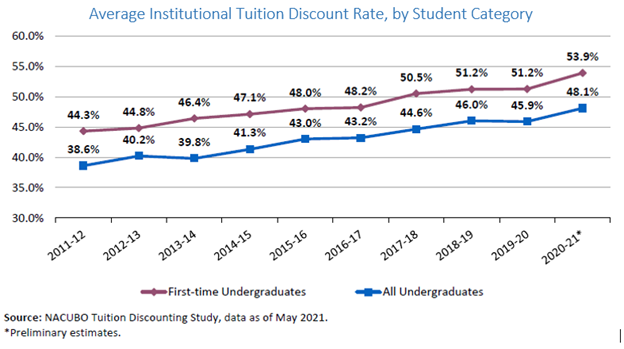
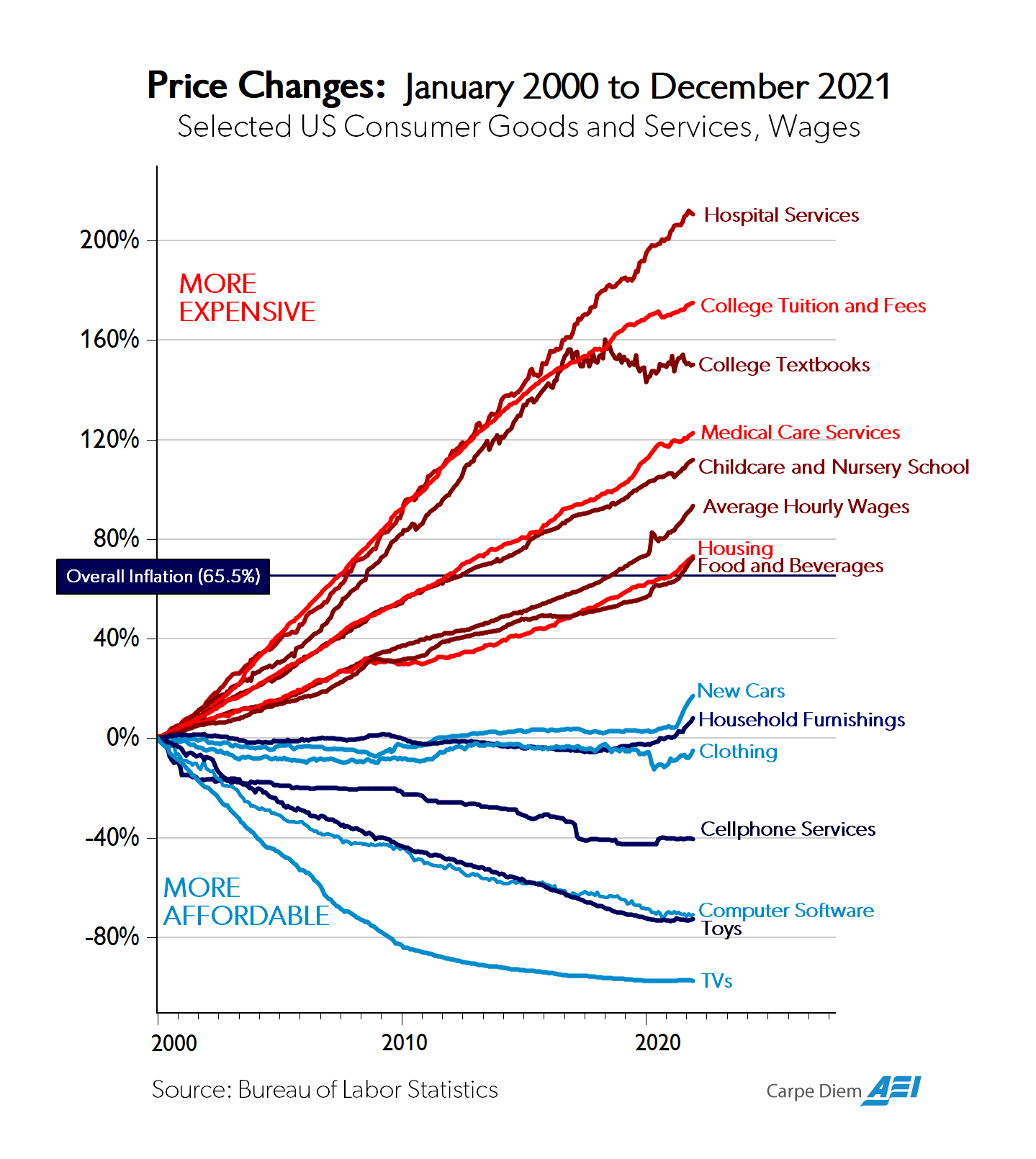
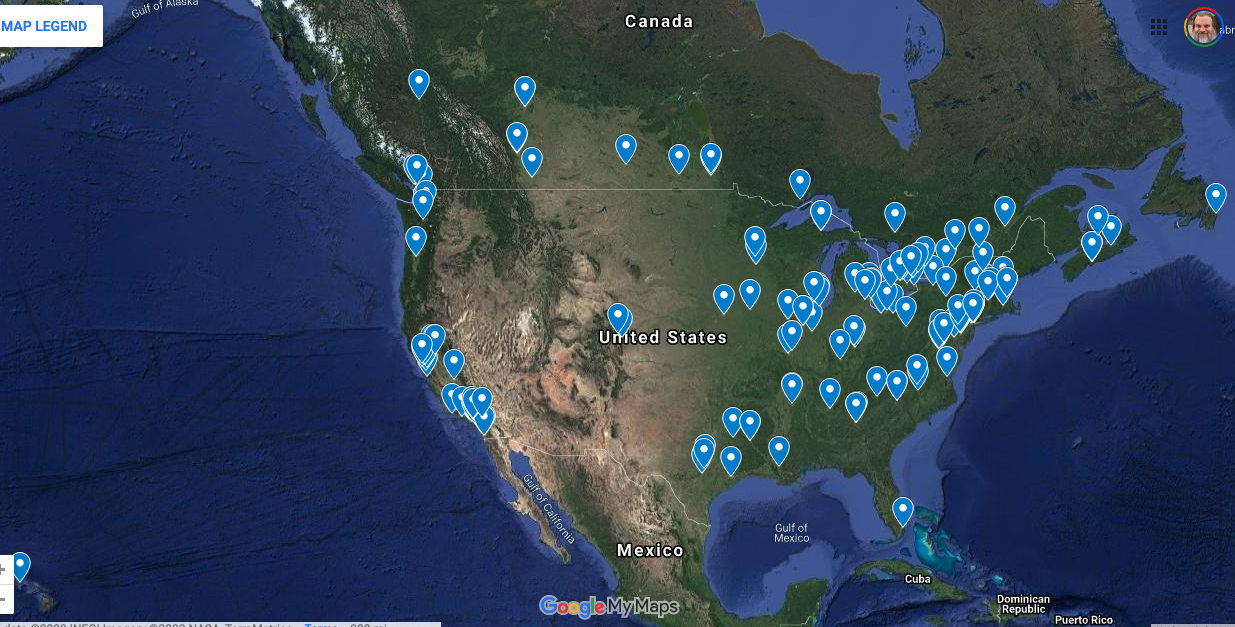
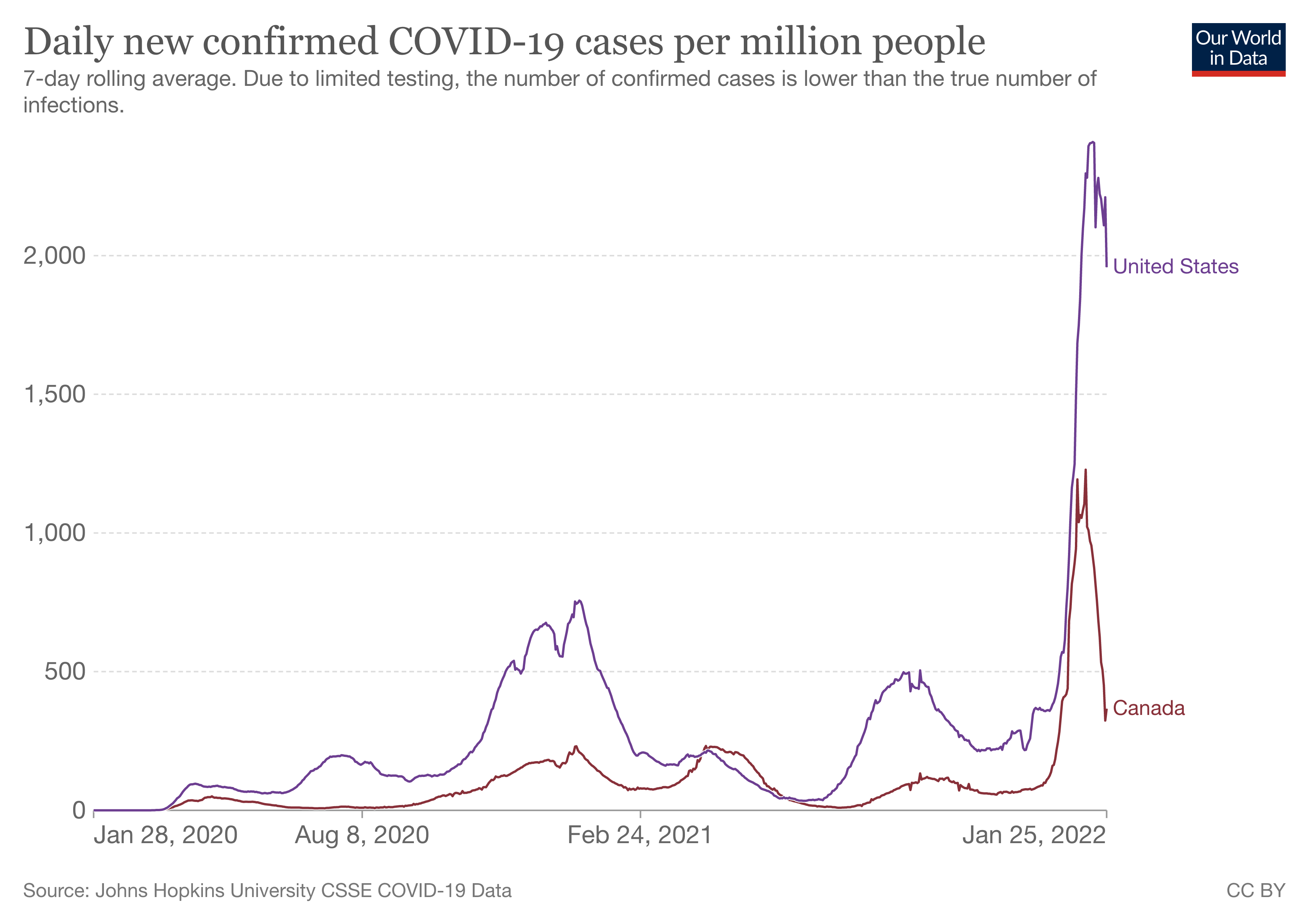
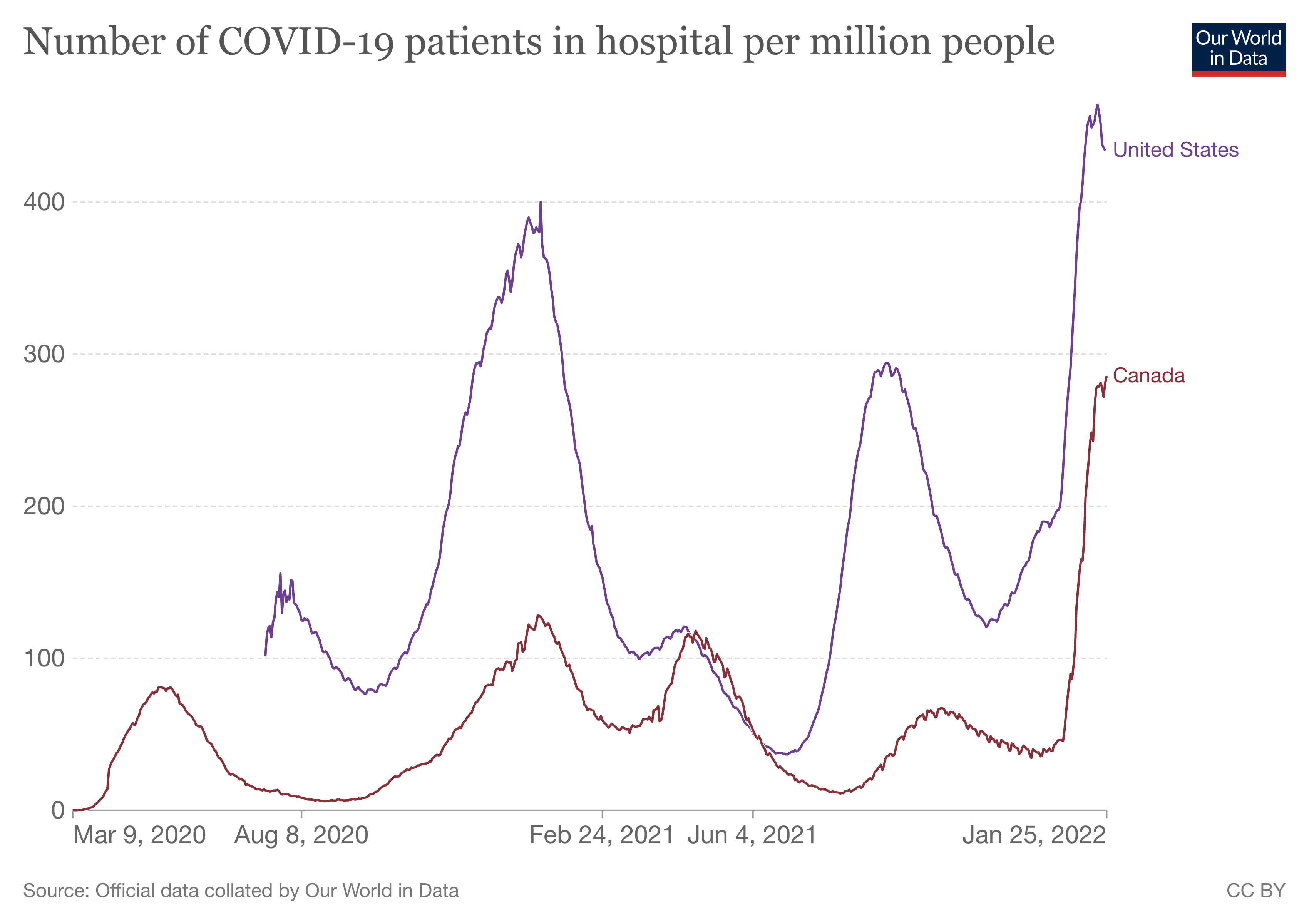
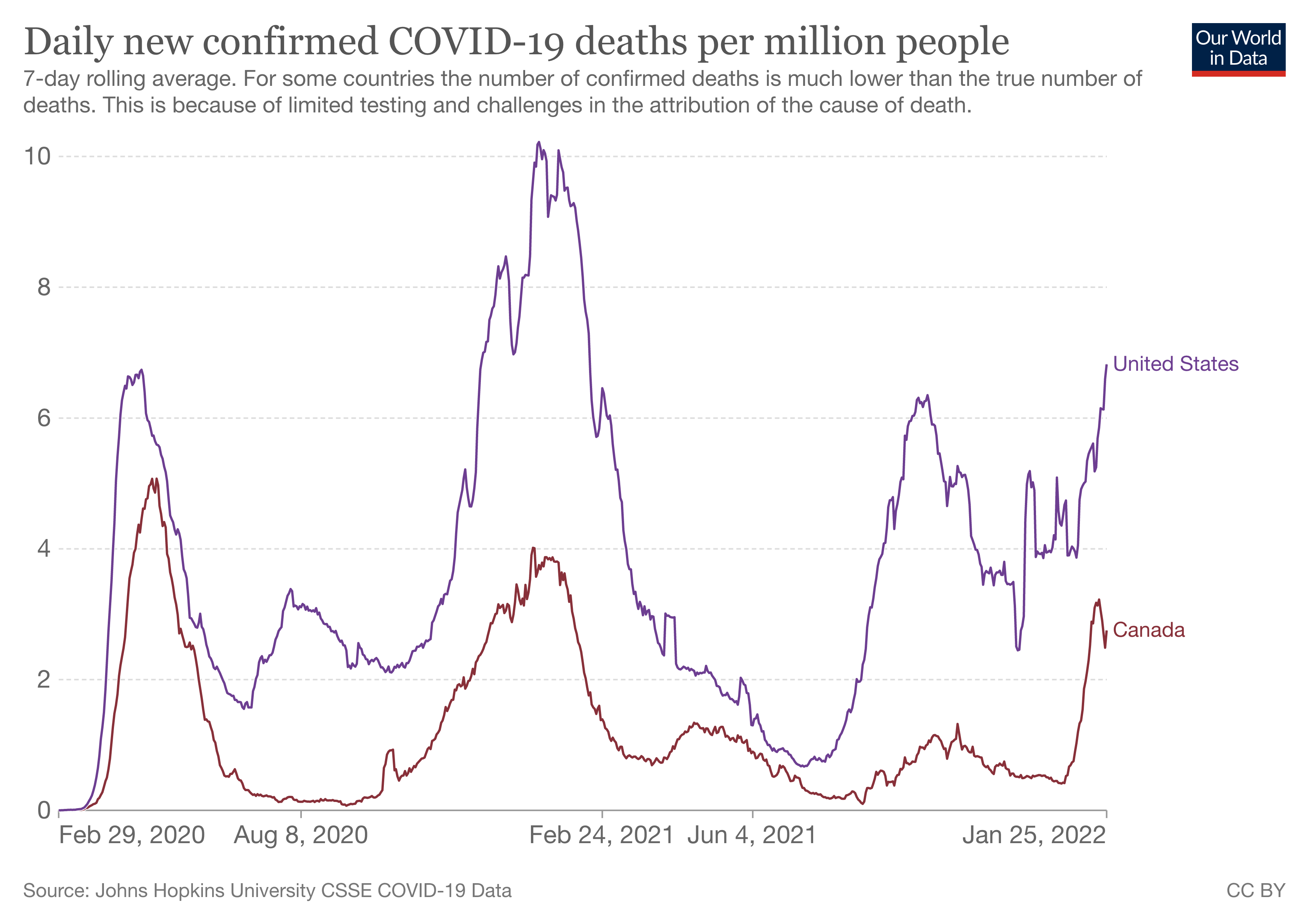
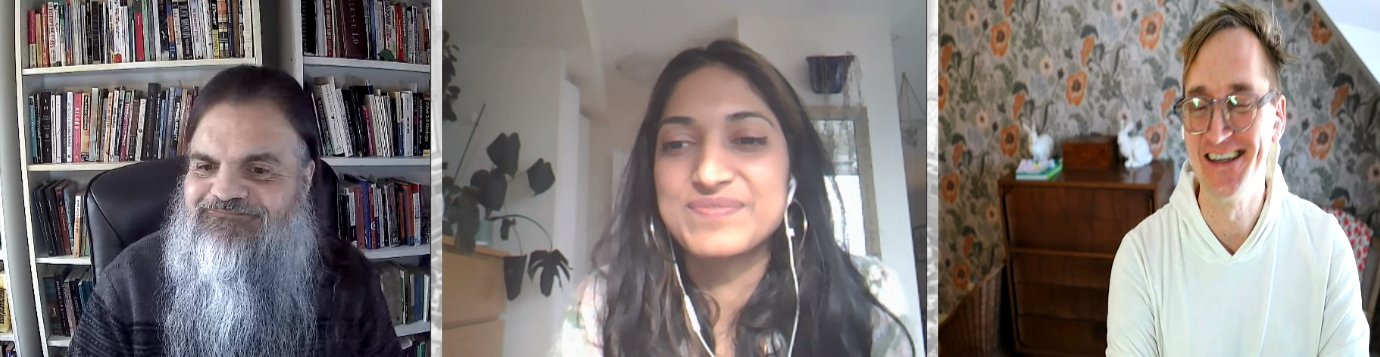
 More practical questions about education and web3:

 The National Student Clearinghouse Research Center has been tracking this closely. They do essential work. They have already released one estimate for fall 2021, which I wrote about