When new ideas boom, bust, then come roaring back: around the U-bend

Lately I’m thinking about the re-emergence of ideas over time.  I’d like to get a better handle on that process, hopefully with a model, and so try to better anticipate when such a thing may occur.

Let me explain.

Most of the time we think of new ideas starting from nothing, then growing through widespread adoption into occupying a significant position in civilization.  For example, powered human airflight: after years of work the Wright Brothers invent a working airplane by themselves, and air travel takes off (ahem) within a generation.

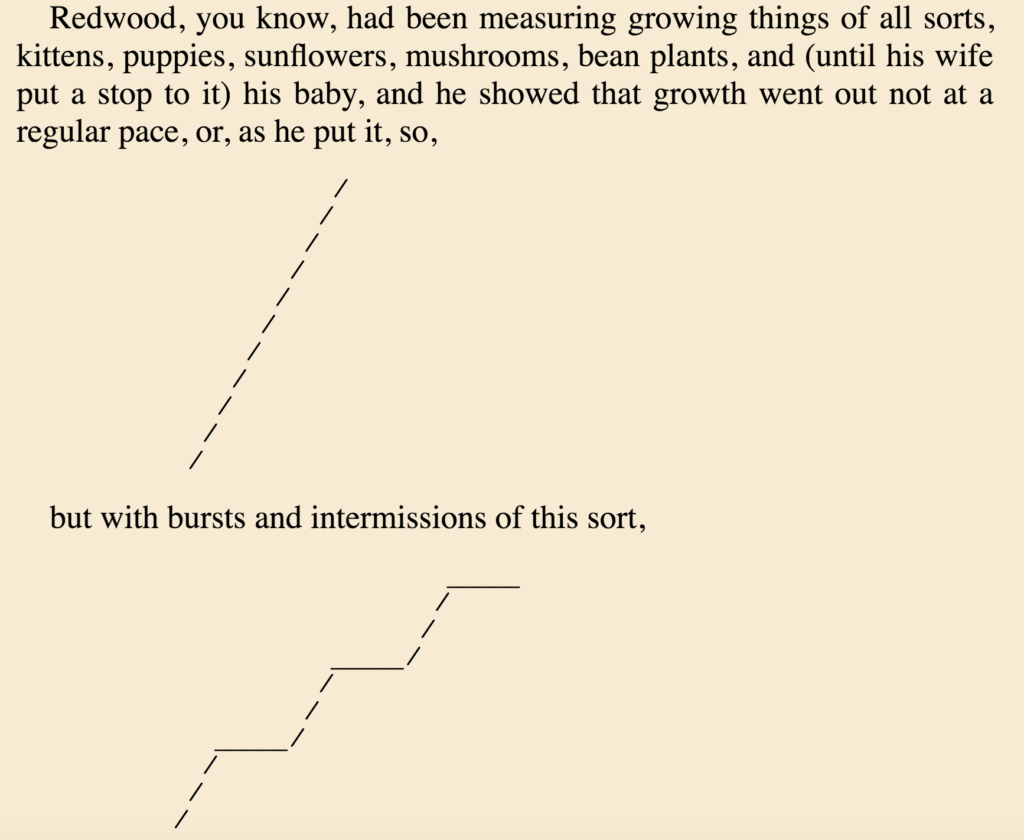
There’s a nice visualization of this pattern in an early chapter of HG Well’s Food of the Gods (1904), where two scientists model biological growth.  In a chart they represent the horizontal access as time, and the vertical for size:

Some of my readers will be familiar with a variation on this, Gartner Research’s famous hype cycle.  That starts off with a rapid growth pattern, changes to a dramatic drop-off, followed potentially by a less impressive, less hyped second growth phase.  I really enjoy this model for its cynicism and actual utility (except for Apple products, which never fall from the peak):

Yet what I have in mind today is a different pattern, one of initial growth, dieback, then a period of larger growth.  In this model some innovations spark then misfire, go dark, then come roaring back years later.

Virtual reality was what triggered this thought for me.  Some of you will remember the excitement around VR in the 1990s.  There was a huge amount of hype, from carnival-style rides to movies to DIY projects.  In 1997 two of students at the University of Michigan built a VR level for a class project in my Gothic cyberspace seminar. Then VR collapsed into a big bust in the late 1990s. (I think this is one reason for Jaron Lanier’s peculiar career as techlasher and bad writer.) Now VR has come back in a second growth phase, bigger than ever before.

Once I saw this pattern, other examples came to mind.

buy elavil online buy elavil no prescription generic

  Computer gaming rose rapidly in the 1970s, then suffered a famous crash in the mid-1980s, at least in North America. Now gaming is one of humanity’s leading culture industries.  AI has gone through multiple hype spikes followed by “winters,” and now is starting to really shake the world

Apart from technology, there are social and cultural examples.  Think of gay rights in America.  After Stonewall the 70s saw a gay and lesbian people start claiming space in popular culture and more openly in everyday life, only to get beaten down in the early 80s, with the double attack of AIDS and a right-wing president.

buy udenafil online buy udenafil no prescription generic

  Yet gay rights has made steady progress since, from decriminalization of gay sex to the gradual legalization of same-sex marriages.

What powers this particular dynamic?  The history of innovation and cultural change offers a rich trove of examples and many different forces.  An idea can be ahead of its time, and only blossoms once social conditions change.  An invention can overpromise and underdeliver, either for internal of external reasons.

buy zithromax online buy zithromax no prescription generic

  Popular taste might shift.  Geoffrey Moore’s Crossing the Chasm (originally 1991) offers many cases of an initial idea failing to go mainstream, primarily by not winning over mainstream populations.

A first wave of growth, followed by a crash, then triumph: what are the best frameworks for thinking about this kind of trajectory?

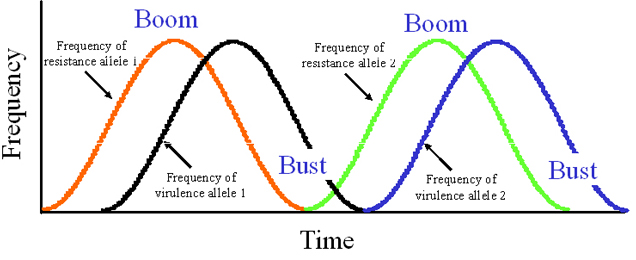
Economics uses boom-bust-boom as a description of the normal business cycle.  Here’s one typical visualization:

Here’s a Wikipedia image for rolling recession:

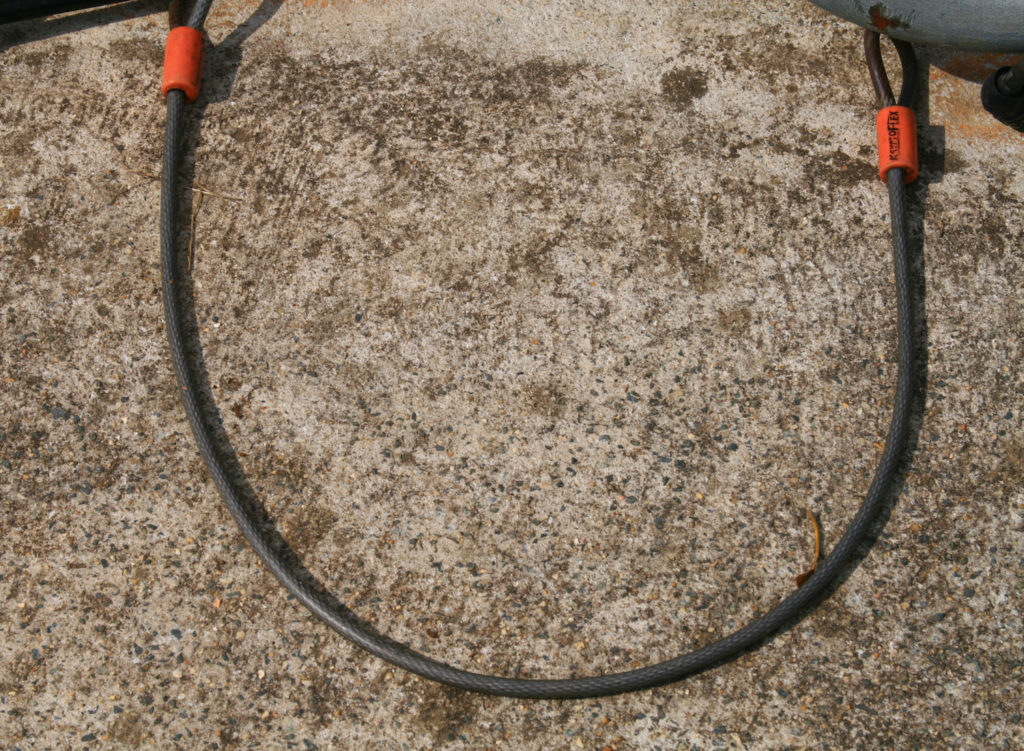
More abstractly, the shape that keeps coming up in my visually challenged brain is of a U-shaped curve.

Maybe a U-bend, as in plumbing.  Textually, I don’t have a good term yet.  Jeffrey Markert tweaked my “boom-bust-boom” phrasing to suggest a lovely alternative, “bloom-bust-boom.”

If this pattern is a real one, I’d like to figure out how to use it in the futures way.  How can we determine if a rising idea or innovation is the first in a two-boom cycle?  Better yet, which busted ideas are getting set to come roaring back?  Which failures can we understand as awaiting a rebirths down the road?

One way is to follow the money.  In her important Technological Revolutions and Financial Capital (2002) Cartlota Perez shows how investment capital drives new tech.  It’s not sexy, but tracking where the money is being sunk should give us a good hint.

Another it to look for changing conditions that an innovation depends on.  For example, if the early 1980s’ spike in Cold War tensions helped quash gay rights, then Gorbachev’s rise and the USSR’s dissolution took that condition away, helping the second phase of gay liberation occur.  On the technological front, VR demands a lot from tech (graphic rendering, memory, bandwidth); the digital ecosystem is now a more congenial space than it was in the 1990s.

Are there other examples of such U-shaped development trajectories?

And which boom-and-busts can you think of that are awaiting their glorious next boom?  A few possibilities:

  • Peer to peer computing (big boom in early 2000s; crushed by copyright and security)
  • Green politics (huge strides in the 60s and 70s; quashed and marginalized effectively by the GOP in the 80s; rising now among the youth)
  • Virtual worlds (think of the meteoric Second Life rise and fall)
  • EDITED TO ADD: Psychedelics had a rapid boom and bust in the 1960s and 70s.  They might be enjoying an uptick now, partly due to the gradual decriminalization of cannabis, partly due to some new activities, like Michael Pollan’s public interest.

What others are out there?

PS: my son offers another take on this U-shaped innovation, one aimed more at an innovator’s morale and general inspiration:

(U-shape photo by ivydawned; thanks to Bill Seitz and Harold Jarche for Twitter conversation; thanks to Eric Hoheisel and Jim Burke for futures reflection)

Posted in futures | 8 Comments

Clouds and networks: reflections on James Bridle’s New Dark Age

I started reading James Bridle’s New Dark Age thinking it was another entry in the recent spate of “techlash” books. The subtitle, Technology and the End of the Future, is a hint. And the book does follow the tradition laid out by Carr, Morozov, Zuboff, Lanier, etc… yet it also heads in some very different directions.  There are some interesting and useful aspects for the future of education.

Bridle New Dark Agetl;dr version – I thought this was going to target Silicon Valley, but instead the book reaches more broadly, seeing our world entering a confused, flailing epoch because of many forces, not just technological ones. It uses cloud as a key term, starting from cloud computing, but inflating it to mean a cloudiness of understanding.

New Dark Age does spend a lot of time criticizing technology. Big data, AI, drones… all come under scrutiny, and in many of the ways critics have been following of late. The digital world threatens privacy and institutions, reproducing racial inequalities and exacerbating economic ones, spreading poor information habits and content, while adding to climate change. These technologies “are potentially catastrophic,” even computer simulations (15; chapter 2). Bridle offers some new ways into these issues, such as tracing the history of computing from British meteorology. His metaphors are fascinating, too, like comparing digitally generated data not to oil, but to atomic power (248-9).

He also follows some observers in finding that human-machine collaboration can be more effective than either people or computers acting alone. A chess legend has made this case, but I’m charmed by the term given to a Google AI protocol: the Optometrist Algorithm (“a stochastic perturbation method combined with human choice”) (99, 160). Michael Greer tweeted that the book is “less dark than the title might imply”, and this is evidence for that view.

So where does New Dark Age branch off?

To begin with, Bridle includes non-technological forces among the drivers of darkness. For example, climate change threatens (among other things!) to erode the physical infrastructure of the digital world, gnawing at cables and data centers (58). Increasing amounts of carbon in the human environment may actually threaten human cognition (73-5). The book sees the digital world making climate change worse, but doesn’t blame the planetary crisis solely on bitcoin mining.

Similarly, Bridle spends time updating us on the crisis afflicting scientific research, noting that the pace of discovery has slowed down in some fields. In the pharma world this is dubbed “Eroom’s Law” (Moore’s Law, with “Moore” spelled backwards). The replication crisis, the shocking inability of researchers to reproduce some key discoveries, is sowing doubt across some fields. Bridle sees some role for tech here (see below), but again, doesn’t ascribe blame solely to silicon.

While most tech critics avoid economics, or simply subsume markets and finance to technology, Bridle actually draws out the importance of huge economic forces. For example, a good passage describing the quiet interweaving of data networks through poor neighborhoods doesn’t see this as an effect of sinister silicon, but as high-powered finance capital at work (106ff). (But see below)

State power: while most tech critics focus on technology companies and either ignore governments or call for their assistance, New Dark Age carefully points out the role of states in driving technology’s negative effects. Chapter 7 in particular dwells on military and intelligence agencies as using digital tools to cloak their operations, while expanding their ability to unjustly probe our own. The conclusion calls out states and allied businesses as imperial and colonial (246-7).

All of these forces, technological and non-, combine to suggest a near-to-mid-term future that is, well, darker than the recent past.  I’m reminded of the great Jane Jacobs’ similarly titled, yet differently diagnosing, last book.

This mix of tech- and non-tech-related forces also come together in Bridle’s modified use of the term “cloud.” Cloud computing is only part of the meaning. Bridle extends the metaphor to describe the ways increased information backfires into reducing knowledge, something that obscures our awareness, that not only hosts content but also blots and obscures. “Nothing is clear anymore, nor can it be.” (72) “Cloud” also means “network” in a similarly detourned sense:

to include us and our technologies in one vast system – to include human and nonhuman agency and understanding, knowing and unknowing, within the same agential soup. (5)

Despite its origins in technology and a setting Bridle dreads, he also finds network thinking to be very positive, done right, as the network “can be a guide to thinking other uncertainties, making such uncertainties visible…” (76)

Network, cloud: Bridle wants us to rethink technology’s language, “re-enchat[ing]… all our tools…” (13) If we think in terms of clouds and networks, understood in New Dark Age terms, we may be better prepared to understand computing and the world it helps shape through a cloud hermeneutics (134).

However, at times New Dark Age overfocuses on technology. The chapter on computing history and simulation, for example, charges technology with being “allied to a concentration of power” (34), yet at that point quietly lets the Cold War military – that immense concentration of power! – off the hook. Bridle’s charge that computation thinking helps us confuse the map for the territory is one that applies to other, also influential fields, such as macroeconomics (dinged for precisely this point in 2008) or the modern state, in James Scott’s analysis. A criticism of digital mapping failures should have noted that people have suffered from non-digital mapping mistakes.* A criticism of finance networks working through spaces occupied by underfunded hospitals doesn’t quite land as a tech problem (110-111). The description of Amazon’s workers being strictly controlled by software somehow misses a century of “scientific management.”** Criticisms of Amazon and Volkswagen focus on tech and leave business, or neoliberalism, off the hook (119-120).

At other times New Dark Age zeroes in on technology’s costs without noting its benefits. A discussion of mapping software correctly notes information that’s left out, but fails to admit the resulting tool is actually quite useful, despite that flaw (35-6). Bridle argues that “computation… occludes the vast inequalities of power that it both relies upon and reproduces,” yet is silent about the way millions use that same computation to expose, understand, and resist power (39). The discussion of mounting problems in scientific research does admit that technology helps correct it:

frauds are also being revealed by a series of connected, network effects: the increasing openness of scientific practice, the application of technology to the analysis of scientific publications, and the increasing willingness of other scientists – particularly junior ones – to challenge results. (88)

One page complains that new taxi drivers in London can get up to speed on that city’s road system more quickly than they did in the past, and it’s not clear that this is a bad thing. (119) To be fair, Bridle allows that some of us see the internet as “allow[ing] many to realize and express themselves”… only to damn the entire thing by concluding that our use of the net is for ends “overwhelmingly violent and destructive.” (229) No evidence is adduced for this claim.

Further, Bridle’s account of information problems – overload, a lack of consensus reality, conspiracies flourishing – admits no existing way for us to address them, which misses key realities. Media/information/digital literacy makes no appearance, nor do librarians. This lacuna may help explain a contradiction in the book’s information discussion, as at certain points Dark Age argues that the digital world has shattered consensus, while at others claiming computation thinking forces us into artificially constrained, single, too simple thoughts (44).

There are also some curiously too-quick dismissals. Bridle slams geoengineering and new developments in material science in less than a sentence, without citation (64). Hollywood is paranoid, but it’s not clear what that means (130). The charge that tech companies “are still predominantly white” (143-4) manages to ignore the large numbers of Asians in those firms, disproportionate to their representation in the general population. An early chapter makes good use of an 1884 Ruskin lecture, but then mistakingly sees it describing, rather than anticipating, World War I’s battlefields, a generation later (195).

Overall, recommended, for all of its flaws.  The book offers a different take on technology in the world from today’s techlash.

*In one margin I jotted down a note about the Donner Party, misled by Hastings’ Emigrants’ Guide to Oregon and California, because that’s how I think.
**In Zamiatin’s great dystopia We the doomed denizens must conform many physical activities to Taylorist strictures.

(an early version of this posted to Goodreads)

Posted in futures, readings | Leave a comment

The partisan divide widens over American higher education, and it may cost us

Americans are increasing critical of higher education, according to new Pew Research.  That actually means Republicans.

This has important implications for the future of post-secondary education in the United States.

buy zenegra online buy zenegra no prescription generic

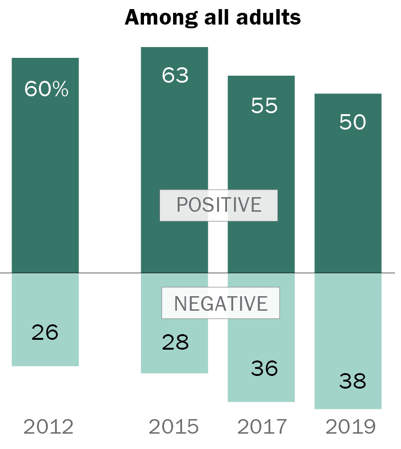
First, the overall finding of declining academic reputation:

only half of American adults think colleges and universities are having a positive effect on the way things are going in the country these days. About four-in-ten (38%) say they are having a negative impact – up from 26% in 2012.

That’s a key milestone: only one half of Americans (adults) think higher ed is doing well by the nation.  The negative number isn’t quite so high, but is rising, and now stands at more than one third.

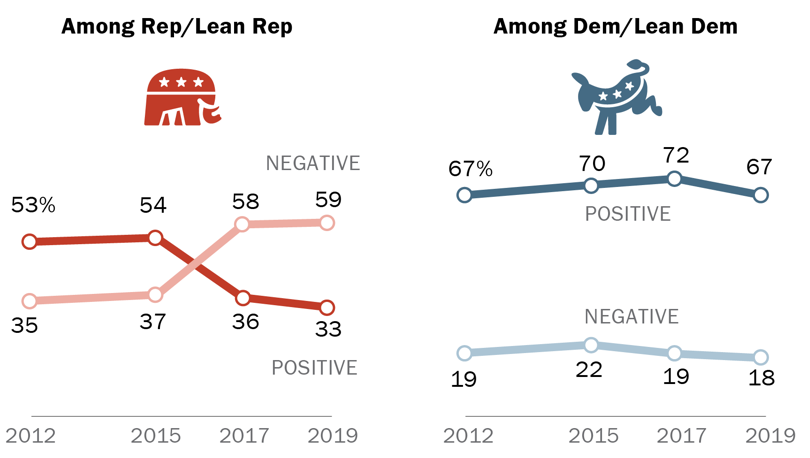
But this is really about one party.  The unnamed Pew study author observes that “[t]he increase in negative views has come almost entirely from Republicans and independents who lean Republican.”  Those views now constitute a majority within the GOP: “From 2015 to 2019, the share saying colleges have a negative effect on the country went from 37% to 59% among this group.”

In contrast, “[o]ver that same period, the views of Democrats and independents who lean Democratic have remained largely stable and overwhelmingly positive.”  That’s despite groups like this and the Obama administration’s continuous pressure on higher ed to reform.

attidues towards college by party_Pew 2019 -party only

This divide breaks out in two interesting ways for Pew.  First, there’s a split over what colleges and universities teach and for what purpose:

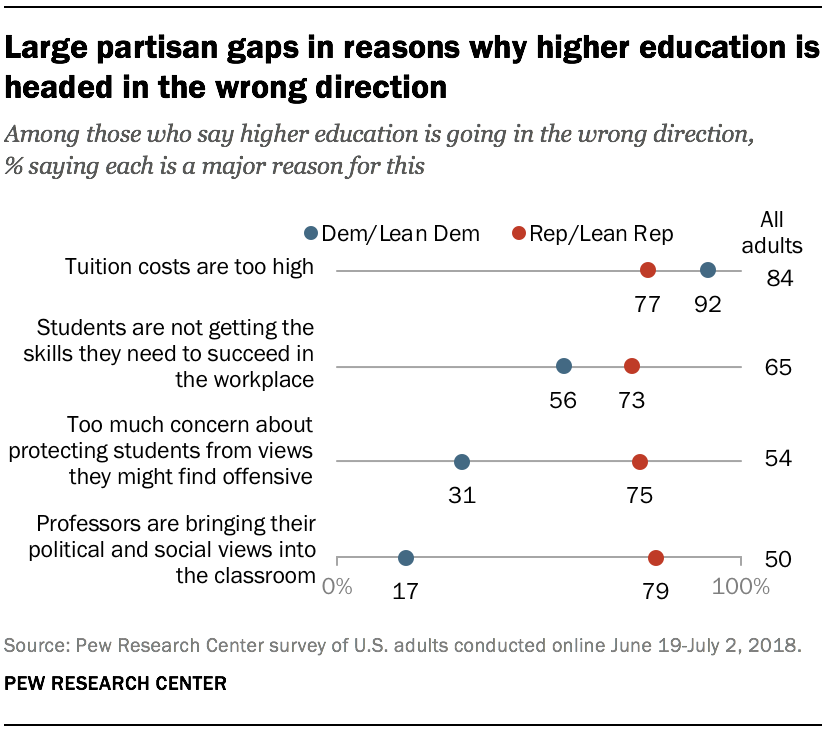
Republicans are more likely than Democrats to say students not getting the skills they need to succeed in the workplace is a major reason why the higher education system is headed in the wrong direction (73% vs. 56%).

Second, there are very different attitudes about college and university faculty members:

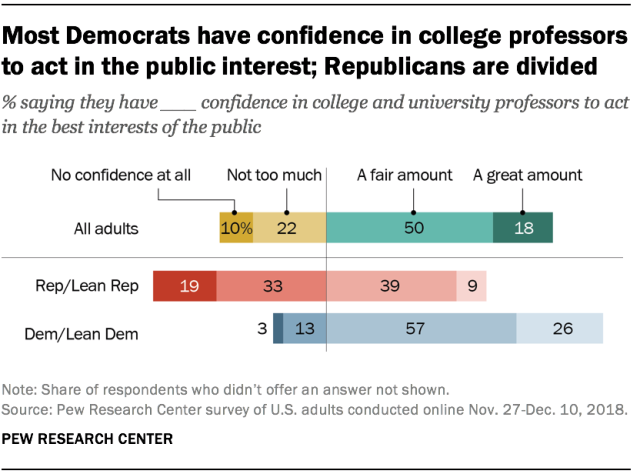
84% of Democrats and independents who lean to the Democratic Party said they have a great deal or a fair amount of confidence in college and university professors to act in the best interests of the public. Only about half (48%) of Republicans and Republican leaners said the same.

attitudes towards college professors_Pew 2019

The biggest divide here is by ideology, as in how people think of profs being political while teaching:

attitudes towards profs by party_Pew 2018

There is also a very large demographic difference among Republicans, which is important to note:

Older Republicans are much more likely than their younger counterparts to point to ideological factors, such as professors bringing their views into the classroom and too much concern about political correctness on campus. For example, 96% of Republicans ages 65 and older who think higher education is headed in the wrong direction say professors bringing their views into the classroom is a major reason for this.

buy suhagra online buy suhagra no prescription generic

Only 58% of Republicans ages 18 to 34 share that view.

I suspect some of this is due to tv news viewing, which is largely the province of people over 65.  However, one of my flaws in horizon-scanning is that I refuse to watch tv news.  I would not be surprised to see that Fox News relentlessly shows stories about liberal profs and revolting students.  Can any reader confirm or debunk my hypothesis?

So why does this matter to the future of education, and to you?

It means we could expect rising Republican pressure on higher education in many forms.  Historically, we know that includes: efforts to cut state funding to public universities; introducing state laws to do various things to curriculum and academic labor; scoring political points by criticizing select stories from higher ed; greater support for religious campuses.  For the last point we can see evidence in North Carolina, where Republican legislators are considering directing cybersecurity funds away from public universities and towards a small, private, and very religious campus.  (thanks to Linda Burns for sharing that one)

On the flipside, we might expect Republicans to seek more funding for vocational and technical education, likely by redirecting it from universities.

The dislike of faculty can lead to more criticism of and attacks on professors who do public intellectual work.  It also hamstrings any chance of public universities to try rebuilding tenure.  This may have very bad human costs.

The curricular focus of Republican ire is also important.  Conceivably we could see Republicans on private college boards and in state government lean on campuses to defund the fields they don’t like – i.e., the humanities in general, or women’s studies/ethnic studies/etc. in particular.

I’m not sure how Democrats will respond.  On the one hand, they are likely to react defensively, given high levels of partisanship, not to mention close links between education levels and voting Democratic.  On the other hand, many Dems are still critical of higher ed.  Note the majority who think colleges and universities aren’t doing enough to equip students for work, not to mention the 92% who think tuition is too high.

buy premarin online buy premarin no prescription generic

  If Democrats do leap to the defense of academia, Republicans can ramp up their opposition, and academia rises to the top of vigorously fought culture wars.

buy fluoxetine online buy fluoxetine no prescription generic

For academics, this means increasing pressure on top of what we’re already experiencing.  That could play out in increasing acrimony on campuses (classrooms to department meetings), governance, budgeting, and long-term strategy.

Posted in research topics | 11 Comments

Getting ready for my fall seminar on the future of higher education

Next week I will start teaching two graduate seminars in Georgetown University’s Learning, Design, and Technology program.  I’d like to share my plans with you all as part of my commitment to transparency in practice.

Last week I introduced the technology and innovation seminar.  Today I’ll describe the other classes, Studies in Higher Education: the future of higher education (LDES 703 – 01).

Now, it’s not the first time I’ve taught this topic.  Last fall I taught the first version. This year’s version builds on that one, based on student feedback and what I’ve learned by teaching other classes in the LDT program.

Here’s the introduction from my syllabus:

What is the future of higher education?

In this seminar we explore that deep question through a range of approaches.  To begin with, the class introduces futures thinking in multiple forms: environmental scanning, scenario design, and the Delphi process.  We also draw on a variety of academic disciplines to explore the full range of academia’s possibilities, including design thinking, critical higher education studies, demographics, sociology, technology studies, and imaginative literature.

The class will explore the varied and complex forces reshaping higher education. We start with change drivers outside of academia, including demographic, macroeconomic, and policy trends. We then address forces within higher education, such as new credentials, enrollment changes, the role of the library, tuition, and access. Next we dig into digital technologies and their impact on colleges and universities. For final projects students will produce scenarios for possible future campuses.

Our goals:

-To introduce futures thinking and methods

-To develop a range of possibilities for postsecondary learning

-To expand your interdisciplinary knowledge

What work will students conduct?

  • Seminar discussion. The focus of each class period is thoughtful reflection and conversation about that week’s topic and materials.  We expect each student to contribute to the discussion, participating in a way that advances our collective understanding.
  • Horizon scanning. We will scan for relevant, future-oriented stories and signals throughout the semester.  Each week you should look both for general items, as well as for content germane to that class topic.
  • Online discussion. Each week students will respond to our topic and materials through an asynchronous technology, such as Georgetown University’s learning management system or through class blogs.  (We will decide which technology during our first class session, and may well adjust things during the term.)
  • Selecting several readings and a topic.
  • Mid-term project: this is analysis of two future trends. You can draw them from any domain, but the two should not be closely related (i.e., don’t pick open education resources and open access in scholarly publication).  Length: aim for 700-1000 words.  You may compose this as an essay, or in another medium, such as a video, an audio file, or an augmented reality document.
  • Mid-term project: here you write a strategy recommendation to a college or university of your creation. Consider and address your audience carefully.  Length: aim for 700-1000 words. You may compose this as an essay, or in another medium, such as a video, an audio file, or an augmented reality document.
  • Final project: based on your class work, model a future university or college. Please be creative with your choice of presentational platform – i.e., consider creating a game, video, audio file, etc. At the same time this must be academically rigorous.  You can use several objects to combine these goals, such as publishing a website for a hypothetical campus, in addition to a pdf reflection.

Here’s the schedule for the semester:

August 29

Topic: Introductions: you, class

Designing the class: technology, community

September 5

Topic: higher education and the future

Readings:

  1. Tressie McMillan Cottom, “The Education Gospel” (introduction to Lower Ed: The Troubling Rise of For-Profit Colleges in the New Economy)
  2. Alexander, “Apprehending the Future: Emerging Technologies, from Science Fiction to Campus Reality” (https://er.educause.edu/articles/2009/5/apprehending-the-future-emerging-technologies–from-science-fiction-to-campus-reality)
  3. AAC&U, “Misconceptions about Today’s College Students” (https://www.aacu.org/aacu-news/newsletter/2018/november/facts-figures)
  4. “Horizon Report: 2018 Higher Education Edition” (https://library.educause.edu/resources/2018/8/2018-nmc-horizon-report)

Forecasting method: Delphi

September 12

Topic: how colleges and universities work

Readings:

  1. Brian C. Mitchell and W. Joseph King, How to Run a College A Practical Guide for Trustees, Faculty, Administrators, and Policymakers, Introduction, chapters 1-6
  2. The past week from Inside Higher Ed, the Chronicle of Higher Education, and selected blogs and Twitter feeds

Forecasting method: horizon scanning

September 19

Topic: signals on higher ed’s horizon

Readings:

  1. Brian C. Mitchell and W. Joseph King, How to Run a College A Practical Guide for Trustees, Faculty, Administrators, and Policymakers, chapters 7-9
  2. horizon scanning: the past week from Inside Higher Ed, the Chronicle of Higher Education, and selected blogs and Twitter feeds
  3. Vernor Vinge, “Fast Times at Fairmont High”

September 26

Topic: narrating the future

Readings:

  1. Organization for Economic Co-operation and Development, “Scenarios for the Future of Schooling” (https://www.oecd.org/site/schoolingfortomorrowknowledgebase/futuresthinking/scenarios/38967594.pdf)
  2. World Economic Forum, “Eight Futures of Work Scenarios and their Implications” http://www3.weforum.org/docs/WEF_FOW_Eight_Futures.pdf
  3. Nathan D. Grawe, Demographics and the Demand for Higher Education, chapters 1-3
  4. horizon scanning

Forecasting method: scenarios

October 3

Topic: demographics and education

Readings:

  1. Nathan D. Grawe, Demographics and the Demand for Higher Education, chapters 4-11
  2. horizon scanning

October 4

MID-TERM PROJECT DUE: Trends analysis, 700-1000 words

October 10

Topic: education and technology, 1

Readings:

  1. Isaac Asimov, “The Fun They Had”
  2. Maria Sachiko Cecire, “Massively Open”
  3. Martin Weller, 25 Years of EdTech (http://blog.edtechie.net/category/25yearsedtech/)
  4. World Economic Forum, “The Future of Jobs Report 2018” (http://www3.weforum.org/docs/WEF_Future_of_Jobs_2018.pdf)
  5. horizon scanning

October 17

Topic: education and technology, 2

Readings:

  1. Karl Schroeder, “Noon in the Antilibrary” (https://www.technologyreview.com/s/611829/noon-in-the-antilibrary/)
  2. Student-selected readings
  3. horizon scanning

October 24

Topic: race, gender, and profit in higher education

Readings:

  1. Tressie McMillan Cottom, the rest of Lower Ed: The Troubling Rise of For-Profit Colleges in the New Economy
  2. horizon scanning

October 31

Topic: the uses of imagination

Readings:

  1. Hernan Ortiz, “The Punishment Room” (https://www.edsurge.com/news/2016-07-07-fiction-the-punishment-room)
  2. Padgett, “Mimsy Were The Borogoves.”
  3. Suzette Haden Elgin, “For The Sake Of Grace”
  4. Saxey, “Not Smart, Not Clever” (https://www.apex-magazine.com/not-smart-not-clever/)
  5. Stanford 2025 (http://www.stanford2025.com/; scroll down)
  6. horizon scanning

November 7

Topic: the uses of imagination

Readings: student selected readings and other media

November 8

MID-TERM PROJECT DUE: A strategy recommendation to a college or university of your creation, 700-1000 words

November 14

Topic: AI

Readings:

  1. Charles Fadel, Wayne Holmes, Maya Bialik, Artificial Intelligence In Education: Promises and Implications for Teaching and Learning
  2. AI-related horizon scanning

November 21

Topic: determined by the class

Readings: “ “ “ “

November 28: THANKSGIVING. BREAK

December 5

Presentations and feedback for final projects

December X

FINAL PROJECT DUE

It’s an ambitious, hard-charging class.  I’m really looking forward to it.

Posted in teaching | 9 Comments

Teaching a graduate seminar on technology and innovation

In a couple of weeks I’ll start teaching two graduate seminars in Georgetown University’s Learning, Design, and Technology program.  I’d like to share my plans with you all as part of my commitment to transparency in practice.

Today I’ll describe one of the classes, Technology and Innovation in Higher Education  (LDES 502 – 01).

This one is a deep dive into, well, technology and innovation.  We’ll approach the topic from multiple views and disciplinary frameworks, including history, social justice, economics, medicine, sociology, critical theory, and science fiction.  Obviously the field is enormous, so I’ve had to focus on what could fit in a single semester.  I’m also relying on what students will be learning in other LDT classwork and experience.  I wanted to pick readings they were unlikely to have already encountered.

As per my usual practice, this is a very student-centered class.  Students get to shape some class content and policies, democratically: several readings; which technology we use for asynchronous communication (Canvas or WordPress or Discourse or Hypothesis); how we should best interact with each other online.  Student writing, thinking, and creativity is crucial.

One key aspect of that student democracy is that they will decide how open the class will be.

buy tadacip online buy tadacip no prescription generic

  Will they choose, for example, to publish their reflections on the open web (through a central class WordPress instance, or an open Discourse, their own blogs on their own domains, etc) or not?  Will the students appreciate my blogging about the class?  Such decisions occur on the first day (see below) and will probably be tweaked in subsequent weeeks.

Readings include:

  • Brian Arthur, The Nature of Technology: What It Is and How It Evolves.
  • Ruha Benjamin, Race After Technology: Abolitionist Tools for the New Jim Code.
  • Jon Gernter, The Idea Factory: Bell Labs and the Great Age of American Innovation.
  • Everett M. Rogers, Diffusion of Innovations, 5th Edition.
  • David Staley, Alternative Universities: Speculative Design for Innovation in Higher Education.

Other readings are available online, either through the open web or ereserves.  There are also a handful of recommended texts:

  • James Bridle, New Dark Age: Technology and the End of the Future.
  • Charles Fadel, Wayne Holmes, Maya Bialik, Artificial Intelligence In Education: Promises and Implications for Teaching and Learning.
  • Shoshana Zuboff, Surveillance Capitalism: The Fight for a Human Future at the New Frontier of Power.  (We read and discussed this one in our book club)

SCHEDULE

September 3

Topic: Introductions: you, the class
Designing the class: technology, community
Reading: Staley, Alternative Universities*

September 10

Topic: The process of innovation, 1
Reading: Rogers, Diffusion of Innovations, selections  

September 17

Topic: The process of innovation, 2
Reading: Rogers, Diffusion of Innovations, selections  

September 24

Topic: Disruptive innovation
Readings:
-Christensen, Raynor, McDonald, “What Is Disruptive Innovation?”
-Lepore, “The Disruption Machine”

October 1

Topic: Theorizing technology, 1
Readings:
-Benjamin, “The Work of Art in the Age of Mechanical Reproduction”

-Arthur, The Nature of Technology, selections

October 8

Topic: Imagining innovation
Readings:
-Forster, “The Machine Stops” 
-Haraway, TBA
-Bush, “As We May Think”
-Schroeder, “Noon in the Antilibrary”

October 11      MIDTERM PROJECT #1 DUE

October 15

Topic: Theorizing technology, 2
Readings:
-Heidegger, “The Question Concerning Technology”
-Arthur,
The Nature of Technology, selections

October 22

Topic: The innovation of innovation
Readings:
-Gawande, “Slow Ideas”
-Rosen, prelude and first chapter of
The Most Powerful Idea in the World
-Student selections

October 29

Topic: Justice and innovation, 1
Reading: Benjamin, Race After Technology: Abolitionist Tools for the New Jim Code, selections.

November 5

Topic: Justice and innovation, 2
Reading: Benjamin, Race After Technology: Abolitionist Tools for the New Jim Code, selections.

November 8: MIDTERM PROJECT #2 DUE

November 12

Topic: Case studies, 1
Readings:
-Gernter,
The Idea Factory, selections.
-Student examples

November 19

Topic: Case studies, 2
Readings:
-Gernter,
The Idea Factory, selections.
-Student examples

November 26

Topic: student work
Readings: determined by students

December 3

Presentations and feedback on final projects

December X:   FINAL PROJECT DUE

SOME CLASS POLICIES:

COURSE DESCRIPTION

…Pedagogically this class combines project-based learning, discussion, constructivism, and educational technology.  You will each play a key role in creating and sharing meaning – collaboratively – as we explore this subject together.  The class is yours, and so you have a say in how it goes and is shaped.

There is also a strong meta- level to this class, since we are using technologies to learn as we think about the same.

buy clomiphene online buy clomiphene no prescription generic

  You are all encouraged to reflect on this dynamic.

buy zydena online buy zydena no prescription generic

Our goals:

  • to advance your thinking about innovation and technology
  • encouraging your creative practice
  • expanding your interdisciplinary knowledge

STUDENT WORK

Students will engage with the class through several ways:

  • Seminar discussion. The focus of each class period is thoughtful reflection and conversation about that week’s topic and materials.  We expect each student to contribute to the discussion, participating in a way that advances our collective understanding.
  • Online discussion. Each week students will respond to our topic and materials through an asynchronous technology, such as Georgetown University’s learning management system or through class blogs.  (We will decide which technology during our first class session, and may well adjust things during the term.)
  • Selecting several readings and a topic. This includes preparing to facilitate class discussion – i.e., raising good questions, identifying key points.
  • Mid-term project, 1: a short (900 word) analysis of a currently emerging technology or other innovation, in light of class readings and discussion so far.
  • Mid-term project, 2: this is an annotated bibliography aimed at a final project. Each student will assemble and analyze a series of scholarly materials for their project, including readings that address the subject, as well as those that describe its technological medium.
    buy symbicort online buy symbicort no prescription generic

      Materials should focus on scholarly articles and books, as well as items in other media (video, audio, web pages, etc.). Aim for twenty (20) items.

  • Final project: an analysis of one technological innovation, either current (emerging) or historical, with an emphasis on its educational implications. Please be creative with your choice of presentational platform – i.e., consider creating a game, video, audio file, etc. – although I would prefer something asynchronously experienced. At the same time this must be academically rigorous – i.e., making an argument with a thesis, supporting it with evidence, engaging with current discussions on the topic, addressing counterarguments.  You will present on your project in process to the class on the seminar’s last day, and we’ll discuss it informally before then.

…and that’s the plan.  Next up I’ll share stuff about my other class, the seminar on higher education’s future.

PS: Classes sometimes appear as grand designs emanating from a single faculty member’s mind, as per copyright theory or the Romantic idea of creativity, but that’s not the case here.  I’m teaching a class that LDT program faculty members invented and developed.  A wide range of students offered their thoughts about the seminar.  Many friends and social media contacts suggested a range of practices and materials.  I owe them all a debt of gratitude.

*It might seem weird to expect students to read Staley’s entire (and excellent) book for the first day, but they already had to read it for a pre-semester mini-class.

Posted in teaching | 4 Comments

How far will digital video go?

In 2019 the growth of digital video looks like one enormous and steady trend.  We see video appear wherever we can wrangle a screen, from smartphones to large screen tvs to the backs of passenger airplane seats and the fronts of gas station pumps.  Video is also taking a growing variety of forms: streaming tv, live-streaming gaming, person-to-person video, large webinars, cutscenes within video games, animated gifs, and more.

video camera_Tom WoodwardSo how far will digital video go?

Let’s look ahead and stretch our imagination.

First, what would a world of total video look like? Second, what would pause or reverse the growth of digital video?

See what you imagine.

Total video

Let’s envision video as our default setting in life.  In this future we prefer to communicate through video, as opposed to all other mechanisms, so during a given day we participate in videoconferences as often as we check emails or text one another today.  We consume content primarily through video – i.e., we’re watching stuff pretty frequently.  We also make video, either by passive recording (having systems record our lives) or actively creating video content (recording, remixing, editing, sharing).

This has entailed an increase in the amount and variety of video hardware in our lives.  More screens, for starters: on the sides of toys and of buildings, on sidewalks, projected against clouds.  Building interiors – walls, ceilings, floors – display video (ads, information, news, entertainment).  More recording devices appear in our personal environments: cameras, phones, and laptops, yes, but also glasses, drones, watches, jewelry, clothing, cars, bikes.  Closets displays clothing options, based on your habits and its recommendation engine, each item rotating in space (both on you and not) so you can see their look from different directions.  Mirrors in public or private spaces reflects your sleepy self alongside news or entertainment clips (for example).

Thinner, lighter, flexible screens are increasingly reliable, affordable, and present.  Screen size ranges from tiny (the side of a pen) to immense (wall-sized videoconferecing, or city block scale projection).

Screens appear by themselves or as parts of other devices.  Some are static, while others move, such as those attached to telepresence robots.

Naturally, there is an order of magnitude more software and network storage in play.  Just as naturally there is all kinds of friction thanks to competing video standards, players, formats, etc.  It’s not uncommon to see screens displaying error messages or the wrong content.  Hacking is widespread, as per the poor security of the Internet of Things.

Other media have become video-ized.  Static images, from signs to maps to photos, cards to clocks, become animations or short videos.  Audio files increasingly take up video forms, such as images and animations added to podcasts, or art affixed to music tracks.  Computer games are drenched in video, from animations through cutscenes.  Making video by capturing game content – machinima – is widespread.  PowerPoints are mostly a series of video clips.

Other media have also declined in use.  First, they drop off as a proportion of human activity with all media, as measured by minutes spent each day.  Second, they fade in absolute numbers. They don’t disappear, just shuffle to the margin.  Think of the fate of radio as it fell from ruling the media roost in the early 20th century to its present status.
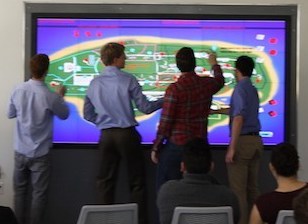
Tangible video is widespread.  These are video interfaces that we can manipulate with our hands.  Think of shared or public touchscreens, for example.  Visit a store in this future and the choices are all displayed by video, with clips representing food, clothing, etc.

buy temovate online buy temovate no prescription generic

; you touch them to get more information, to compare offerings, and to order.  Imagine, too, videowalls in public and private spaces, which passersby adjust through casual gestures, flipping through different channels, pausing, or reshaping.  The Corning “World Made of Glass” video already anticipated this back in 2012, with animations and full on video attending every gesture.

I wrote “tangible” but we should not restrict ourselves to hands and fingers.  Imagine video screens that respond to user voices, either by proximity (moving content across multiple displays towards where watchers actually are) or through content analysis.  Tough screens mounted along or even on sidewalks can display all kinds of content, from illumination to information; they can be triggered by walkers’ presence or gait analysis.

An update of closed circuit tv begins to spread.   In 2019 a good number of cars helpfully show their drivers a close-up view from the machine’s rear, a view normally obscured by the car’s bulk.  There’s interest in giving aircraft pilots a realtime view of what they can’t see from their cockpit (remember the Concorde’s nose?).  Workers in spaces lacking external windows can play videos of the outdoors (scroll down for one post-apocalyptic example here); they are, in turn, examined by managers through video feeds.  Some homeowners use Ring and other technologies to scan for threats to their property, much as hunters deploy game cameras. Let’s extent these practices into the future.  Athletes preparing for a match can watch the competitive space from their locker rooms.  Chefs can scan their customers.  Tractor drivers watch minute ground details through a screen, toggling to check other areas not visible to the eye.  Weather fans check into video feeds from tall building tops, from balloons, ships, or drones, looking for meteorological perspective. Increasing amounts of video screens, capture, and transmission mean a world of closed circuit tv 2.0.

These videos are displaced in space.

buy intagra online buy intagra no prescription generic

  They can also be removed in time.  Think of a restaurant showing a video of food production: not live, but from the most dramatic moments.  Advertising could portray goods and services at other points in their life cycles, and sometimes already do: an auto showroom showing a car being manufactured on an assembly line, a bank displaying borrowers paying of mortgages.  This could extend even further, with an elementary school showing high school or college graduation to inspire its population, a construction company displaying the origin of its materials (mining, forestry, etc).  A circular economy enterprise might use video to demonstrate items being repeatedly recycled, repaired, and upgraded, rather than being replaced.

Thanks to Chris Gilliard for talking through this point with me.

Privacy has eroded, as many people live-stream, archive, and asynchronously record their immediate environment.  Companies continuing in the surveillance capitalism mode use video interactions to gather more data about user behavior, from clicks on menu kiosks to facial recognition of those watching a giant plasma screen.  The more attention we pay to more video interactions, the greater the amount of data we generate.

There will probably be many different responses in play.  Governments should offer regulatory solutions of various kinds (think revenge porn, protecting children, intellectual property shielding), usually long after a given tech and practice are in play.  Businesses will likely sell privacy protection tools, from camouflage clothing and appliances (masks) to drone-blocking drones.  Some of these tools become illegal, and have to be sought in shadowy places.  Individual users try various approaches to share what they want of their lives, while cloaking the rest.

In this world education is a video-first enterprise. Students make videos for class projects, with elementary school kids learning video production as a basic literacy.  There is an awful lot of video content for formal learning.  Informal learning is primarily through videos.

Virtual/augmented/mixed reality is also video first.  We consume a lot of video this way, such as watching a movie scene play across our furniture, or conducting a videoconference via glasses in a moving car.  Video grammar changes to accommodate these technologies, as experiencing 360 video drives different user behavior than flat screens.  Some videos are truly 360 degree affairs, presenting rich surrounds of material, while others use various techniques to nudge our attention to a particular point.  We may also take in a lot of information through AR video: footage of a building’s interior, seen from outside; ads for businesses and real estate as we peer down a city street; agricultural information when we gaze at a field.

For a current example, look at this National Geographic AR demo.  It isn’t entirely video content, but mostly so, and it leads with video:

The AI revolution will boost video, starting by helping create more content, including deepfakes.  AI-driven deepfake detection is also in play.  Backgrounds, minor characters, then major characters appear, followed by plot spinoffs and entire features.  AI also helps users enhance and produce their own content.  Some telepresence robots are guided or driven by AIs. Meanwhile, AI curation could help us navigate this vast sea of stuff to watch.

We inhabit a world of video ecosystems, embedded in and interacting with multiple screens, consuming and creating video.  As a friend of mine once said, provocatively, “video is the new paper.”

What could reverse this?

It seems like the trend of expanding video is enormously powerful.  It’s actually hard to think of what could drag video growth down, but we can speculate.

Audio tracks within video can be a problem in social environments, as overlapping sound typically yields a painful experience.  Unless technological solutions are widely adopted, we might experience cacophony, which might in turn drive us back a bit.

buy azithromycin online buy azithromycin no prescription generic

  Or we’ll get used to silent videos, like animated gifs.

Revulsion at deepfakes could sour us on video, giving us the sense that video isn’t to be trusted.  We could see the opposite of “pictures or it didn’t happen”; if it’s video, it didn’t happen.  Now, all other media as susceptible to such AI-driven faking, if not more so, but people might feel more confident in their ability to detect imposture in images, audio, and text.

Alternatively, we might react or recoil culturally.
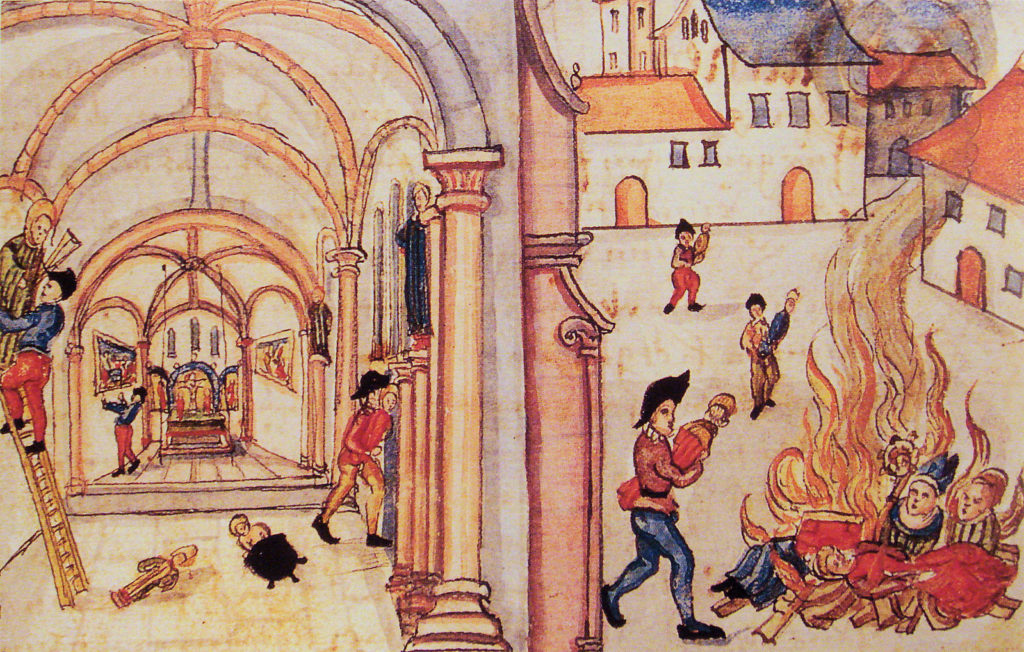
Living with a torrent of images could trigger a modern-day version of iconoclasm.

buy flexeril online buy flexeril no prescription generic

  Critics will likely charge us with living under the sway of video, even to the point of video fetishism.  Our immersion in images might dialectically elicit the desire to rid ourselves of them.  From the start we should expect no-video spaces, video breaks, and perhaps video detoxes, if that meme persists.

Such reaction may go further, arguing that video mediation removes us from immediate experience. Hakim Bey once argued for what he called “immediatism,” a cultural turn in favor of face-to-face experience over mediated communication.  Jerry Mander damned tv as too simple for a complex world, de-education and stupefying us. Some of us might find that way of thinking to be congenial, and start arguing against bathing in so much video. Such a retro belief could take hold through various social mechanisms: intergenerational conflict, for example, with younger folks disdaining the olds’ video obsession, or vice versa.  This could break out by geography (“those city folks and their videos!”), economic class, education level, religious affiliation, or gender.

It could also be driven by spectacle. There’s a fine Ray Bradbury short story, “The Murderer,” about a man who starts sabotaging media devices, starting with radio, in order to regain both silence and face-to-face conversation. We could see playful street art that covers video screens, such as stuck-on venetian blinds or drawn curtains.  Imagine a wave of public videowalls being more aggressively defaced or destroyed – by gunfire, in America.  This could inspire an iconoclastic copycat wave, with enraged activists shattering, painting, stabbing, or burning screens.  An arms race of video protection and demolition techniques would probably ensue.  American tv news will no doubt cover videoclasm with horror and glee.

Violent, specatular, and (naturally) widely shared by video videoclasm might also spark a reaction in the form of nonviolent critique of video (“I’m not one of those screen-smashers, but maybe they do have a point…”). People can adopt new habits to reduce or modify their video exposure, like having their AIs remind them to stop making and/or watching video, or altering their on camera appearance.
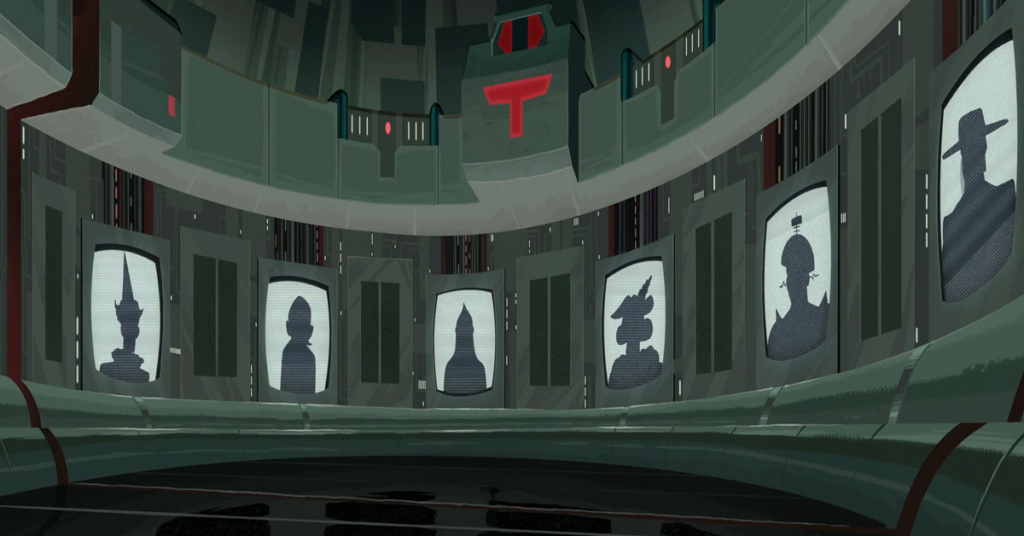
Bonus points if you recognize the source of this image.

Social protocols could arise regulating access to video.  It will be acceptable to record yourself at certain times and locations, but not at others.  For certain occasions/people/jobs people can reasonably be expected to appear on video on demand, like answering a phone call (back in the 20th century), while for others videoconference sessions have to be arranged in advance.

Otherwise, it seems at this point that we’re wading into a rising wave of total video.  How far do you think the screens and cameras will rise?

(video camera photo by Tom Woodward; Blade Runner 2049 image from this Vox article; iconoclasting image via Wikipedia); shadowy figures on video image from this Reddit board; all other photos from me)

Posted in technology, trends, videoconferencing | 5 Comments

Today, a video-presentation-network experiment

Today we’re going to try something new.

We’re going to combine a keynote address with a Future Trends Forum video session.

How will this work?  Let me explain…

Starting at 2 pm Eastern Time I will launch our weekly Forum conversation.  This time we’ll begin by sharing observations and thoughts about the major trends reshaping education and technology.

Physically, I’ll be seated at a conference hall stage.  That’s because at around 2:30 I’m offering the closing keynote to the DT&L conference.

While I address the crowd I’ll speak to the Forum at the same time.  I expect questions and comments will surface.

At about 3:15 pm I’ll cease my peroration and turn to questions.  Those questions will flow from the Forum community, from Twitter, and from the conference live crowd.

That’s Robin DeRosa when she was a Forum guest. She opened the DT&L conference this year.

How will those populations interact?  Can we successfully combine a face-to-face speech with the videoconference format?  Will we melt down the internet and create the Singularity?

Join us and find out!  You can register ahead of time here or just jump in, live, starting at 2 pm ET.


Posted in Future Trends Forum | Leave a comment

Digital storytelling with Apollo 50

Last month Owain and I visited the Washington Monument to watch an extraordinary work of digital storytelling.  It was called Apollo 50.

Here I’d like to explain how it worked, why I was so impressed, and some practical lessons all digital storytellers can draw from it.

Apollo 50 took place on the east side of the Washington obelisk.  When Owain and I arrived we saw thousands of people milling or seated on the grass, staring up as the monument, upon which was projected a video clip of the Saturn V on its launch pad (see above).  Two large projection screens spread out on either side.  Near them were massive stands of speakers.

We arrived 45 minutes before the show was to start.  While the crowd grew and the Saturn V projection loomed, the two screens lit up and displayed a countdown in T-minus fashion.  Space music played, setting the mood, and an announcer stated the time at several points.

The show itself began without other preamble or introduction.  The Monument went blank and the PA started playing a 1962 John F. Kennedy speech I’d never heard before.  In it Kennedy describes the history of human invention, starting with animal skins print and racing ahead to print, steam power, and spaceflight.

It’s quite a speech.  The archival recording sounded across the Mall:

No man can fully grasp how far and how fast we have come, but condense, if you will, the 50,000 years of man1s recorded history in a time span of but a half a century. Stated in these terms, we know very little about the first 40 years, except at the end of them advanced man had learned to use the skins of animals to cover them. Then about 10 years ago, under this standard, man emerged from his caves to construct other kinds of shelter. Only five years ago man learned to write and use a cart with wheels. Christianity began less than two years ago. The printing press came this year, and then less than two months ago, during this whole 50-year span of human history, the steam engine provided a new source of power.

Visuals complemented the audio.  The two big display screens showed JFK.  The obelisk showed historical images: an electric light flickering, a steam-powered piston working. As the speech progressed the displays turned to other historical images.

Key point: every word was echoed in text scrolling clearly across the top of both projections.  I was able to read along very easily.

Then the audio shifted to another Kennedy speech, that most famous call for a lunar mission.* . Now the screens alternated between the president and the construction of Apollo, while the gigantic Saturn V loomed into view again upon the monument.

What followed was a quick summary of Apollo 11 from launch through the moon landing and back.  Videos flashed against the monument, emphasizing vertical scenes (the Command Module docked with the LEM) or giving us thin slices of other images.  The two big screens often echoed or mirrored each other.  At one point the big screens each showed a curve of Earth, as the Apollo arrowed between them.

Then the show continued.  We saw (and heard) a rapid sketch of spaceflight since 1969, right up to the space shuttle and ISS.  The conclusion pointed to the future.  A new narration (female voice) pointed out upcoming possibilities, like a lunar settlement and a Mars landing.  Visuals followed suit.

Here’s a video shot from the mall:

And another one, with different angles:


An awesome and inspiring evening.

“This is all very nice.  But what,” asks the digital storytelling practitioner, “does this have to do with me?  You’ve described a great event, but one at a vastly huger scale than the kind of personal projects we do.”

Good point.  But I think we can identify some useful practices:

  • Use archival materials.  There was a lot of magic in seeing 1969’s images and hearing JFK’s words.
  • Be accessible.  Those text scrolls were really useful.
  • Work with constraints.  Think about what a terrible visual space the Washington Monument is: ludicrously narrow and tall.  So the team focused visuals that fit those restrictions: pistons, rockets.  Then they contrasted those with the big screens.
  • Remember the power of the human voice.  Hearing a woman’s voice at the end was a wonderful reminder of cultural changes, after the presence of so many men on screen and on voiceover.
  • Prepare your audience beforehand.

None of these are shockingly new ideas, but Apollo 50 really drove them home.

*I think Kennedy repeated the historical text in the Rice speech as well.

(thanks to Owain and Elena)

Posted in digitalstorytelling | 4 Comments

Climate change and behavior modification: the uses and limits of shaming

One response to climate change involves trying to modify human behavior.  This can occur at the most macro levels, such as coaxing multiple nations into reducing their carbon output.  It can also occur through media and pop culture.  Since we’re in early days on this front, many approaches are available.

Interesting case in point: shaming people into greener behavior.

Rather than appealing to reason, or convincing folks that anti-carbon practices will empower or otherwise make their lives better, shame is all about negative self-worth.  It can tap into deep religious and psychological wellsprings, from sin and guilt to recrimination.  Shame is a profound motivator.

For example, this video encourages viewers to shun plastic water bottles:

(Yes, it’s a riff on a notorious Game of Thrones scene.)

Elsewhere, airlines are apparently shaming people into buying fewer tickets.  KLM, for example, gently reminds would-be fliers to consider other modes of transport:

Explore other travel options

In some cases, railway or other modes of transportation can be more sustainable than flying, especially for short distances such as within Europe. Do you know that flying from Amsterdam to Brussels takes longer than going by train?​

Added to that is a note about carrying too much stuff:

Notice the greenery off on the right.  Perhaps there’s some some anti-consumerism messaging here, too.

There is now a neologism specifically about this kind of tactic. “The Swedes even have a word for it: flygskam, which translates as ‘flight shame’.”  Or maybe “air shame.”  (Hashtag) The BBC adds another twist of the shame knife: “Too busy to take the train? Att smygflyga (‘flying in secret’) may result.” There’s more, too.  The flipside of flygskam is tågskryt, or “train bragging.”

The examples above can be thought of as targeting ordinary people.  At least one shame campaign has ramped up to target celebrities:

a Swedish Instagram account dubbed “Aningslösa influencers” (meaning, literally, clueless influencers), “has been shaming social media profiles and influencers for promoting trips to far-flung destinations, racking up more than 60,000 followers.”

Obviously airlines shame themselves and their would-be customers from self-defense.  Owning anti-carbon language, powerfully expressed through shame, is a way of preempting protests and, possibly, new regulation.

What kind of impact with flygskam-ish rhetoric have?  How far will it go?

We could see more of it if policy and legal sanctions fail to alter human behavior.  Jennifer Jacquet argues that

[s]haming allows citizens to express criticism and social sanctions, attempting to change behavior through social pressure, often because the formal legal system is not holding transgressors accountable.

In other words, if enough of us find governments not doing enough on climate change, we might find shame a useful option.  At the very least feeling of carbon shame can provoke conversations and, thereby, maybe, change.

We can imagine shame campaigns ramping up.  I’m struck by the Aningslösa influencers move, and can envision all kinds of celebrities mocked for jet-setting, car idling, and even running heat, lights, and ac in their homes.  Democratically, we should expect more of the same leveled at everyone else.  In turn, people may signal their anti-carbon practices in order to ward off the possibility of shamewalking.

Carbon shame has its limits, including cultural ones.  Mercedes Hutton thinks China is likely to expand its air travel infrastructure, rather than contract it. A recent Washington Post column suggested that air-shaming is a European thing.  Americans will resist, because we don’t have sufficient rail, and we also love driving.  That sounds plausible to me, at least in the near term.

It might trigger cultural opposition.  There are signs of this in the US, with people proudly burning fuel in Hummers, or rolling coal (rigging vehicle exhaust to gout forth excessive smoke, indicating extra carbon burning).  Some may be actively opposed to climate change activism for various reasons; others could resist shame tactics because they react badly to them.  Back and forth: people could drive further down this road, leading to a tit for tat escalation.  Meanwhile, the religious support for shame might become less effective in secularizing societies; generally, it may be more effective with older people.

Moreover, these shame campaigns are about promoting companies and targeting individuals, which may be exactly backwards.  Even in the aggregate, individual choices may have a tiny impact on global climate change.  In this view shaming people for flying instead of training, buying plastic bottled water instead of refilling a container is not only a bad tactic, but ineffectual.  Could we turn the finger around, and see mass movements shaming the large enterprises that burn carbon at scale?

(thanks to Jim Burke for conversation and links)

*Note: this post is only about one sliver of one aspect of climate change.  I’m struggling now to work through climate change literature in order to frame out its possible impact on higher education and technology.  That’s an enormously deep and complex topic.  More to come.


Posted in horizon scanning | 7 Comments

How to merge a college with a university

Two more American campuses announced a merger.  Marlboro College in Vermont will merge with the University of Bridgeport in Connecticut.

For years I’ve been tracking ideas and practices around academic mergers, closures, cuts, and queen sacrifices, as responses to the growing pressures exerted upon American higher education.  This story offers another useful example.

Here I’ll explore the reasons for the merger, along with how it might play out and what this means for education’s future.

Why merge?

To begin with, Marlboro is not doing well.  They state as much in their announcement, reporting that they face “significant revenue challenges resulting from a rapid and accelerating decline in the number of college-aged students in New England and beyond.”  (Familiar themes for my readers.)  According to CTPost, the college’s “enrollment had dropped 34 percent since 2010 and its tuition revenue by 50 percent.”  It ran a deficit last year.  According to Marlboro’s last president,

“To our sorrow, we don’t have enough students. And those that come, we discount their tuition too much, so our financial models – they just aren’t sustainable,” said Marlboro College President Kevin Quigley.

Marlboro’s reputation may have also been hit by data like this, published by USA Today:

Median graduate earnings 10 yrs. after entry: $27,600

Avg. annual cost of attendance: $40,840

In fact, Marlboro has been seeking a partner for a while.  According to their official announcement,

In our search for a complementary institution, we sent out a Request for Partnership Vision to more than 70 colleges and universities and have had dozens of conversations with potential partners over the last several months.

In contrast, Bridgeport is doing much better.  However, it did experience a serious decline in international students. Marlboro’s students could help address that shortfall.  Otherwise, I’m not sure of the net benefits UB wins through this deal, unless they have a plan to really connect their population with Marlboro at scale.

There are some similarities between the institutions.  Both are private.  They are both in New England, about two hours apart.  Their endowments are nearly identical: $37.6 million for Marlboro, $34.1 million for UB. (Thanks to Emily Alling for raising this point)

How will this merger play out?

Formally, one name change will happen: “The University of Bridgeport will keep its name. Marlboro College will be become the Marlboro College of Arts and Sciences at the University of Bridgeport.”  That suggests UB absorbed Marlboro, rather than it being a marriage of equals.

Administratively,

[President Laura Skandera] Trombley said the merged university would maintain one Board of Trustees and that similar sized endowments at both institutions — about $35 million each — would be combined. Trombley also said she would become the president of both institutions.

There will be some curricular exchanges:

Marlboro College students would have the ability to complete advanced degrees at the University of Bridgeport.

UB this fall is also restarting a performing arts major and Trombley said Marlboro will play a big part in that. The Marlboro College campus annually hosts the Marlboro Music Festival…

Plans are also under consideration to have combined classes and other learning opportunities between the two campuses, such as a first-year seminar for University of Bridgeport students at the Vermont campus.

There should be cost savings, one of the biggest arguments for mergers.  As CTPost, observes, “Financially, the goal is to save money through efficiency… Much of the savings will come by integrating administration, merging computer systems and other operations.” My first thought was that while UB wouldn’t realize much (think of the relative scales), Marlboro could rely on the larger school’s infrastructure, which seems likely to mean ending some local services and laying off staff.

Yet as one interlocutor observed on Twitter, that might not amount to much:

https://twitter.com/JeffreyM_PhD/status/1154587814807445505

My guess is that Marlboro will benefit from having more students.

What about faculty?  No changes are in the offing now, according to Vermont Digger: “School officials at both institutions say that Bridgeport has agreed to preserve most of the Vermont campus and honor all of Marlboro’s tenure agreements with faculty.”

“preserve most of the Vermont campus”?  I suspect that means selling off some of the properties.

One challenge is that these are very different institutions.  As Marlboro admits, “Marlboro [provides an] intimate, self-directed liberal arts education [while] Bridgeport [offers a] STEM focus and extensive professional studies programs.”   Perhaps the new entity will work like large state universities that offer small residential units within.

What does the merger suggest for the future of education?

It may well encourage other mergers nationwide, especially in regions and for sectors that are most demographically and financially challenges.  Think of the midwest and northeast, hardest hit by the “birth dearth.”  Think, too, of small colleges that can’t benefit from economies of scale, as well as rural locales (population of Marlboro town: 978).  While these are private institutions, publics could also be inspired.  Marlboro-UB might counteract the bad publicity following Hampshire College’s disastrous flailing for a merger.  So we should expect more mergers to come.

I’ve been writing “merger,” but the asymmetry of this story suggests “absorption” is a better word.  “White knight” is another term I’ve heard in such discussions.  UB isn’t that wealthy, but it does have resources of scale.  Scale may be one of the lessons here, as America’s unusual focus on developing tiny colleges wanes.

Finally, this is not good news for Vermont.  Remember that Vermont lost three (3!) colleges over the past year.  Note, too, that no Vermont universities stepped up to help Marlboro.  The state government apparently took no action, not even at a policy or public statement level (unlike Massachusetts).  This is the same state that also saw its bond rating cut down twice over the past year.  Losing colleges to closure and out-of-state merger is not going to help Vermont.

(thanks to interlocutors by email, Twitter, and Facebook; Marlboro College windows photo by liz west; thanks to Stephen Landry for first drawing the story to my attention)

Posted in research topics | Leave a comment