What is going on with attacks on American power stations?

When is a story a signal of a future event?

I’ve been tracking a recent series of events which, while receiving little media attention, suggest some serious possibilities.  They involve attacks on American electrical power stations.  This isn’t about higher education, my usual topic, but does concern the infrastructure and politics alongside which colleges and universities exist.

Caveats: this is an emerging story without a lot of documentation.   It’s also potentially frightening.
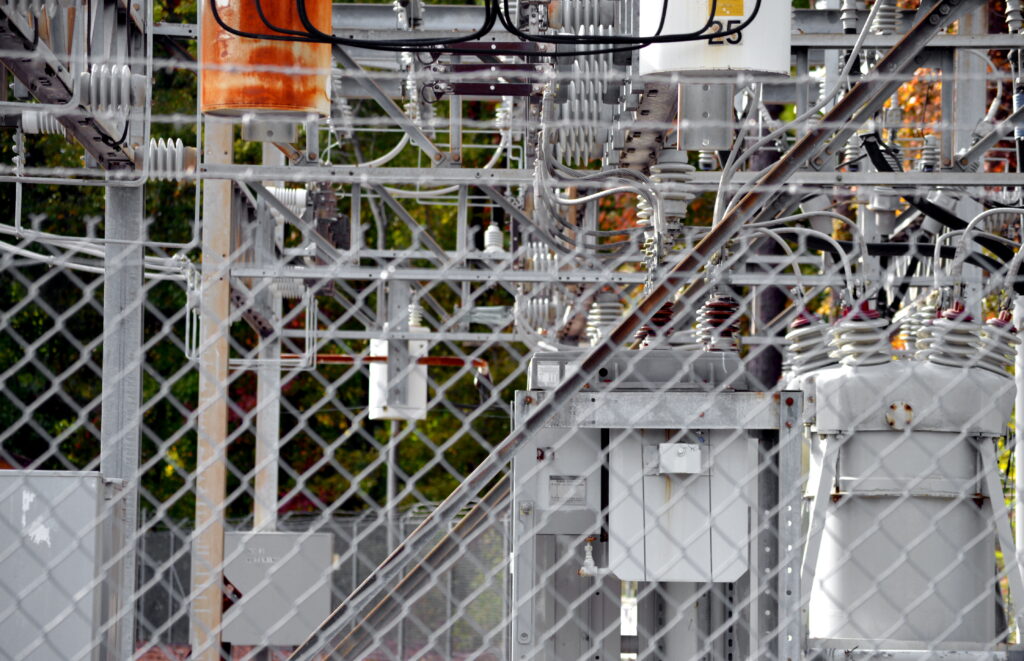
power grid by byzantiumbooks

Here’s a timeline:

January 2022 – the United States Department of Homeland Security warns of the likelihood of terror attacks on, among other things, America’s power infrastructure.

February – three men plead guilty in Ohio to planning attacks on civilian infrastructure, including power stations.  “The trio decided to disable electricity substations in major regions of the nation essentially by shooting at them, prosecutors said.”

September – several “intrusions” target Florida power stations.

early November – reports of shots fired at two different Ohio power stations.

November – six separate attacks on power stations in Washington state and Oregon.

December 3 – many shots fired at two power stations in North Carolina, causing power outages.

December 7 – someone shot a power station in South Carolina.

What does this all mean?

Let’s look at this as futurists do.  We scan the horizon, looking for signals of potential futures.  I sometimes call these seeds of growth which might take off.  The trick is to identify the ones most likely to flourish (for better or worse) while at the same time avoiding apophenia.

To start answering the question, we can check our immediate intuitions. Perhaps we see this as a series of copycat crimes. There isn’t much media coverage, but maybe some folks have been inspired to shoot up power stations for… various reasons.  Those reasons might include causing mayhem in general, terrorizing a specific region, trying to collapse civilization, or to impress some actor (organized crime, a foreign power) with one’s effectiveness.  Alternatively, some or all of these attacks could be the deliberate campaign of such an organization.

Our political views can shape these intuitive responses. Liberals and those on the left might immediately view these attacks as the work of right wing groups, such as militias or hate groups. They can point to recent examples of such, along with some law enforcement warnings about these actors.  Conservatives and those on the right would likely see other entities behind the shootings, such as antifa, Black Lives Matter, or ecoterrorists.  (I think the latter is very unlikely, from my research into violence and climate change and its recent antecedents.)

power substation_kacey

Let’s collect more evidence, informing those intuitions with the thoughts of others.  There isn’t much to work with, alas. This CNN article points to several ideas, including: “writings by extremists on online forums encouraging attacks on critical infrastructure and a series of recent disruptions of LGBTQ+ events across the nation by domestic extremists”; the possibility (dismissed) that a drag show was the target in North Carolina; that local investigations are proceeding.  A local report indicates South Carolina authorities disputing the attack idea entirely.  The FBI might be investigating the northwest attacks.  The Guardian observes that many authorities have warned that the American power grid is vulnerable.  A Daily Kos article considers right wing extremists as likely subjects.  Kos also points to a DHS warning about potential Russian attacks on the American power infrastructure – cyberattacks, to be fair.

We can also look to recent history for precedents and models.  Domestically, in 2014 someone cut phone lines to a California power center, then took out a bunch of transformers.  In 2013 some people shot up another California power center; nobody was ever charged. Living near Washington, DC, I’m reminded of how the 2002 sniper attacks sowed fear throughout the area.  There is also the shadowy history of hackers probing targets, either for their own purposes or at the behest of others. Most obviously, Russia’s war in Ukraine shows an electrical power attack in operation, as Moscow degrades Kiev’s capacity, demonstrating the effectiveness and cold-blooded appeal of such a strategy at a far greater scale.

Putting these ideas and details together, we can start to identify trends and explore some possible short- and medium-term possibilities.

Perhaps we’re seeing an organized group, hoping to exercise power and cause chaos. What’s been done so far are first steps, even test cases, and they will continue, possibly ramping up through practice and winning recruits.  Some utilities may try to harden their defenses with fences, walls, drones, human guards, surveillance, government involvement, and more.  It is plausible that we may experience an escalating and reinforcing series of attacks and defensive measures. This could go on for years, like the right wing Order‘s string of bank robberies on the run.  Worse, the attacks could succeed in stirring political chaos, bearing out the unrest I’ve been forecasting for years.

Alternatively, these are the actions of some larger group, such as organized crime. The attacks were demonstrations which showed their capacity, either as a threat to specific actors (state governments, local communities, the federal government) or for some client, like another such group or a state actor. The attacks could pause, if their purpose has been fulfilled. Or they could continue to make the point more clearly.  As in the previous case, this can elicit defensive measures from utilities and governments.

Perhaps that other group is the prime mover. A hostile power (Russia? China? North Korea?) is probing American weaknesses, either hoping to sow some chaos now or to set capabilities in place for later, larger assaults.  If so, this could lead to geopolitical conflict, up to and including warfare.  Again, the attacks could pause for a time as the capability, established, awaits its full use down the road.

This story could also be something… less. Perhaps all we’re seeing are a handful of individuals, possibly inspired by media stories or some extremist chatter, acting out for thrills and spectacles, without any larger purpose.  Like shooting a stop sign, just scaled up a bit.

We can go further in our futures thinking.  We could pair this trend with another one, such as American political instability or decarbonization, using the intersections to generate deeper scenarios. Alternatively, we could work this story through a futures wheel.  We can also develop these projections as new inputs arrive, evidence and analysis.

That’s it for now. We can follow up later.

(thanks to many friends, including those on Facebook; power grid photo by Bill Smith; power substation photo by Cindy Mc)
Posted in politics | 3 Comments

What’s the best way to work with pdfs in 2022?

Here’s a problem I didn’t think I’d be dealing with as the year 2023 draws nigh.  What’s the best way to read pdfs?

PDF_file_iconTo explain: I read a lot of digital texts, from emails and social media updates to ebooks, web-native ebooks, and game content. But pdfs remain awkward for me, at least in the ways I work.  I like to read them closely or skim texts. I want to see images in great clarity. I need to annotate the copy. And I insist on being able to copy the source material plus my annotations to other applications.

Which is apparently a tall order.  For one, many pdf files are hard to read on mobile devices, especially phones. Some pdfs have formatting which might have been very nice in print or on a big screen, such as several columns and neatly integrated visuals, but which force readers on smaller screens to pan left to right and back, zig zagging across the file like a little kid trying to read under a blanket with a tiny flashlight.  This drives me to schedule pdf reading for when I can be in my office, happily glaring at my yard-wide desktop screen.

Others lock down text so it can’t be shaped into more pleasing forms.  Compare with the Kindle, for example, whose .mobi files are “flowable” – capable of being easily resized – and single column.  Yet the Kindle gargles on pdfs.

Then there’s the annotation problem.  Some of us grew up writing notes on print texts (books, journals, xeroxes) (and remind me to tell you about my first concussion and the problem of notes on Pynchon) and value that interaction highly.  Yet many pdf writers and/or files block this function, or provide embarrassingly bad tools for it.  (The Kindle’s annotation function is better than it was, and the social side of it can be fascinating, but it’s still awkward to use and awkward to export).

As for organizing pdfs – given the difficulties in moving across devices, I barely do this. I do take care to rename each file in a recognizable way (author then title, maybe a little more, depending). Each of my laptops and desktops has a “texts” folder, and that’s about it.  I don’t have a tagging or search system, and probably should.

So what is the best way to read a pdf in late 2022?

I had some ideas, then got more by polling friends and colleagues.  Here’s a list.

iPad Many friends, especially the Macisti, pointed me here. They liked the screen (although it depends on model, with one advocating for the biggest) and recommended the post-Jobs Pencil for annotation.

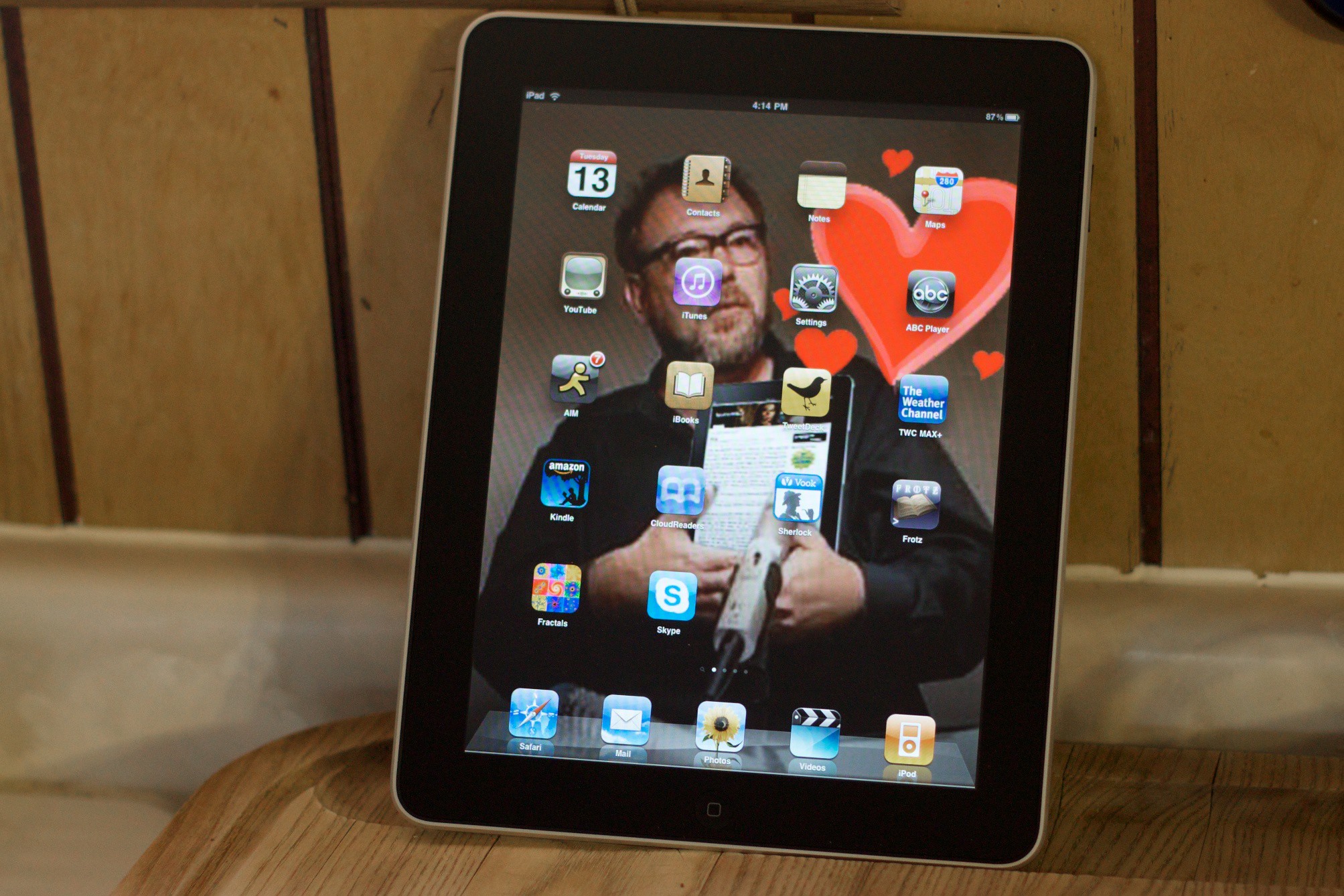
iPad with Bava_cogdog (Are there cheaper yet effective alternatives to the Pencil? And what’s the best iPad version for pdf reading?)

I have issues with iPads.  One is cost, as they are more expensive than alternatives.  The other is having to wade further into the Apple walled garden world.  (Right now I have an Apple desktop, which serves me well. Otherwise I have Windows, Androids, Xboxen, Kindle, etc.) A third is that the digital keyboard doesn’t work for me. Fine, I’ll get a physical keyboard connected by Bluetooth… and then I’ve reinvented the laptop, just more awkwardly and expensively.

Android tablets These tend to be cheaper than iPads.  They seem to have fewer applications developed for them, and run into the keyboard issue I mentioned.

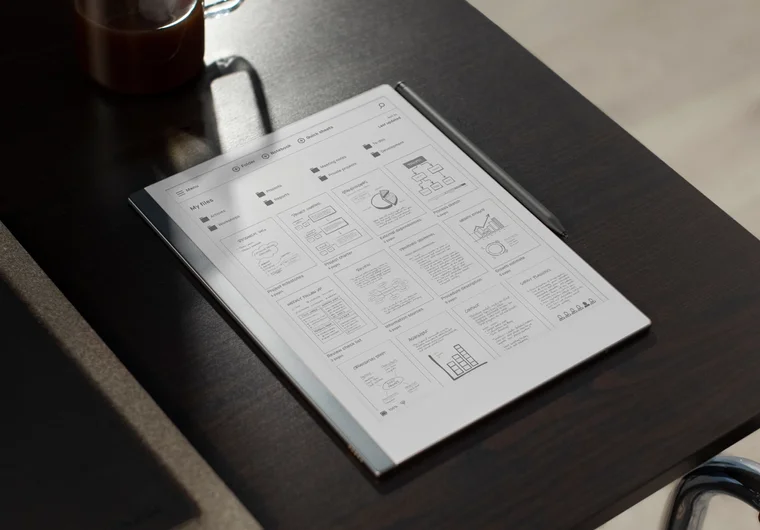
Remarkable This looks like something in between a tablet and an e-ink reader. I haven’t used one, but it seems built on stylus-driven annotation.

Remarkable hardware

Does it do anything else?  Is Remarkable worth the price?

Use software to beat pdfs into shape There are a lot of programs out there for reading and wrangling pdfs.  Here are some which friends praised:

  • Calibre.  In addition to a viewer there’s a file management system. It also seems to have the ability to convert file formats.
  • Moon.  An ereader app for the Android ecosystem.
  • Zotero. I know and admire this tool for citation wrangling, but didn’t know it had pdf affordances.

Just stick to the big desktop monitor This gives maximum viewability and a wealth of annotation and sharing tools.  It also means I have to be in my office, which is a problem, given how much I travel.

Print ’em on paper and go old school I see people doing this whenever I travel.  Which is a sign that digital alternatives have not triumphed.


What do you think of these solutions to my grumpy problem?  What’s the best way forward?  Any other tools I’ve missed?  Are my requirements just too picky? The comments box stands open for your… annotations.

(Thanks to all of my friends who weighed in on Facebook and elsewhere! 

pdf image by Adobe SystemsCMetalCore – Own work, Public Domain, https://commons.wikimedia.org/w/index.php?curid=73470452; iPad photo by the great cogdog)


Posted in technology | 22 Comments

The pandemic as portal

It’s late and after a long day of work I’m facing a giant pile of still more and overdue work, but I wanted to share this quotation.

buy fildena online buy fildena no prescription generic

  It’s one that keeps haunting me.  I use it to end a lot of presentations, and it seems to move audiences as well.

I don’t think I’ve blogged it, so let me do so now.

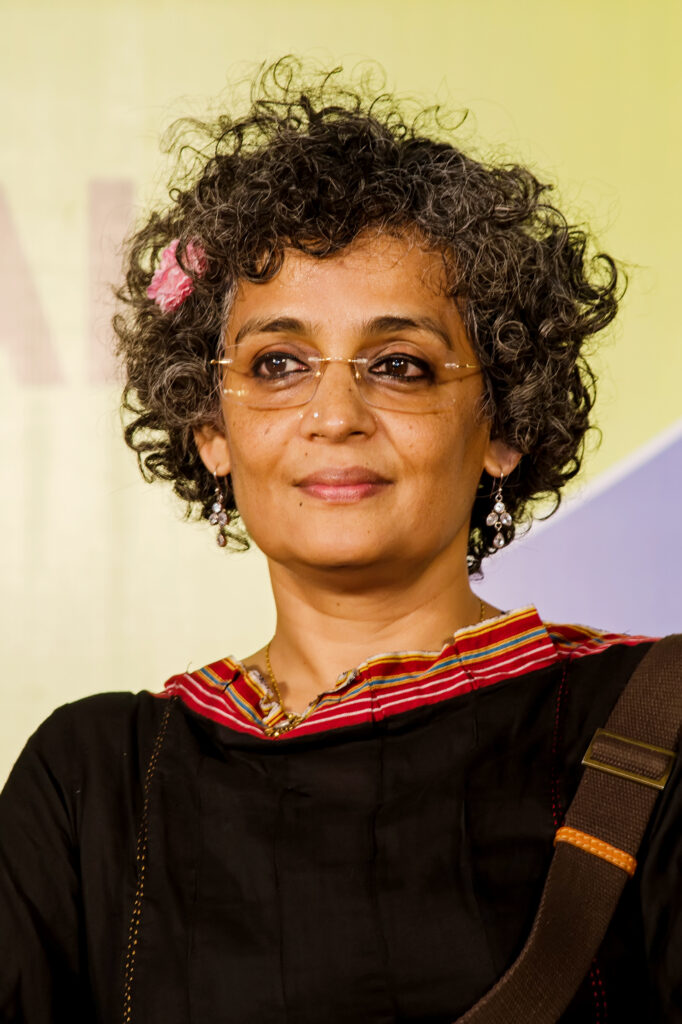
Arundhati RoyIt’s from a 2020 article by the Indian writer Arundhati Roy. The essay reflects on how India and the world responded to the pandemic, and I recommend the whole thing for its sharp vision.

But here I want to cite its conclusion. Roy surveys the many ways people envisioned COVID-19:

What is this thing that has happened to us? It’s a virus, yes. In and of itself it holds no moral brief.

buy tadora online buy tadora no prescription generic

But it is definitely more than a virus. Some believe it’s God’s way of bringing us to our senses. Others that it’s a Chinese conspiracy to take over the world. Whatever it is, coronavirus has made the mighty kneel and brought the world to a halt like nothing else could. Our minds are still racing back and forth, longing for a return to “normality”, trying to stitch our future to our past and refusing to acknowledge the rupture. But the rupture exists. And in the midst of this terrible despair, it offers us a chance to rethink the doomsday machine we have built for ourselves. Nothing could be worse than a return to normality.

Roy then offers a metaphor, and turns it to a visionary purpose:

Historically, pandemics have forced humans to break with the past and imagine their world anew. This one is no different. It is a portal, a gateway between one world and the next.

buy sildalis online buy sildalis no prescription generic

We can choose to walk through it, dragging the carcasses of our prejudice and hatred, our avarice, our data banks and dead ideas, our dead rivers and smoky skies behind us. Or we can walk through lightly, with little luggage, ready to imagine another world. And ready to fight for it.

A portal through which we can imagine another world.  Who else responded to COVID like that?  And since the article appeared, way back in early April 2020, did humanity fulfill Roy’s charge?

buy cytotec online buy cytotec no prescription generic

  What new world did we fight for?

Think on it.  Good night, everyone.

(photo by Augustus Binu, CC BY-SA 3.0, https://commons.wikimedia.org/w/index.php?curid=29707968)

Posted in coronavirus | 8 Comments

Early signs of struggle for economics and higher ed’s future: more growth versus degrowth

Recently I had two meetings on the same day which resonated with each other in an interesting way.  Both sessions were with academics, a dean and a professor.  They expressed diametrically opposite views on economics and higher ed, and that expressed a dynamic I’ve been tracking.

To be clear, economics wasn’t the subject of either conversation.  We met to discuss other topics.  Yet how we arrange the economic world came up organically in both.

To explain: in our conversation, as we discussed institutional resilience and strategy, the dean expressed firm support for continued economic growth. This was in general, not just for their institution, but for the economy at large.  Regular GDP gains, increases in corporate market caps, growing market sizes all benefited that campus in this view.  The institution depended on GDP going up each quarter.

The professor, in contrast, detected and approved of an opposed way of thinking, both within higher ed and in the world at large. Zero growth, degrowth, circular, and donut economics were finding an expanding audience and that’s a fine thing, in their estimation. Some of the deepest problems our society experiences, notably income inequality and the climate crisis, stem from our current economic order of perpetual growth. Changing course, even reversing economic progress, was ethically the right thing to do, in this view.

I have a lot to say about each point.  We can dive into economic modeling, consider industrialization’s ideologies, reach back to Malthus, and more.  Today I just wanted to share that pairing and explain why it moved me.  I’m curious what people think. I’d also like to plant this flag for later work.

It’s not a surprise to see professors and administrators on opposite sides of a question, of course, but I don’t think institutional politics are the main driver here.  Instead, I think we’re seeing many people question present-day economics (call it neoliberalism, late capitalism, very late capitalism, democratic capitalism, or whatever you like).  Partly this stems from the life experience of younger generations, who didn’t receive the anti-socialism Cold War era programming of their elders, and whose experience of capitalism has included some disasters, like the recessions of 2008 and 2020.

buy prednisone online buy prednisone no prescription generic

At the same time there’s a kind of escalating restlessness in much of the world, a sense that the present order is not only flawed, but is responsible for awful things and isn’t likely to change course on its own. We see that with antiracist activism, which changes various entities (states, businesses, populations) with racism in multiple forms, and calls for both past reckoning and present reform.  We see it in the United States with rising labor activism, from an uptick in unionization after decades of decline, plus whatever the “Great Resignation” actually turns out to me – at the very least people not accepting jobs they deem low in compensations.  Perhaps this plays a role in the current protests in Iran and China.

This kind of wide-ranging skepticism of the present order also appears within climate activism, the bounds of which far exceed what most people once viewed as “environmentalism.” I suspect more people are realizing just how extensive decarbonization is as a project.  Depending on their situations and perspectives, they connect it not only with their electrical bill but also with diet, travel, work, entertainment, gender identity, political parties, generational feeling, and more. Recognizing the sheer, mind-boggling size and complexity of the topic lets us review and rethink these related topics… which unavoidably leads to the economy, among other things.

Back to higher education: this opposed pair of ideas is present within academia, beyond these two contacts, albeit not in a very public way. The dean I spoke with represents a fairly popular view in higher education, although one perhaps more often held without a lot of discussion.  American colleges and universities are, broadly, privatized to various degrees, and therefore financially depend on a growing economy to pay for growing expenses.  Further, as academia prepares students for careers,  in a growing (for now!) population, and we want to elevate students’ economic status, the economy needs to grow.

buy suhagra online buy suhagra no prescription generic

  Additionally, unless we want to bank on downward mobility, the economy has to grow to make room for the upwards sort. Again, I don’t see professors and librarians eagerly celebrating quarterly GDP estimates, but this pro-growth idea seems to lurk beneath the surface of our debates and actions.

From the other side, I don’t hear much in the way of nogrowth or degrowth arguments in my conversations and readings of colleges and universities.  I’ve found antecedents and allied ideas, like criticisms of consumerism for years.  Increasingly, I’m also hearing criticisms of and objections to capitalism as a whole, especially among younger academics. There is academic research into anti-growth schools of thought; I don’t know how widespread this is in curricula.

How far will this opposition go within higher ed and the world at large?  Perhaps campuses become sites of loud contestation between pro- and anti-growth movements, with repercussions in institutional strategy and our communities.

buy furosemide online buy furosemide no prescription generic

  Or maybe each will remain discussions within disciplines.  I’m not sure now.

I’ve been noodling on a related book project about a closely related point, at a history of ideas/direction of civilization level. The emerging debate I’ve identified in this blog post may fit neatly into that.

buy valif online buy valif no prescription generic

  More on this later, if it develops.

What are you seeing in terms of pro-economic growth and its opposition in your slice of the academic world?

(photo by Christian Weidinger)

Posted in economics | 8 Comments

My month after COVID

It’s been about a month since I came down with COVID-19, after nearly three years of researching the virus.  Since the aftermath is interesting from medical and public health perspectives, I thought I’d continue to share my story here.  It’s one snapshot of recovery.

The main effect I’ve experienced of having had COVID is fatigue.  For the first three weeks after exiting lockdown huge waves of fatigue would hit me.  Sometimes they would hit after I’d done what I used to consider minor or trivial amounts of physical activity: making dinner for the house, vacuuming a floor. Sometimes intellectual work yielded those fatigue tides, like grading for a couple of hours.  At other times nothing would be the cause – sitting on a chair, reading, and suddenly feel like I’ve just chopped wood for ten hours.

This was much worse in early November.  I think it’s less of a problem now.

Yet connected to fatigue is getting more sleep.  Normally I sleep for around 6-7 hours each night. (My quality of sleep is usually fine, thanks to the CPAP machine. I have no problems falling asleep.) Since Halloween I’ve slept 9-10 hours, and many days could easily have slept more.  These are usually deep sleeps without waking or disturbance. My dreams are clear; I can recall one, two, or three upon waking.

To some extent this might be my body catching up with “sleep debt,” since 6-7 hours/night isn’t enough.

Keep in mind that the medical advice for people after infection is not to exercise.  I’ve been following that advice carefully.  My pull-up bar stands neglected in a corner.  My weights gather dust and occasional feline attention at the end of my desk. I haven’t ridden the bike or taken a long walk. The only walking I’ve done is the roughly one mile to my Georgetown classroom from the Rosslyn Metro station, and I’ve been very careful to take that slowly, even pausing to rest.

And this is galling. I feel my muscle tone softening (perhaps mostly in my imagination). At times I feel like an invalid, especially when resting during a puny one mile stroll.  I know it’s the right thing to do, but that doesn’t stop feeling like a lazy slug.  When I drive to the grocery store or HOA meeting one or two miles away, I feel embarrassed.

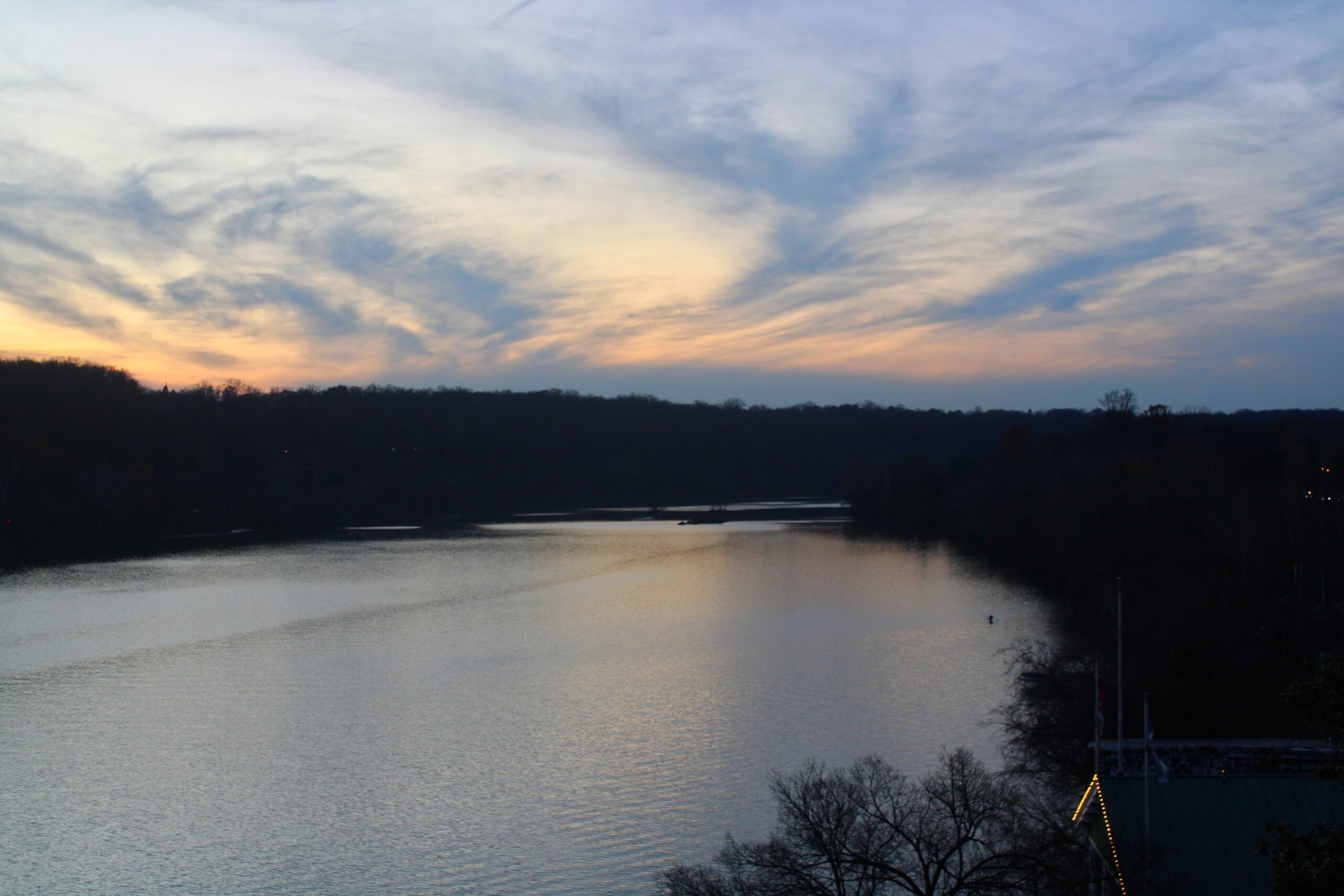
The Potomac River just after sunset, seen from the Key Bridge.

Crossing the Potomac River on the Key Bridge. This is the center of my walk to class.

I have been eating less. This takes the form of skipping breakfast or dinner or both.  That’s because my appetite is lower.  I’m not appalled by food or anything, just not getting hunger pangs in my gut. Is it because I’m not doing as much physical activity?  Is it a mind game, because I’m embarrassed by not exercising?

There was one bad week when my left ear had problems. It got congested badly enough that I couldn’t hear through it. In face to face conversations I turned my right side to people so I could hear better.  I tried domestic cures: steam, tugging the left earlobe while yawning, exhaling while closing my mouth and pinching the nose shut.  No luck. Friends recommended an audiologist.

I worried about permanent hearing loss, so checked with our HMO.  The nurse on call (on chat, from the Kaiser website) recommended a combination of eardrops to melt earwax, nasal irrigation with a saline solution, and using a neti pot.  This took nearly a week to work, but finally that left ear opened up.  It’s a weird experience, almost like a popping, but more like someone suddenly playing loud noises right next to your head. The ear closed again a few hours later, then opened, then closed, until finally it remained open and I wasn’t going deaf on my left side.

Other post-COVID symptoms I’m not experiencing: joint pain, headaches, organ pain, shortness of breath.  My senses of smell and taste are just ok, but it’s winter, and I usually get stuffed up for the season.

What about brain fog?  I’m honestly not sure.  Most of the time I find myself thinking like I used to, pre-infection… as far as I can tell, which is part of the problem here.  I don’t have good ways of monitoring my cognition.  Externally, I’ve been quietly asking people how I do in conversation, in class, leading video meetings, giving talks. All feedback has been positive, which is a relief.

buy clomiphene online buy clomiphene no prescription generic

I feel mentally energized by some events.  Class, for example, is always an adrenaline shot for me. In fact, earlier this month I warned students I might end sessions a little early, due to COVID, but every time went right to the scheduled end and had time for students afterwards.  Clients for presentations have been satisfied.

And yet.  The fatigue gnaws at my mind. I worry that I can’t multitask as much, but it’s hard to assess this. I catch myself making small errors (not sharing apps the right way in Zoom) or having to remind myself of process steps (chopping garlic *before* sauteeing green beans) more than I used to. Are these real problems, or am I just paying more attention because of the COVID context?  I’m honestly not sure.

All of this is the first month post-infection. Looking ahead, I want to start exercising again.   Not my full routine, but some small exercises – a one mile bike ride, the lightest weight.  I have to be careful not to let enthusiasm and remembered capacity lead me to overdo things.

I’m not sure if my appetite will rebuild. I’m at the lowest weight I’ve had since the 1990s – 215 lbs – and like it.  Maybe my appetite will be suppressed long term.

buy augmentin online buy augmentin no prescription generic

Alternatively, ramping up physical exercise will bring it back.

buy cytotec online buy cytotec no prescription generic

Hopefully I can resume my pre-COVID muscle mass and tone, which will add pounds.

Is this something I should talk about with medical or mental health professionals?  I don’t know, and it honestly feels silly to even consider.

My biggest worry is, of course, long COVID. Research on this is still nascent. I’m not sure how my behavior now shapes my chances of coming down with it.

buy symbicort online buy symbicort no prescription generic

  So I’m trying to be very careful.

That’s not really my biggest worry, although it should be.  My greatest anxiety is that COVID will depress my ability to work, and hence reduce my ability to support my family.  As an independent and an American, I don’t have much in the way of public resources to fall back on.  I can give myself days off, but those are days when I could be bringing in revenue. My teaching, workshops, presentations, consultation, writing, and video work are how I pay the mortgage, medical bills, insurance, groceries, debts. So while I try to not make my health worse, I also have to keep a roof over my family’s heads.  How far can I push myself?  What risks am I taking?

Forgive me if this is TMI or too long, or both. I hope these reflections are useful to people experiencing or thinking about COVID.

Posted in coronavirus, personal | 15 Comments

One college takes steps to protect itself from rising sea levels

What can a campus do in response to the climate crisis? The United States Naval Academy just offered one course of action.

The main thing the Maryland-based USNA is doing it repairing and extending the Farragut Field Sea Wall, according to an official statement. “The project aims to repair and raise the height of the seawall to address daily high tides and minor storms out to the year 2100.”

The project includes repairs to the sheet pile bulkheads along Farragut Field and the southeast side of Santee Basin. A new sheet pile wall will be constructed outboard of the existing one. A new tieback system will be constructed inland of the existing for lateral stability. The project will provide critical structural protection for the Naval Academy against floods and future sea level rise.

There’s more to come: “Future plans include adding earthen berms to protect the Naval Academy from storm surge[s].”

And, according to the secretary of the Navy:

“This sea wall is the first in a series of climate-related improvements from the Naval Academy’s comprehensive Installation Resilience Plan that I am personally committed to,” said Del Toro. “And this is just one achievement among many more past, present, and future.”

Calls and plans to do something along these lines date back at least to 2019.  I’ve written about this in Universities on Fire (now available for pre-order).

A few reflections:

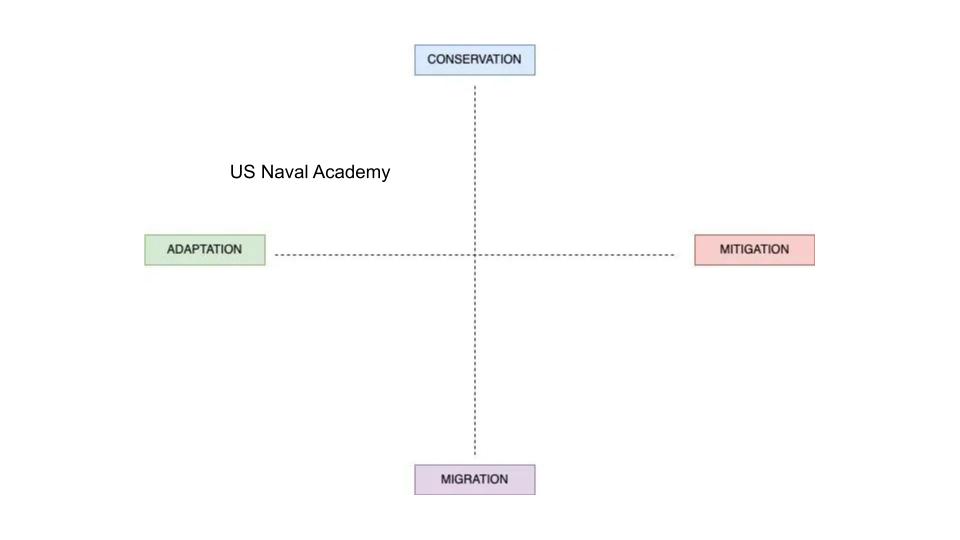
First, in my four-point scheme, this action falls under the Adaptation header.  It’s not mitigating nor does it represent migration. It does seek to conserve, in terms of protecting the institution’s physical grounds, so perhaps we can locate the move angled in that direction, like so:

climate compass US Naval Academy

Second, this seawall project isn’t a one-off.  Institutionally, the Academy now has a climate crisis portfolio:

This project is the first in a series of improvements from the Naval Academy’s Installation Resilience Plan that provides a comprehensive project portfolio, and year-to-year execution strategy to cohesively address and mitigate the combined effects of flooding caused by land subsidence, sea level rise, storm surge, and changes in groundwater elevations. It uses the most recent projections recommended by the USNA Sea Level Rise Advisory Council and the DoD Regional Sea Level database.

Think about running this portfolio as an academic position. Or an office.  Or one local instance of a shared service.  The announcement lays some groundwork for the latter by noting that it’s not just this Academy that’s in danger:

With almost 3,200 miles of shoreline, Maryland is particularly vulnerable to threats from rising sea levels, flooding, and intensifying storm activity. Annapolis, and by proxy the Naval Academy, is ground-zero for sea level rise on the East Coast – NOAA reports that Annapolis experienced nine high tide flood days in 2021 and predicts that the city will endure as many as 115 high tide flood days by 2050,” said [Senator Ben Cardin (D-Md.].

Third, this is just one story of one higher education institution out of 20,000 or so around the world.  The seawall idea won’t apply to all circumstances – indeed, not to most, since most campuses aren’t close to rising seas. But it does represent a key idea: a concrete example of action being taken in anticipation of the climate crisis worsening.


Posted in climatechange | 1 Comment

Another campus expands climate classes – this time, because the students made it happen

I’m catching up with writing, slowly.

Getting COVID knocked my schedule flat.  Ten days ago I keynoted a conference in Chicago, which went well, but exhausted me like a simple trip has never done before.  COVID recovery actually means a lot of this kind of strange fatigue.  Just making a big meal for everyone sends me to a sofa for rest.  And the health experts insist I refrain from exercising, so no biking, weightlifting, or hiking for weeks.

None of which stops me from researching and reflecting on the future of higher education!  I have a series of blog posts in the hopper. Today’s topic is how academia grapples with climate change, based on one new story.

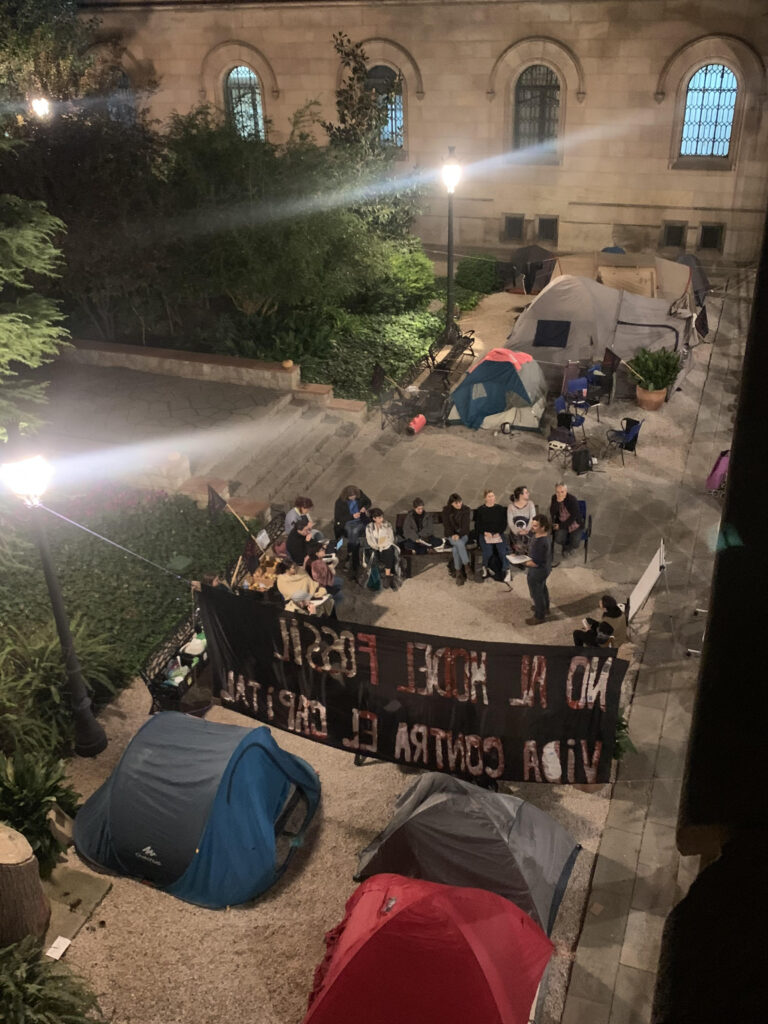
“… for a few days the camp has become an open space for training and reflection, with many classes and workshops.”

Students at the University of Barcelona asked their administration to mandate a class on climate change.   Not make such a class available, but require it for all students.  They occupied administrative spaces until UB agreed to the curricular change, adding a professional development component for faculty and staff:

In a move thought to be a world first, all 14,000 undergraduate and postgraduate students will have to take the course from the 2024 academic year. It will also devise a training programme on climate issues for its 6,000 academic staff.

The announcement came after a seven-day occupation by a group from the anti-fossil fuel organisation End Fossil Barcelona.

Here’s an account of the protests by a graduate students:

So why does this matter?  It’s just one university out of 20,000 or so in the world.

Several reasons.  First, it’s another example of climate change’s potential expansion through the higher education curriculum.  Note that this is a general education class, not a specialty one.  And that it sounds quite interdisciplinary. (echoes of the Harvard proposal I mentioned last month)

Second, because student activism made it happen. This wasn’t a faculty initiative or an instance of administrative benevolence. It took students organizing, articulating demands, and then taking actions – including occupying admin space – for it to come about.  Climate activism is growing within higher ed, as I’ve been forecasting, and we need to bear this in mind as we look ahead and plan.

Here’s a related example of this trend.  A small number of scientists, including academics, is taking public actions to draw attention to the crisis.  A NASA climate scientist and 79 others were arrested, and not all for the first time:

Watch for more of this to come.  How many faculty may be involved in such movements?  How many staff and students may join them?  And might you be one of the participants?

Third: this mandated class is only one step a university can take. The climate change engages higher education on many levels beyond the classroom.  Donald Clark commented on this, skeptically:


He’s right.  There’s a *lot* more academics can do.  I’ve previously outlined the many ways we can engage, including but by no means limited to teaching: research, community relations, the physical campus environment, and actions on the world stage.

How higher education engages with the climate crisis_overall

To what extent do these actions represent adaptations to the new environment?  To what extent do they mitigate global warming?  How far might we transform the academy in the Anthropocene?

The Barcelona students took one energetic step.  How much farther along that path will they – and the rest of us – go?

(link thanks to Laura Nissen; protest photo via Lorenzo Velotti)

Posted in climatechange | Leave a comment

COVID diary, day 8 – out of isolation!

My COVID infection and isolation diary, continued. (Previous posts: days 1-2, 3-4, 5-7)

November 5

I slept late again, easily, and only woke around 10 am when a campus public health officer called to check on me.  I felt clear-headed, not in pain, and reported accordingly.

The morning passed quickly in checking RSS feeds, taking a shower, reading the news.  My vitals were fine; my weight, down to 214, the lowest I’ve weighed since… the 1990s or so.

Thinking about weight led to lunch, then reading with Owain.

I thought I should check in with my HMO (health insurance provider), Kaiser Permanente. This meant firing up their website, logging in, and trying to reach a nurse on their chat service.  This took more than an hour; again, it seems like KP suffers from staffing shortages on weekends.

Finally I got through.  The nurse asked for my symptoms, reviewed my file, then pointed out I didn’t need to be in isolation any longer.  I’d been here for eight days, at least four of which were symptom-free.  That was good enough grounds to release me, as per CDC guidelines.

She shared this statement with me:

When to End Isolation:

If you had no symptoms, end isolation after 5 days (day zero is the test date).

If symptoms are gone or resolving, and you have no fever for 24 hours (without using fever-reducing medication), end isolation after 5 days (day zero is first day of symptoms).

buy elavil online buy elavil no prescription generic

I typed back, disbelieving: “So I can go?  As in, now?”

Yes, came the response.  Just mask up.

No more tests?  Not now, since they will keep generating false positives.

I was floored and disoriented. I ran this past my household on Gchat, plus a nurse friend.

buy diflucan online buy diflucan no prescription generic

They approved.

Owain had been napping and woke up as I started picking up things.  I explained the situation and promised to cook for him.

Then I opened the door and walked into the rest of the house.

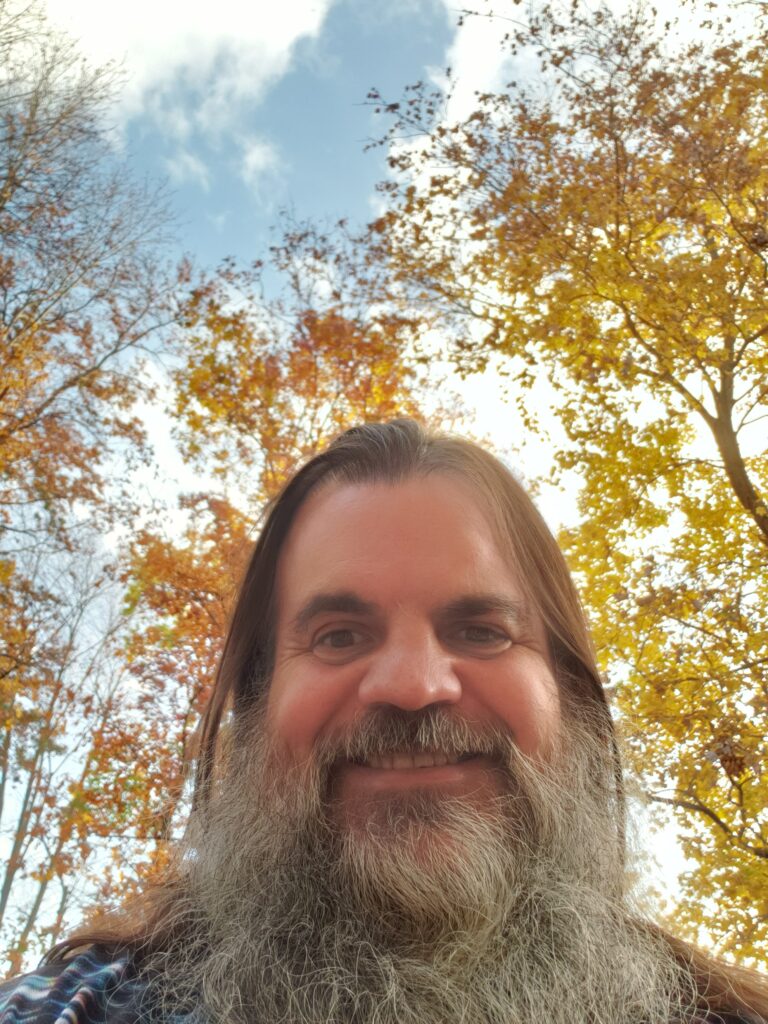
Bryan out of isolation against yellow leaves blue sky

Everything was normal and delightful at the same time: the kitchen, the mail table, the back porch. I hugged everyone.

Then I did make dinner for Owain, and bring it up to him. I made dinner for Gwynneth, our daughter.  I emptied the dishwasher, filled it up, took out trash and recycling.  I wanted to make more food but they stopped me.

Since then I’ve been relishing walking around the place, taking photos and writing.

So what’s next?

I’m under orders to take it easy for a while. I need to get better details on this, but the idea is no exercising. For me, that means no weightlifting, no bicycling, no hiking.  And apparently more sleeping.

buy zydena online buy zydena no prescription generic

COVID rebound is also a possibility, due to my ingesting a box full of paxlovid.  I have to watch for symptoms.  Which is tricky, since I often show cold-like symptoms during winter.

I hope this was useful for people to read.  Also, I hope it’s the end of COVID infections for me!

buy tadacip online buy tadacip no prescription generic

Posted in coronavirus, personal | 10 Comments

COVID diary days 5-7

My COVID-19 infection and isolation experience, continued. (Previous posts: days 1-2, 3-4)

November 2

…and I woke up at noon, to my son shaking me. Apparently my family wanted me to do a quick vitals check.

Numbly I stuck my finger in a tiny pulse-ox device and let Owain scan my forehead.  How did it get to be noon?  How did I sleep… 12 hours?

I don’t think I woke up at all through that vast swamp of sleeping.  My body just dove down deeply into rest and didn’t choose to return me to the daylight world. I would easily have continued, had Owain not intervened.  My dreams were clear and … not terrible.

In the afternoon I did emails, then took in a webinar hosted by one friend (Matt Alex) and starring another (Paul LeBlanc).  Next, more research. None of this required physical activity beyond typing, staring, listening, and paying attention.

In the evening, I wound myself down, unlike my usual nighttime burst of activity.  Typically after dinner I do rounds of emails, housework, class prep, research, and conversation. This night I needed to rest instead.  So I settled into bed with The Peripheral streaming from one laptop tab. Next to my a nice collection of Graham Greene stories waited on the Kindle. Owain played a game on his machine (the excellent-looking Return of the Obra Dinn).

I imagined my immune system battling in every squishing cubic inch of my body, rooting and destroying virus after virus.  I further envisioned that immune system bulked up by vaccines and paxlovid (which feels like I eat it in whole mouthfuls), and that the virus struggles to take hold of my otherwise healthy body.  But it didn’t feel like it. Instead I felt simply tired, and also felt I was doing the wrong thing by setting aside work for a slothful time.

November 3

I slept soundly, apparently ignoring my son’s repeated coughing. I had clear dreams which I can still see and reflect on, hours later.  Owain is otherwise symptomless.

After a long shower (again, this does wonders) I took in two video meetings for 90 minutes. They were good and productive, yet I felt seriously drained afterwards, as if they constituted a whole day’s worth of appointments.

I took readings.  The pulse ox read 97, 96.  My temperature stood at 97.2 F.  Weight: 216 lbs. All good.  I also took the last bunch of paxlovid, ending that course of treatment.

Then it was time to do more.  I hosted the Future Trends Forum with a great guest.

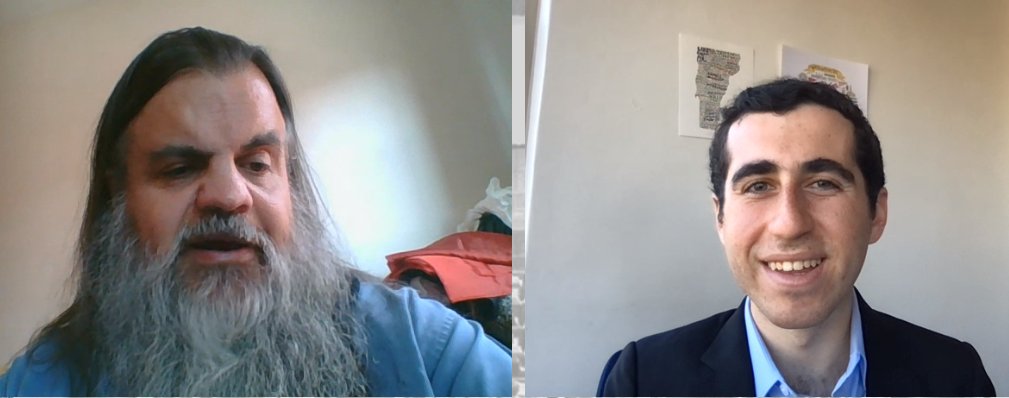
Future Trends Forum screenshot with myself and guest Benjy Renton; created by_Roxann Riskin

Then it was time for class.  From 4-6:30 my Georgetown seminar wrestled with la paperson’s A Third University is Possible, then played another round of our Matrix university simulation game (interesting how the group wanted to work as a whole, rather than in pairs).

That’s a normal Thursday for me, class, Forum, meetings. Normally I would have traveled, too.  It was too much for a COVID day, yet I couldn’t stop any of it.  Each meeting had been carefully arranged, and I’d made commitments. The Forum took a lot of doing and I didn’t want to have to reboot the session for another time, potentially losing people.  And my students had done work; I had to honor that.

I did power down to watch The Peripheral with Owain. Then read a few Graham Greene stories – perfect down to each sentence – before falling asleep.

November 4

I woke up from vivid and kind dreams, rested.  At 9 am, too – not too much sleep, and in enough time for my morning appointment.  Raring to go.

Instead of going anywhere I stayed in the bedroom, occasionally stepping across the hall to the bathroom. I held virtual office hours in the morning, then prepared for a brief appearance on a virtual panel. My topic: higher education and the future of democracy.

buy orlistat online buy orlistat no prescription generic

My family brought up lunch. After than, the panel, which went well, with good panelists and wide-ranging conversation.

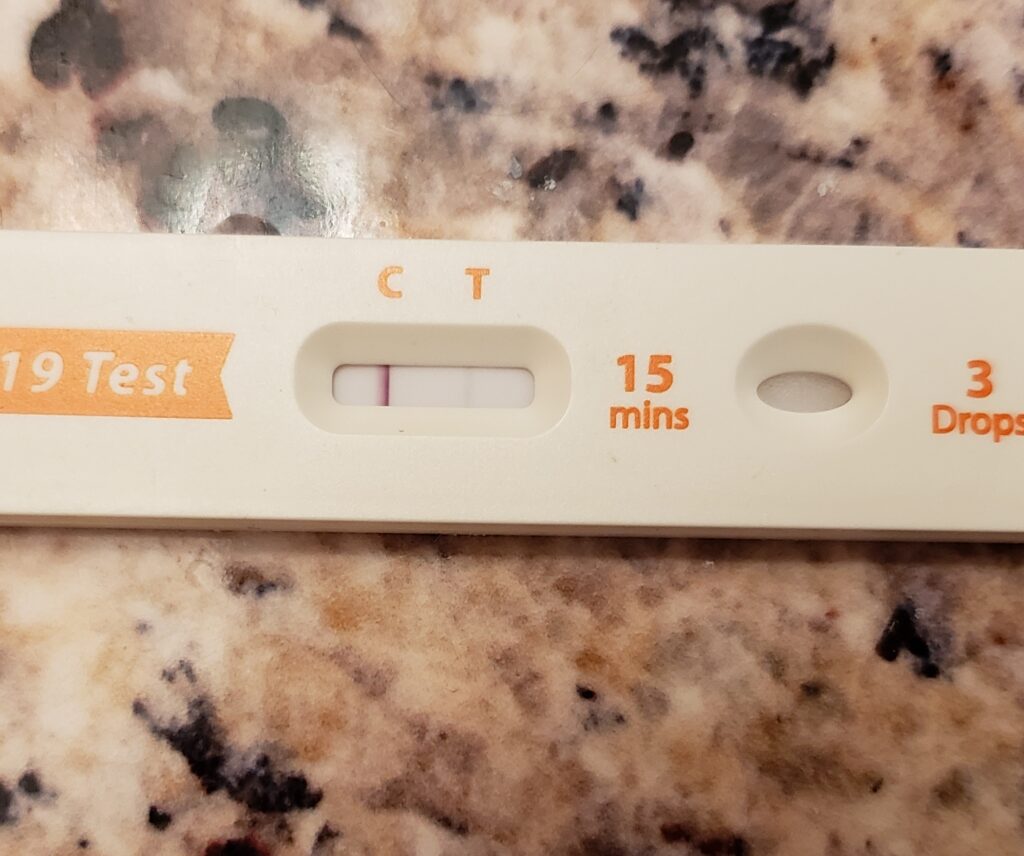
Throughout the day I showed not a single symptom.  No cough, no head pain, no fever, no joint pain. I was a bit tired, was all. So happily I tired up a COVID-19 test.  Swabbed my nose twice, filled the container, swished, dropped, and waited 15 minutes, hoping for release, and:

coronavirus test mine positive 2022 November 4

Again!

I felt like just deleting chunks of my life.  I canceled a dentist appointment on Monday. I asked a podcaster to reschedule our Monday session for…

buy filitra online buy filitra no prescription generic

some other time, since I can’t honestly schedule things now. I reached out to my client for the rest of the week.

(But I can’t really delete anything.  There is too much that needs to be done.)

So what now?

It’s possible that I’ve successfully quelled the virus. My immune system, powered up by vaccinations and paxlovid, exterminated the thing, and what the test is picking up is worn-out viral carcasses.

Perhaps in a few days, if this continues, I’ll end the CDC-dictated ten day period and be free.

Or maybe I’ll test negative tomorrow.

Or… for pure hellish bonus points, I’ll exit isolation, set out for next week’s professional trip, then get hammered by a rebound attack on the road.

This leaves me fuming and frustrated.

buy doxycycline online buy doxycycline no prescription generic

I hate the uncertainty. I despise not being to work at my usual level.

I can’t tell if I’m actually less tired than I was or if I’m so restless and pent up that I feel more energetic than my body really is.

Let’s see what’s next.

Posted in coronavirus, personal | 7 Comments

COVID diary, days 3+4

Notes on being COVID afflicted, days 3 and 4:

October 31

Halloween is my favorite holiday, and I hate having to miss it due to a very non-fantastic, all too mundane bit of horror.

Today my symptoms are better.  No head pain. Throat soreness is down. Swallowing isn’t a problem. There are fewer hot flashes.  I’m generating less in the way of entertaining mucus. Best of all, my attention is more focused and sustained.  Few brainfog instances.

I’m sleeping better, but not getting enough, at least for what my body wants. I woke up groggily, having to help family (see below).  I feel the pull to nap like a gentle tide, but I resist that, since naps usually leave me more tired, sadly.  Maybe I should give in.

On the downside, my adult son just joined me in quarantine. Owain’s not sure if I gave the bastard virus to him or if he picked it up at a medical appointment.  So we are commiserating and comparing notes.  Father-son bonding, sharing a single room in joint misery.

November 1

Woke up tired. In the morning I sat in a chair and in bed, mostly doing emails, but also doing a 10 minute tech check with a Future Trends Forum guest.  My work habits are strong.

I tried to relax in the afternoon, playing Civilization (V; for some reason I can’t get into VI) with Owain. But my evening class loomed, so I ate lunch (crafted per Gchatted instructions to my un-sick family, desposited outside our door) and did class prep.

My Georgetown seminar on technology and innovation runs 6-8:30 pm, and I raised the possibility of ending it early if my energy flagged.  Students were very kind and supporting.  I started things off with a student writing exercise. This involved a Google Doc hosting technology and innovation keywords we’ve monitored since the start of term. They worked from their memories and notes, developing definitions and examples.  I gave them some feedback, pointing where they can go next, commending their work. Next up was a student’s presentation (on the XBox), which didn’t require me to be on the hot seat. (Throughout the semester each student gives a 25-minute interactive presentation on a tech topic of their choice, with my approval  and within a framework we’ve developed. Delightful to see the students learn and also to see their presentational creativity.

Then we shifted to Ruja Benjamin’s powerful Race Against Technology for our theme of technology, politics, and justice.  The discussion was powerful, as each student explored different parts of the argument, trying out questions and formulations. Emotions built up.  International students asked good questions and offered their perspectives. We were also going to address Jill Lepore’s critique of disruption, but by 8:20 I was quite drained and drew things together, pointed to next week, and bowed out.

Right after I took a COVID test.  Maybe it’ll be negative…

coronavirus positive test Bryan 2022 November 1

Damn it.

At least the second line was faint and slower to appear than last time.

I wanted to relax after class with a movie, yet I couldn’t stop my brain from working. I emailed several students to follow up. Fixed up class notes.  Did some updating in the Canvas instance. Then it was natural to check Twitter and Mastodon, plus doing more emails and… I don’t relax well.  I can’t switch off the desire to get things done.

Fell asleep after 11 pm.

My days now occur in a few square yards: bedroom, primarily, plus a few feet of hallway and the adjacent bathroom.

I can’t relax enough. I keep thinking of housework I need to do, and above all of my professional work. My mind leaps to various engagements and appointments for the next few months, various clients, the new book, the new podcast, the Forum, continuous research (new FTTE due out!), and looming over all a terrifying pile of emails.

I know this is dumb, medically.


Posted in coronavirus, personal | 10 Comments