An update on my summer crises

Last month I shared with you all the story of two awful things which happened this summer: my father’s death and my wife having a heart attack.  People responded with a lot of concern and care, which helped things here immensely.  I’m very grateful. Now I’d like to update you all.

My wife, Ceredwyn, how is she doing?  Ah, this is good and bad news.  The good is that she’s recovering.  The bad is that she had a second heart attack.  Oh yes.

A couple of weeks after the first she felt increasing pain in her chest.  She’d been monitoring chest pain closely, unsurprisingly, and observed this carefully.  It got worse. We discussed it, decided not to risk anything, and I drove her to the emergency room.  She spent the next few days in the hospital with me and we experienced repetitions of the procedures she’d just gone through: cardio tests, EKGs, horrendous attempts at blood draws, another catheterization, and more tests.  This time her troponin level was higher than the last, indicating more extensive damage to the heart tissues.  So going to the hospital was exactly the right thing to do.

The staff were terrific, from awesome nurses to the astonishing cath team. They dove into her body again and found a tiny artery which seems to have been the culprit. Gradually her heart stabilized and, after several days, they let me take her home.

Ceredwyn is now the survivor of two (2) heart attacks.  Which is not a sentence I ever expected to write.

Ever since she’s continued healing.  That involves more of what I wrote about last time: a bag of new medications, lots of resting, carefully monitored exercise, frequent at-home tests (blood pressure, O2 levels). She saw a cardiologist and is set up for cardio therapy starting soon.

She’s better in some ways.  The many puncture wounds have healed up, as have the awful, extensive bruises.  But she gets pummeled by exhaustion daily, sadly after tasks which she used to do without a second thought.

Ceredwyn walking the Manassas battlefield green tunnel path

Some of that exercise.

Last time I mentioned some American health care details for my non-American readers, so I’ll continue now with a big one.  We’ve been waiting anxiously for the medical bills to arrive.  This is a ritual we do in the United States, because health care costs can obliterate family budgets.  So much depends on what the medical providers charge (this is invisible to us at point of care) and what insurance companies decided to pay for (similarly opaque, and subject to a series of possible denials).

Yesterday the charges appeared.  The total for two hospital stays was over $75,000.

The insurance company absorbed most of this, leaving us on the hook for around $7,100.

This won’t bankrupt us.  My years of overwork mean that we can fit it into our finances. We’re going to pay it in installments, which are miraculously not subject to interest charges. Yet I think of how when we were younger we could not have paid for this.  Many people can’t pay for this kind of charge. The amount would be devastating.

I think as well about people who, unlike my wife, don’t have a lot of knowledge about the health care system, and how confusing and terrifying this can be.  Or who don’t have my bull-headed, extrovert’s shamelessness about asking basic questions and pressing formidable strangers for better treatment.

On a different personal level I have to add that Ceredwyn having two heart attacks at times feels simply bizarre, at least when I tell people about it.  It feels incredible and part of me dreads not being believed.  At home we joke about it with our usual black humor.

To sum up: now is about paying the bills, taking the medications, getting into the cardio therapy, carefully exercising.  And her resting.


Last week would have been my father’s 92nd birthday. He wasn’t much for birthdays after he retired, and so the emotional kick wasn’t too painful.  And yet.  Recognizing the link and thinking it through is a step in mourning, a formal event reminding us of death.

I haven’t been doing that mourning work over the past month.  Instead my days have been blurs, mostly, combining a lot of work (back to 65- and 70-hour weeks) and caring for Ceredwyn. Few reminders of my father’s passing have hit me, which suggests a substantial distance existed between us for a long time.  In contrast, friends I’ve lost over the past couple of years repeatedly appear in my mind, based in triggers as disparate as pull-ups, certain books, some music, and even parts of our house.

The hospice service my father engaged has a mourning specialist whom I can speak to on the phone.  We had one talk, which was mostly me trying to figure out what a mourning specialist did. She told me it would take time to grieve, and that it would surprise me at times.  I haven’t called her back so far.

I think I went through some of this grieving process when he was still alive, in his last year, declining steeply. I thought about things I wanted to say to him, and things I wanted to hear from him. There wasn’t much.

I think more about the logistics and material nature of the event. How we cleaned up his rooms and wrapped things up with the facility. How my lawyer brother is doing heroic work on paperwork.

What happens next?  Perhaps a memory will ambush me.  That’s what the grief experts describe.  Maybe he’ll appear in dreams.  I don’t know.  I do know that I just feel… tired.

Posted in personal | 29 Comments

One big reason webinars suck

My question for today is:

Why are so many webinars so bad?

I’ve been thinking and working on this question since the 1990s (he typed, wiping a furrowed brow and gazing at grey hairs).  I remember working with facilitators, technologists, and fellow professors then as we sought to make live video events work. That’s when I got into virtual worlds, actually, way before Second Life, as an alternative to video. Later, I launched the Future Trends Forum in 2016 in part to try to improve webinars, at least in the higher education space.  I’ve blogged about the topic repeatedly (for examples).

I’m moved to write now, again, because I keep having to endure crappy webinars. What surprises me is that in the year 2023 so many videoconferences are still so lousy.  We’ve had not years but decades to get better.  Worse, we had years of COVID-19 which drove us all into live video for months, even years, like it or not.  We’ve practiced, learned, experimented, and practiced again. And despite all of that, the experience of firing up Zoom, Teams, etc. can still be depressingly bad.

I think a lot of factors go into this, and will say more about those later, but today wanted to focus on one single, big, overarching reason. Too many webinar organizers don’t take audiences seriously.

I don’t mean the video quality is poor or content is bad.  That can happen, of course.  Instead, what I mean is that too many webinars are designed in ways that show they don’t care for participants.  And webinars stink, on ice, because we in the audience get the signal loud and clear.

Let me explain why, and then show some examples.

Why so many webinars shouldn’t exist on the face of the Earth

The question I ask would-be videoconference hosts is simple.  “Why are you doing this?”

It’s an easy one on the surface, but the answers I get are often pretty telling.  “I want to share this great idea/project/story/experience/product.”  “We have some great guests we’d love to get in front of people.”  “Something exciting is happening and I/this cool person can speak to it.”

These are great reasons… to make a YouTube video.  Not a webinar.  If you want to share content, excellent!  The internet was built for this and there is a torrent of ways to do so.  A video, posted to anywhere, but, realistically, to YouTube. Make it for TikTok if you’re aiming for that crowd and want to throw discoverability to the winds. If your visuals aren’t interesting or germane, make a podcast. If you start with a script, post it as a web page or Google Doc with a heap of text and maybe some other media.  Make a mobile app if you have the coding chops.

I know what folks will say next. “But my content is time sensitive!” “It’s important that this appear on a certain date!”  OK, understandable.  So publish it accordingly on YouTube.

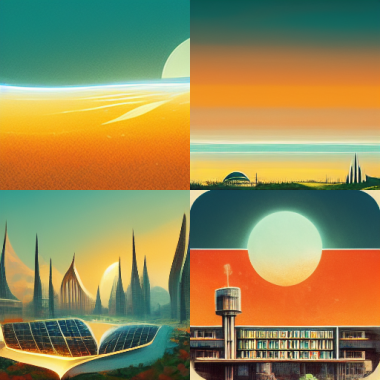
An AI imagines a webinar.

Craiyon imagines a webinar. I’m not sure what exactly is happening here, but I like the weirdness of the machine and the epic sun with clouds.

“People have to know about it!”  Linking material to the right audience is often a problem, and I sympathize as a writer, speaker, and maker of digital stuff.  The way to address that problem is not to offer a crappy winder, but to calibrate your posting for an audience.  Pick a platform and use its native protocols (tags, categories, etc.) to help people on that venue find it. You can increase your audience by communicating through other platforms, from emails to social media.  A live webinar won’t help, and, done badly, will depress the unfortunate people who endure it.

See, a webinar is something profoundly different from posting a chunk of content to the world.  It’s not about hurling material into people’s faces and expecting them to coo in splendid isolation. Instead, a live video event means you are asking for people to deliberately spend time and attention with you and whatever it is you’re offering.  Sure, some users will multitask digitally (doing emails, playing a game) or analogically (housecleaning, making food, playing with animals) but they are still choosing to allocate at least some of their time to you.  It is an ethical imperative to honor that, and it is – at best – rudeness to do otherwise.

Assuming audiences are passive and silent receptacles for content is a terrible mistake which flows from failing to honor their attention, but it’s also a very common one.  It ignores how people have been using digital technology for generations. We use it to share, to express ourselves, to reach out to other people, and have done so since Usenet. It’s the primal power behind the web and social media.   You can see this in gaming, where people like to chat, explore, attack or ally with other people, or make stuff.

So let people who pay attention to you act like people who are online with other people.  Don’t stifle them. Don’t block the ways they are often adding value to the event.  Instead, support their socialization and create a better webinar.

(I think some of this bad habit comes from tv culture, especially for older folks who remember broadcast schedules.  We’ve been trained to sit for the video, patiently, at a certain time.  I can say more about this later.)

If you want to host a webinar, be honest with yourself or your team as you think about what you want to accomplish. Do you really want to have meaningful interaction?  Is that essential to your concept of the event? If not, head to YouTube or cut a podcast.   That’s a fine thing to do. It means your event will become asynchronous content, which is most of what the digital world is, after all.  You’ll be able to focus on the appropriate kind of production for the best result.

Perhaps you don’t think you can support audience conversations. Maybe you’d like to, yet you think you just don’t have the capacity.  There’s no shame in that.  There are media and facilitation professionals, after all, who took the time to hone skills, and not everyone can be that good. You might feel overwhelmed with the sheer amount of moving parts involved in webinar software plus wrangling dozens or hundreds of human beings at a distance. Maybe you fear not being able to deal with abuse and trolling.  Or you’re actually part of a team, and it’s not clear you have the skills between you or the ability to organize a discussion.  Fine – go to YouTube instead.

Maybe you want feedback but would rather have it spread out over time, when you can focus on it.  That’s a really good idea.  Post to YouTube, make sure comments are turned on, then check those out as they come in – and be sure to react to them.  Or post your stuff to another platform for feedback, from a blog to whatever social media site you’re into. You can host the conversation, just asynchronously, rather than synchronously.  People might respond on various platforms and by making their own content. The result is not an event but an ongoing discussion, which can be awesome.

Yet too many webinar presenters haven’t gone through this internal questioning process.  They think: live video! webinars are easy! and run with it. Which is why there are too many vile ones.

Signs of a webinar that despises you

Once you think of this basic problem, of webinar organizers not honoring people’s attention and contributions, you can see evidence of it in many ways, large and small.

Craiyon imagines terrible webinars.

Craiyon imagines “terrible webinar.”  These are nine separate visualizations, but I like the way combining them looks like a Zoom gallery view.

Not recognizing the audience exists.  Listen to how presenters and facilitators speak of the event. They will usually praise or announce themselves and their content, which is fine. If they have sponsors they should thank them. But will they say anything about the audience?  Will they describe who’s there, or call out individual groups or participants?  Will they describe how the audience can participate in the session? Do they offer technical help for problems?

What I see instead, all too often, is webinar leaders speaking for posterity, not the present. They name themselves, not the rest of us involved. They introduce presenters and what they’re talking about – and that’s all.  Those of us paying attention may as well not exist.

One more detail: does the introduction address the audience’s nature? That is, are the opening remarks generic, or do they take into account who’s actually there?  For an academic webinar, do we just get the traditional academic obituary format, or are remarks pointed to the specific situation? (This is a general problem, not just limited to webinars.)

Making the audience invisible.  Here I’m not referring to when audience members have the option of turning on cameras and choose not to. I’m talking about webinar organizers who do this unto the audience, both literally and metaphorically.

In many Zoom meetings you can literally see other people, or at least their handles, if they’ve turned off their cameras.  In my Future Trends Forum avatars appear on half of the screen; people can also add some information about themselves (their institutional affiliation, their title) which other people can easily find with a mouseover.

We’re actually used to this kind of social presentation in many digital environments. In a shared Google document you can see “Anonymous Cetacean” flitting across a memo or spreadsheet.  Miro will display a floating pointer with a name for other users. Think of multiplayer computer games or virtual worlds for another version of this form of interpersonal presence.

Now think of webinars where the audience is effectively invisible. No avatars appear on screen, nor video feeds or handles.  (On24 is especially bad at this, among other problems.) You can’t even tell how many people are with you and the presenter. Are you alone or amid a horde?  It’s such an odd psychological experience, like staring into a camera lens for the first time and not knowing who’ll eventually look back.  On a practical level such invisibility keeps people from knowing who the literal audience is, if they’re thinking of what to communicate and how. It blocks networking, meeting people, seeing colleagues, making friends – what we do when we socialize.

Polling badly. Polls can be very useful tools. They can surface some of what the audience is thinking. They can wake up the disengaged, since responding to a poll is easy.  Depending on the tool being used, they can be playful.  I’m fond of how they often get more responses than a more qualitative approach can elicit, as some folks would rather click a single button than write a paragraph.

Yet webinar after webinar misuses polls, starting with just not using them when a quick poll would have assisted the presentation. I’ve also seen presenters show a poll’s results, mumble something about them being interesting, then – moving on, without responding meaningfully, much less incorporating the results into the rest of the program.  A good poll should impact the event. It should change things.

Worse, I’ve seen presenters misread polls in a basic way, like overstating one response over equivalent others, usually to pretend the exercise confirmed their preexisting ideas.  This is spectacularly dumb, since being surprised by the audience can be a real joy and learning opportunity.

Hiding questions. Many videoconference platforms have a formal Q+A box. This has some nice advantages, like encouraging people to phrase feedback as a question, and giving presenters/facilitators a steady stream of questions to work from without having to sift through a firehouse of discussion.

I love seeing other people’s questions when I’m in an audience.  It tells me something about the group, and can also expand my thinking about the material.

Yet some webinar organizers block other folks’ questions from view.  You can see your own, but no one else’s.  Which is so strange, like being in a classroom wearing blinders and earmuffs, with your head strapped in place so you can only behold the instructor and board.

Even worse are presenters who tell us they’re getting questions and comments, then don’t share them. I literally watched one academic presenter brag about getting dozens of questions, then saying they’d rather ask one of their own.  A fine way to diss your audience.

One more way to misuse a Q+A function is to only allow responses from facilitators.  Have you ever experienced this?  Type in a question, see it appear, and then only the webinar team can reply.  Nobody else is allowed.  If you’re allowed to see someone else’s question and you have a response, too bad.  Honestly, humans can be very creative in strangling other people’s abilities to communicate.

Anonymizing audience contributions.  It’s a truism in online teaching that it’s a good idea to mention someone’s name when you’re interacting with them, and I think that’s a fine idea for webinars.  “Good point, Ivan.” “Jeanne has this question…”  Names are powerful, as every society knows, and using them is a way to hail and recognize people.

Yet too often I hear presenters or facilitators strip away identity in favor of something anonymous, or semi-plagiarized.  “Here’s a comment from the chat…”  “I like this question, and it aligns with what I wanted to say, which is…”  If people took the time to share a query you should name and thank them, just from common decency, not to mention the way it can encourage others.

Shutting down chat. Chat boxes are one of the most ancient internet technologies, dating back to the early 1970s.  They appear in all kinds of forms, from ICQ and chat rooms (kids, ask your elders) to Discord and gamers trash talking. It’s a classic, low tech, wide open way for people to communicate.  All videoconferencing platforms I’ve used have chat functions, although in different configurations. Some try to deemphasize them by hiding boxes at startup or pushing them to one side, but they’re there.  They complement video and slides, offering another way to communicate.

I think I’ve seen just about everything in chat.  Arguments, lighthearted chatter, abuse, bad puns, professional assistance, hyperlinks, pedantry, budding romance… it’s clearly a versatile tool.

So why do so many webinars shut chat down? I’ve heard a reliable set of reasons over the years.  First, because the host(s) don’t think they can monitor chat. The possibilities are overwhelming and so they nix it. Second, because they fear abuse, either arguments overheating or outsiders zoombombing.  Third, because they think it distracts from the main event.

I am sympathetic to these reasons, especially as I’ve encountered them all, but I don’t think they are actually sufficient in many cases.  If people can’t monitor chat, they can deputize folks to do just that.  Or they can learn.  (For myself, when I run a webinar I track the audio and video conversation, any Q+A, backchannel on Twitter, email for emergencies, text messages ditto, *and* chat, while taking screenshots and looking to a text file for notes. I might be an outlier, but neither am I a hacker nor a cyberkid. People can learn.)
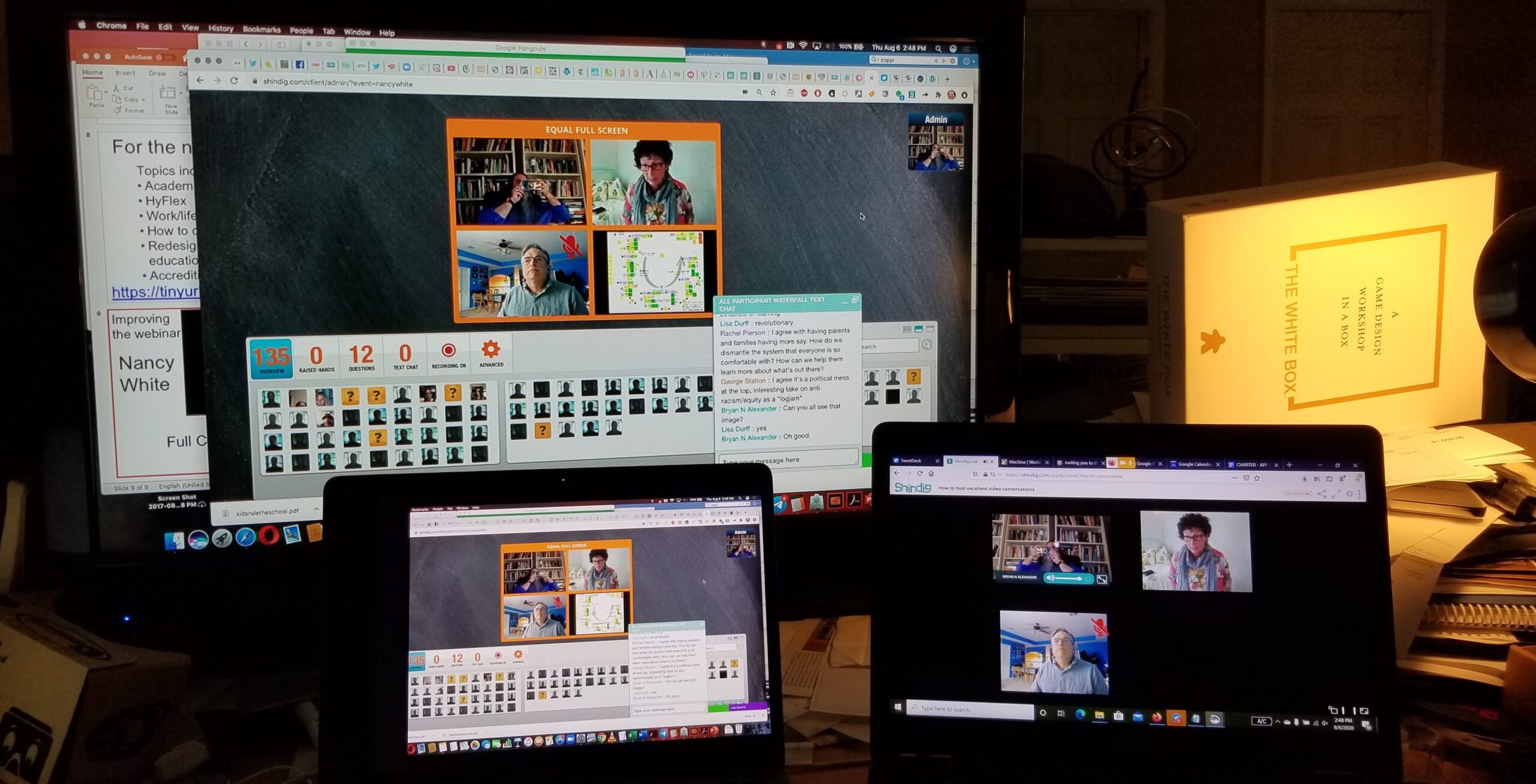
The Future Trends Forum admin view, with three computers.

I admit to overdoing it with hardware this one time.

The fear of abuse is a real one, but I think folks turn it into an unstoppable demon unnecessarily.  We’ve been handling Zoombombing for a while and have developed good ways to ward it off – here’s one easy to find list, and here’s another.  On top of those, we can turn to the online facilitation world to help keep discussions from going nuclear.  I also find some communities are robust enough to corral themselves.

You might look at me and say, “Ah, but you’re a white man and hence immune to abuse.” The former is true but the latter is not, yet I take the point about other populations being more likely to be targeted.  I try to structure events to make sure this doesn’t happen. The Future Trends Forum has hosted its share of white men, along with many women, people of color, a trans gubernatorial candidate, scholars writing about topics which have already elicited horrendous attacks online, and more.  We have a good record on this so far.  I’m not saying all chat is delight, but I am saying preemptively killing webinar chat instead of actually taking useful steps is often a bad move.

As for chat distracting from the main event, I tend to view that possibility as commentary on the video.  If the talking heads or slides are going on and people are lighting up the chat, see what’s going on in chat.  If it’s not about the content, then mostly likely either the content might be to blame (seriously) or something came up in the chat which energized people, and thus the presenters should address it.

Have you noticed what people do when a webinar kills chat?  Some folks check out, as far as we can tell, but others will start working other platform functions for that purpose.  A snuffed-out chatbox sometimes drives people to the Q+A box, which means they might not be asking questions, or end up cramming comments into interrogative shapes.  They may also take to Twitter, productively (to discuss the topic) or not so much (to complain about chat and moderation). The human desire to socialize is powerful. People will find a way.

And speaking of which –

Not making backchannel arrangements. Some webinar participants will multitask away from the video platform to discuss the show elsewhere, especially if the session makes the mistakes I’ve been talking about. Before Musk bought it Twitter was a favorite destination.  Nowadays we have many options, yet the idea remains.

Webinars can own this. It’s easy for a presenter to suggest a backchannel.  Just pick one you’d like to monitor or have someone monitor for you, say as much before and during the event, and do what it takes to make it work, like identifying a hashtag. If you don’t like social media, pop open a Google Doc or Etherpad and share connecting information.  Use a collective whiteboard if your platform allows, or pick out an external one, like Jamboard or Miro if not.

If you lack the capacity to carefully monitor the backchannel, you can do several things.  First, say so.  Be clear that while there is a place to chat, you chat at your own risk. Second, get other folks to do so. Maybe you can pay someone professionally, or ask another to assist on a volunteer basis. You might be surprised by the latter, and end up building both a good experience and a nice connection.

Blowing you off after the show. Some webinar hosts will follow up by email with thanks, or pointers to recordings, or maybe a survey.  Others will not, which is disappointing.  If folks came to your show, contributed their attention, and also added content, the least you can do is appreciate it afterwards.  (I try to email individuals who stood out.)

I think you all get the idea.


Today I asked ChatGPT about bad webinars.  One response from their list of ten was:

Inadequate Interaction: A lack of interaction with the audience, such as not addressing questions or ignoring the chat, can make participants feel disconnected and uninvolved.

I also asked about good webinars, and one answer from 13 was:

Interaction: Engage with your audience by including Q&A sessions, polls, or chat features. This interaction can break up the presentation and keep attendees involved.

Weirdly, in neither response did the bot say “please kill chat” or “turn Q+A into a howling voice” or “make sure to not name or thank participants.” Which means other folks have been thinking and talking about this problem for years, which is how OpenAI found the sentiment and expressed it through this large language model.

There are other reasons for webinars to turn foul, but I think disrespecting the audience is one we should be better about in 2023.

Posted in videoconferencing | 7 Comments

How high will today’s largest endowments grow by 2055?

How might the richest American colleges and universities develop in the future?

I’ve been looking at this small yet superinfluential slice of higher education for a while.  For example, since 2018 I’ve been trying to forecast when the most expensive campus will crack six figures for its annual cost of attendance.  (Right now it looks like 2025/2026, so coming up fast) And I follow research from other people.  The New Press published two powerful books, The Merit Myth (Anthony Carnevale et al) and Poison Ivy (Evan Mandery) (also a fantastic Future Trends Forum guest in 2022).

kim_joshua_Darmouth official pageLast week Joshua Kim offered a thoughtful addition to this topic at his Inside Higher Ed column.  He examined college and university endowments, looking back in time, then projecting them forward.  I’d like to draw your attention to the latter today.

(Just a quick reminder about the reality of endowments: only a tiny fraction of America’s 4,000 or so colleges and universities have endowments of meaningful size.  Endowments are not savings accounts, as a good amount of the funding tends to be structured for certain purposes.)

Josh begins with data from NACUBO, an organization I greatly admire and have worked with.  He sets the stage by looking at the endowments of the richest institutions back in 1990, first with that year’s amounts, then adjusted for our time to account for inflation.  I’ll pick the top 21 of Kim’s list:

School 1990 endowment (in thousands) 1990 endowment in constant (July 2023) dollars (in thousands)
Harvard $4,653,229 $11,165,229
Texas U System $3,731,826 $8,954,361
Yale $2,570,892 $6,168,748
Stanford $2,053,128 $4,926,395
Princeton $2,527,140 $6,063,767
MIT $1,404,588 $3,370,250
Penn $808,409 $1,939,743
Michigan $448,209 $1,075,458
Notre Dame $605,630 $1,453,183
Northwestern $983,556 $2,360,001
Columbia $1,494,938 $3,587,041
Washington University $1,365,854 $3,277,309
Duke $472,923 $1,134,759
Chicago $1,074,505 $2,578,230
Vanderbilt $603,708 $1,448,572
Emory $1,153,875 $2,768,675
UVA $487,007 $1,168,553
Cornell $926,900 $2,224,057
Johns Hopkins $560,478 $1,344,843
U of Southern California $495,595 $1,189,159
Dartmouth $593,952 $1,425,163

In case that table waters your eyes, look at the second row. Harvard University’s endowment was $4.6 billion back in 1990, or the equivalent of just over $11 billion now.  (That’s Billion with a “B”.) Harvard’s regional neighbors MIT and much hated Yale also belonged to the billion-dollar endowment club back them, as did Princeton, the University of Texas, and Stanford University.  The campus I was attending in 1990, the University of Michigan, held only a measly half-billion.

What happened to this rarefied club in the decades since?  Something else to know about college and university endowments is that they can seriously grow, if well tended by financial professionals.  Here’s what Josh found for 2022, the year of the latest data:

School FY22 endowment (in thousands)
Harvard $49,444,494
Texas U System $42,668,276
Yale $41,383,300
Stanford $36,300,000
Princeton $35,794,186
MIT $24,739,862
Penn $20,724,351
Michigan $17,347,188
Notre Dame $16,729,299
Northwestern $14,121,488
Columbia $13,279,846
Washington University $12,252,329
Duke $12,116,260
Chicago $10,300,000
Vanderbilt $10,206,067
Emory $9,997,742
UVA $9,858,442
Cornell $9,838,198
Johns Hopkins $8,244,472
U of Southern California $8,100,000
Dartmouth $8,065,743

Growth indeed.   Those 1990 financials expanded by factors of six, seven, eight, or more.  Harvard’s $4.6 became nearly $50 billion.  My Michigan’s ballooned to $17 billion. Dartmouth, where Josh works, soared from $560 million to just over $8 billion.

Now let’s turn at last to future possibilities, the subject of this blog.  Just how high might these endowments reach if things keep going as they do?  (This is a futures method called extrapolation.) Josh picked the year 2055, did some number crunching, and offered this fiduciary glimpse:

School
Potential 2055 endowment (2023 dollars—in thousands)
Harvard $210,057,439
Texas U System $181,269,704
Yale $175,810,678
Stanford $154,215,049
Princeton $152,066,174
MIT $105,103,554
Penn $88,044,264
Michigan $73,696,899
Notre Dame $71,071,891
Northwestern $59,993,001
Columbia $56,417,413
Washington University $52,052,163
Duke $51,474,094
Chicago $43,757,989
Vanderbilt $43,358,929
Emory $42,473,892
UVA $41,882,097
Cornell $41,796,093
Johns Hopkins $35,025,390
U of Southern California $34,411,622
Dartmouth $34,266,087

These are first-order extrapolations, I say again. They are not rock-solid predictions.  They give us a first pass at where things might be headed.

And Josh offers even more caveats.  For his method, he explains:”The assumptions I used are that returns would equal 10 percent annually, and inflation would run at 3 percent.” He immediately notes that this might not be too realistic:

The reason that I was aggressive in returns and put a lower inflation number is that I did not input any additions to each endowment through capital campaigns or other giving. The calculations also leave out potential future annual drawdowns of endowments.

The assumption that there will be no giving to these universities in the next 30 years is not defensible. An aging cohort of high-net-worth baby boomer alums is set to transfer enormous sums of capital to their heirs and to charity, and universities will almost surely benefit from that eventuality.

Yet it’s a starting point.  Kim goes on: “Still, not knowing what investment or inflation will do in the next 30 years—we can leave out future giving to help with some confidence that the projections below are at least in the ballpark.”

What do these projections tell us?

First, the richest institutions will likely become even more wealthy to a staggering degree.  We can speak of Harvard, the University of Texas, and Stanford’s endowments in meaningful factions of trillions of dollars.  Now, as inflation historically rises, the word “trillion” will lose the eye-popping power it retains today, but looking ahead gives us a sense of scale.

Second, the magnitude of those monies will make calls to use them even more urgent the next time we have a crisis on the order of the COVID-19 pandemic.

Third, *if* American culture shifts away from hyperindividualized neoliberalism towards a more public orientation, perhaps along the lines of the FDR era, we might see calls for these institutions to spend some of those hoards to enroll more students who aren’t rich.

Fourth, the majestic size of these troves might inspire more political moves against them, from tax proposals to contributions into the local community, or other policies. Recall that Thomas Piketty wondered if early 21st century endowments actually contributed to regional wealth inequality. How will these staggering sums appear over the next decades?

Thank you, Josh, for a thought provoking column.

Posted in economics, future of education | Leave a comment

To grow or not to grow? Take this with a giant pile of salt.

One of the great questions of our time is: shall we continue to grow?

I’m referring to our civilization and its massive, complex footprint, which we can measure in many ways.  Will we keep growing our economy, making more goods, services, and money?  Will we keep growing our total population?  And will we decide to keep growing in areas where growth is very difficult?

I’ve been mulling over these questions for years and have a book proposal to fire off shortly, but today I wanted to share one example for discussion.  It’s about the American state of Arizona and how economic and population growth, a/k/a development, is running smack into the natural barrier of not enough water.

(Note: this is a quick post written in haste, as I race between addressing a number of issues and crises.  I’m going to touch too quickly and with too much generalization on giant, complex topics.  I’ve written about them before and will say more later.)

It’s well known that Arizona is very arid. Big chunks of it are desert. Yet for years people keep moving into the state, putting up buildings, expanding towns and cities, developing and developing on the very knife edge of sustainability.  This is well known, I think.

Arizona mountains and plantsNow the state might have hit a hard limit to its growth curve.  In January the state government ordered a halt to development around Phoenix, due to water limitations.  More recently the New York Times noted in a powerful piece that Arizona, like many American states, is overpumping its groundwater.  Yet more people want to move to the state and development is hungry.  What is to be done?

I think of this as a microcosm of our civilization as we look ahead.  There are logistical and practical details, but also a kind of strategy or ideology in play. Are we going to keep revving up growth or will we try some other approach?

All of this came to me, around 2400 miles to the least, as I listened to a very well done Times podcast about a proposed plan for Arizona’s water crisis.  I recommend listening to the whole thing, but the gist is a spectacular idea: building a giant water desalination plant in a Mexican city on the edge of the Sea of Cortez, then pumping the de-salted water far north to Arizona.

The project immediately divided people.  On the pro-growth side the arguments are familiar: we (Arizonans) need to make space for newcomers.  We’re also a state that invents grandly, so this plant+pipeline fits in our tradition.  I would add: it’s consistent with innovation-happy American culture as well.

On the other side, the podcast points out some big problems.  First, it would be huge expensive.  Second, there’s a lot of politics to wrangle, from international diplomacy down to persuading multiple urban and rural folks to go along.  Third, disposing of what would be a giant and growing mountain of salt is a huge burden, one most likely slotted to Mexicans to deal with.  Fourth, the proposed pipeline would stomp on a range of sensitive environments from the sea to consumers.

For me, these are partly echoes of old western debates between development and its opponents, but now with a climate crisis dimension. If human industry is heating the planet, should we respond with more industry or less?  Should we turn to our tested wellsprings of creativity and implementation, or instead haul back on the reins and just… stop?

“But Bryan,” some of you might ask, “What does this have to do with higher education?  That’s what your writing is about, right?”

I see academia all over that great divide right now.  On the development side, we have helped civilization warm the world, as we’ve done our share of educating people in a wide range of pro-development fields from mechanical engineering to business.  We’ve also done generations of research along these lines.  And in the United States we have more or less privatized higher ed’s finances, driving most colleges and universities to reach frantically for dollars wherever they could.  We *need* growth to generate enough of an economy for us to draw upon.

Yet we’re also somewhat on the anti-growth side.  Academic researchers have been stalwarts in researching the climate crisis and calling for humanity to respond.  Some academics have studied and developed ideas around anti-growth political economy, such as degrowth or donut economics. Some academics also teach along these lines.

I’m not sure how many academics want to apply post-growth thinking to their institution’s operations. In the USA we’ve depended on ever-growing enrollment (and hence dollars) for two generations.  Since enrollment stopped and receded, we still raise our budgets and continue to beat the advancement drum.   Yet I’ve heard some campus degrowth talk from individual faculty and staff, who think their institution has enrolled too many students.  And the occasional campus leader has publicly stated they will accept smaller student bodies (I have a post on West Virginia coming up).

How far will the latter grow?  I’m not sure, at this point.  Many academics tell me the solution to their problems involves the spending of a lot more money, often at the state or federal level. I don’t see Americans in general rejecting consumerism, nor have I seen most academics wanting to reduce their professional footprint.  Perhaps anti-development will remain a minority opinion for the foreseeable future.

I wonder how this might play out with Arizonan colleges and universities.  Who will commit to supporting the plant and pipeline publicly?  Which departments will try to work with the project, such as civil engineering?  And who will oppose the idea, and from which sites within the state’s academic ecosystem?

I think the debate is there, both in the state and elsewhere, if only in a nascent stage.  We can see it in the divisions over Arizona’s grand lunge for more water, and perhaps echoes of that within the entire academic world.

More on this to come.


(photo by Quinn Dombrowski)

Posted in climatechange | 7 Comments

One nation mandates climate classes for its entire higher education system

How might academia respond to the climate crisis?

One way is for colleges and universities to teach more content and classes on the topic. This is a path individual faculty who are passionate about global warming can follow, to the extent they have the autonomy to redesign their classes or to create new ones.  At a larger scale, academic leaders, from department chairs to academic deans and presidents, can help support the infusion of climate into curricula, or the creation of entirely new climate-themes programs, such as certificates, degrees, or interdisciplinary courses of study.

…but on the other hand, maybe some academics won’t have the choice to do so, because the decision will be made for them, from outside of academia.

India University Grants Commission logoI’m thinking of a recent development. The Indian government decided that all of that nation’s universities will now require students to take global warming classes in order to graduate.  As University World News put it,

All students at India’s universities will have to study subjects such as environmental education and climate change in order to graduate, starting from the about-to-begin 2023 to 2024 academic year, according to guidelines from the University Grants Commission (UGC), the country’s higher education apex body.

The UGC also published curricular guidelines about such coursework earlier this year.

There are more interesting details in Shuriah Niazi’s account.  This requirement covers all students studying all topics, “including general engineering, medical, architecture, pharmacy, management, among others.”

The required classes are also not based in one single discipline:

the new environment education curriculum will be multidisciplinary and encompass areas such as climate change, sustainable development, conservation and management of biological resources and biodiversity, pollution, sanitation, waste management, and forest and wildlife protection.

(This matches my call for climate change to be the new liberal arts, in the American context.)

The reason for doing this is immediate disasters striking the nation:

Many academics have noted that as India has witnessed extreme weather events in the past few years, including huge loss to life and property, extreme heat waves, unprecedented floods and excess rainfall, landslides, glacier bursts etc, believed to be triggered by climate change and environmental imbalance, the environment as a subject has become of prime importance.

(There is also a professional group for Indian academics teaching the climate crisis.  Hello, TACC!)

This is an important move for global higher education, as I think it represents the first nation to mandate climate crisis classwork for all postsecondary students.  Some nations have encouraged such classwork’s development to various degrees, but not required such, as far as I can tell.  Some individual campuses require such work – indeed, University of Barcelona students struck to compel their administration to issue that mandate.  Yet at the level of all post-secondary education for a country, I think India might have broken new ground.

Will others follow suit?  I’m not sure of the geopolitics here.  Perhaps other BRICS countries will be inspired.  Maybe some individual nations hit hard by climate, or clearly threatened by global warming, will consider such a move.  I imagine national leaderships seeking to build up green job capacity may find this a useful policy tool.

I don’t know what this means for academic freedom and autonomy in India’s colleges and universities.  UGC does have the power to issue such policies.  Is this an unusual step in practice?  How does it connect with prime minister Modi’s policies*?  I am not sure, and would like to learn more.

It might be that years from now we’ll see mandatory climate classes across the world.  Alternatively, such mandates might become superfluous as student demand soars, and wise academic institutions meet it.

*Please don’t interpret this post as an endorsement either of Modi or his leadership.

(thanks to Vivian Forssman for the main link)

Posted in climatechange | 3 Comments

Starting my future of higher education seminar at Georgetown

Today I’m holding the first class for my Georgetown University Learning, Design, and Technology future of higher education class.  It’s one I created from scratch and am enormously fond of.

I’ve taught it several times, and am keeping the majority of the syllabus this time.  Yet I’m also adding some twists and would like to share the whole thing here, in my usual spirit of transparency and openness around teaching.

The goal remains to teach students three things: the best thinking about the future of higher education; how to do futures work; interdisciplinary study.  We do this work through a bunch of tasks and exercises: reading articles, stories, and books; minilectures from me; discussions driven by them; weekly responses; weekly horizon scanning; two mid-term projects. As ever, the final project involves them creating a new higher education institution and portraying it creatively.

Also as ever, this is a student driven class to a substantial degree.  The class shapes “rules of the road” on the first day. They determine one week’s topic and readings for two weeks. Their horizon scanning findings feed into discussions (and this time we record them on a running Google Doc).

One change is that I’m adding AI material throughout the term. It’s a mix of hands-on and critical work. They will do AI exercises and hold discussions about them nearly every week, tied to that week’s topics.

Another change is that I’m increasing the amount of time aimed at the climate crisis.  They’ll read Universities on Fire at the course’s end but precede that with horizon scanning for the topic.  And there are two points where students connect AI and climate change.

Several things are still in the design process now, starting with my Matrix University game.  I haven’t had a chance during the past year to revise it further, so hopefully can carve out some time over the next month to do so.  (If you haven’t seen the game, it’s a kind of tabletop/role playing game hybrid, a simulation of a campus over the next decades.)

I’d also like to make a deliberate effort to include Georgetown’s fine Maker Hub and Gelardin multimedia support center in giving the students more opportunities for creative work. Typically I urge – well, harangue – the class about these awesome campus resources. This time I should loop them in.

Here’s the syllabus.  I’ve deactivated some links which only the logged-in students can access.

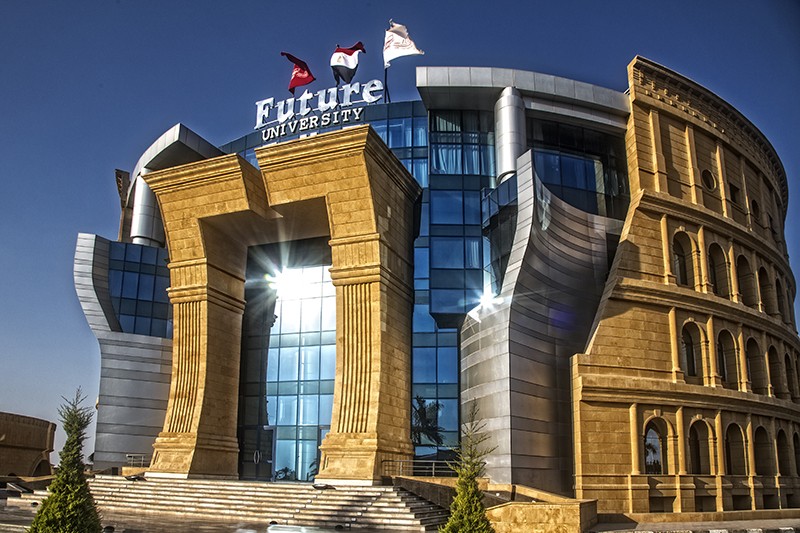
Future University in Egypt

Thursday, August 24, 2023 – Introductions

Designing the class: technologies, community, practices, pathways

Forecasting methods: introduction to futuring

Exercise: introduction Canvas thread

Stewart Brand, “Pace Layering: How Complex Systems Learn and Keep Learning”

Exercise: assemble academic systems, 1

Exercise: futures wheel

Thursday, August 31, 2023 – Futures and Systems

Gidley, The Future: A Very Short Introduction, chapters 1-4

How To Run a College, chapters 1-6

Exercise: assemble academic systems, 2

AI exercise: how AI imagines higher education

Thursday, September 7, 2023 – Systems and scanning

Forecasting methods: horizon scanning, higher education (share notes here)

How To Run a College, chapters 7-9

Stanford 2025 

Exercise: set up digital scanning practice

AI exercise: how can AI help with horizon scanning?

Thursday, September 14, 2023 – Trend Analysis

Exercise: horizon scanning (share notes here)

Forecasting methods: trend analysis, STEEP

Exercise: turn this week’s horizon scanning into trends

Academia Next, chapters 1-6

AI exercise: turn horizon scan results into trends

Thursday, September 21, 2023 – Scenarios

Exercise: horizon scanning (share notes here)

Academia Next, chapters 7-15

Forecasting methods: scenarios

AI exercise: use AI to create scenario text and images (some extra thoughts here)

Thursday, September 28, 2023 – Speculative Fiction as Futures Tool

Exercise: horizon scanning (share notes here)

Forecasting methods: fiction

Stories:

AI exercise: ask AIs to create future stories

Friday, September 29, 2022 – TRENDS ANALYSIS DUE

Thursday, October 5, 2023 – Delphi Method: Educational Technology

Exercise: horizon scanning  (share notes here)

EDUCAUSE Horizon Report 2023 

Forecasting methods: the Delphi Method

AI exercise: explore for Delphi process

Thursday, October 12, 2023 – Educational Technology 

Exercise: horizon scanning (share notes here)

Readings: selected by students

  • (items here)

AI exercise: TBD

Thursday, October 19, 2023 – Gaming the Future

Forecasting methods: simulation gaming

Exercise: horizon scanning (share notes here)

Readings:

  1. Alexander, “A Web Game for Predicting Some Futures: Exploring the Wisdom of Crowds” 
  2. Practice games

Matrix University game materials (link tk)

  • Individual role briefings (in email)
  • Game board

Role assignments:  TK

Matrix game, 1

Thursday, October 26, 2023 – Student Determined Topics

Exercise: horizon scanning (share notes here)

Matrix game, 2

AI exercise: getting an AI to manage a simulation game (some thoughts here)

Friday, October 27, 2022 – STRATEGY MEMO DUE

Thursday, November 2, 2023 – Decolonizing the University

Exercise: horizon scanning (share notes here)

la paperson, A Third University Is Possible

AI exercise: to what extent does the technology reflect colonialism?

Thursday, November 9, 2023 – Higher Education and the Climate Crisis, I

Exercise: horizon scanning (share notes here)

Universities on Fire (to 111)

AI exercise: use text and image generators to imagine academic futures in the Anthropocene

Thursday, November 16, 2023 – Higher Education and the Climate Crisis, II

Exercise: horizon scanning (share notes here)

Universities on Fire (115-to end)

AI exercise: consider AI’s academic role in the climate crisis

(no class November 23, 2022 – Fall Recess)

Thursday, November 30, 2023 – Student Futures

Presentations

AI exercise: envisioning the rest of the century

Tuesday, December 12, 2023 – FINAL PROJECT DUE


READINGS

  • Bryan Alexander, Academia Next.
  • ____, Universities on Fire.
  • Jennifer Gidley, The Future: A Very Short Introduction.
  • Brian C. Mitchell and W. Joseph King, How to Run a College A Practical Guide for Trustees, Faculty, Administrators, and Policymakers.
  • la paperson, A Third University Is Possible.

Recommended readings

  • Adrianna Kezar, How Colleges Change.
  • David Edgerton, The Shock of the Old.
  • David Staley, Alternative Universities: Speculative Design for Innovation in Higher Education.
  • Tressie McMillan Cottom, Lower Ed: The Troubling Rise of For-Profit Colleges in the New Economy.
  • Joshua R. Eyler, How Humans Learn: The Science and Stories behind Effective College Teaching.
  • Charles Fadel, Wayne Holmes, Maya Bialik, Artificial Intelligence In Education: Promises and Implications for Teaching and Learning.
Posted in automation, classes and teaching, teaching | 6 Comments

Solarpunk as a way of redesigning higher education for the climate crisis

One well-known risk of working on climate change is depression.  The topic presents so many terrible futures that dwelling in it can be mentally brutal.

In response to this grim issue, people have been offering hopeful ways of thinking about global warming.  One of them became a design movement which strikes me as an antidote, and I’d like to introduce it and its implications for higher education in this post.

The design movement is called solarpunk.

1: What is solarpunk?

I’ve seen people describe it as a way of prompting us to imagine the best possible Anthropocene, and that’s a good start.  Generally solarpunk envisions a positive response to the climate crisis, a way of designing and living that’s in harmony with nature, as opposed to exploiting it.  We rethink everything from transportation to clothing, food systems, landscapes, and social relations.  Put another way, solarpunk is a prompt to get us thinking of a climate future that isn’t horrifying, but actually appealing.

The name is interesting.  On its face the two parts clash: “solar” standing for the sun, of course, and “punk” referring to a rebellious or nihilisitc attitude. In practice the prefix makes us think of solar power, representing renewable energy in general, while the suffix emphasizes creative dissent and an attempt to break with the present day order of things.  The sun also tends to have a positive, warming resonance, which signals the term’s positive aspirations.  For me, “punk” particularly indicates an unfinished, improv, DIY creative energy.

We can tease out a host of concepts under the solarpunk header, starting with biophilic design. This is an architectural school which seeks to reconnect people with nature within the built environment.

For an example, consider this classic image by Imperial Boy:

A solarpunk vision by Imperial Boy.

The city is far greener than most.  Note the plants and trees growing on buildings beyond their first floors, intertwining flora with urban life.  Note, too the centrality of water, both in the canal and (implicitly) running through the plants.  There’s much more to biophilic design, but let’s move on for now.

A second concept is what we used to call appropriate technologies for the post-fossil fuel world.  Solarpunk is neither anti-tech nor boosting tech for its own sake, but seeks instead to pick tools which work and have a minimal footprint.

For an example, watch this extraordinary video which is putatively – of all things – a yogurt ad:

Some days I prefer this version, with the voiceover (and ad copy) removed:

Notice the mix of technologies.  Some are advanced, like human-ish robots, drones for delivery and local rain clouds. Others are not, like old school clothing.   Technology doesn’t dominate the world, but sits nicely within a human and natural context.

A third element is a kind of left-green politics. Solarpunk centers the environment and renewing it within the political sphere, as per Green parties.  It tends to be anti-consumerist and anti-capitalist.  It’s also keen on social justice along multiple axes: gender, race, geography, development, etc.  I’ve especially seen the latter in solarpunk fiction, which often turns around ways of addressing inter-human injustices.

Solarpunk stories and art often speak of growth, but it’s important to note that it’s not in the neoliberal sense of ever-expanding market share, business size, stock value, and so on. Instead, solarpunk growth strikes me as being more about natural renewal. Indeed, that can be at the expense of humanity, whose footprint recedes in many ways.

Additionally, it’s important to see that solarpunk is a transnational, global movement. We can find examples from Brazil, China, India, Europe, and the United States.  The designs show this, with local/national details and remixes of many cultures.  At the same time, solarpunk stories are often very local, focused on a given community.

We can also speak of solarpunk’s visual aesthetics.  They often emphasize green colors, of course.  We also see a mix of Earth tone.  The appropriate technology dimension leads to interesting representations of hardware combined with nature.

There’s a lot more to be said about this design movement.  We can pull up examples from literature, games, and art.  We could dive into the long prehistory of solarpunk antecedents. But I’d like to pause that for now (see below for some links) in order to turn to how we might apply it to colleges and universities.

2: What might solarpunk mean for higher education?

Now I’d like to bring this design movement to bear on academia as we wade ever more deeply into the climate crisis.  My intuition is that solarpunk can inspire us to interesting and useful ways of rethinking colleges and universities.

Some AIs agree. Claude.AI had some thoughts, starting with the physical campus:

Here are some ways a college campus could embrace solarpunk ideals and aesthetics:

  • Abundant plants, trees, gardens, and green roofs on every building to integrate nature and capture carbon. The campus could focus on native species and food production.
  • Renewable energy like solar panels and wind turbines providing electricity. Buildings designed for natural light and ventilation to minimize energy use.
  • Sustainable architecture with recycled and natural materials. Lots of wood, stone, and glass for a bright, earthy look. Decorative elements made through 3D printing or crafts.
  • Rainwater harvesting systems used for irrigation and plumbing. Features like constructed wetlands and bioswales for drainage.
  • Transportation by walking, biking, and public transit encouraged over cars. Paths connecting campus to greenbelt areas and the local community.
  • Makerspaces with technology like 3D printers where students can build and repair sustainable devices. DIY and upcycling emphasized.
  • Communal gardens, kitchens, workshops, and social spaces to foster sharing and collaboration. Focus on circular economy and repair/reuse over waste.

Next, Claude has ideas about the non-physical infrastructure of a college or university:

  • Courses and research involving agriculture, renewable energy, ecology, technology, social justice, arts, etc. with a holistic approach to solving environmental problems and creating sustainable systems.
  • Campus culture values equity, inclusion, cooperation, and democratic processes. Students, staff, and community partners work together on improving sustainability on campus and beyond.

The overall goal would be a closed-loop, carbon neutral or even restorative ecosystem improving the natural and social environment.

That’s a good start, covering a nice range of topics.  Each makes at least some sense, but is by no means the final word.  And we can see the bot hitting some of the domains I’ve previously identified:

How higher education engages with the climate crisis_overall

I would add even more. Does solarpunk suggest collaborations between campus and the local community, such as those communal kitchens?  How might academic research play a role on the wider regional or global stage?

Visual AI services have created some intriguing images.   An early edition of Midjourney depicted some interesting, abstract views, like these:

Solarpunk_university_4 pix JohMag23__Midjourney

Sketchy, but you can see glimpses of nature and various academic signifiers.

Stable Diffusion presents more details:

solarpunk by Stable Diffusion

Now we see buildings deeply intertwined with greenery – forests and farms?  Water lines one side, while solar panels are plentiful.

Nowadays Midjourney offers more detailed visions, like so:

bryanalexander_A_solarpunk_university._glass and blue water

There’s a strong emphasis on water and glass, suggesting greenhouses, perhaps, or passive heating and cooling.

Compare with this one:

bryanalexander_A_solarpunk_university._lots of brown wood

I don’t know what “…ATO SURAN” means but do enjoy the surrealism of AI image generators freestyling new languages.

Again with water and glass.  But the brown/tan colored structures might suggest wood or mass timber, for a very different building design.

Hopefully you, dear reader, may have some ideas which you’d like to share in comments, your own blog, or on social media. I think this is a good prompt for reflection, conversations, prototyping, and workshops.  In fact, I’m going to host a live video Future Trends Forum session this week, wherein participants can develop their own ideas together.  Join us!

There’s a lot more to look into if you’d like to explore solarpunk.  The Arizona State University’s Hieroglyph project’s manifesto is handy, as is this interview with its author.  This article goes into more detail. Here’s one nice guide.  Solarpunks.net has good materials.  Rhys Williams has a good appreciation and critique.

(drawing on sources like Solarpunk Anarchist and Built In)

Posted in climatechange, Future Trends Forum | 5 Comments

More campuses under extreme weather

Yesterday I wrote about two Canadian campuses endangered by fires. Climate change played some role in intensifying those conflagrations.

Today I offer a related story.  This post will be relatively brief, as I’m with my wife, back in a hospital again.

Let me note a group of American colleges and universities threatened by another type of extreme weather.  These are institutions in southern California, in the way of tropical cyclone/hurricane (now post-tropical cyclone) Hilary.

"The Weather Prediction Center’s updated Excessive Rainfall Outlook for August 19–22, regarding Hurricane Hilary"

“The Weather Prediction Center’s updated Excessive Rainfall Outlook for August 19–22, regarding Hurricane Hilary”

How are those institutions responding? At Inside Higher Ed Doug Lederman notes some examples:

Palomar College, a two-year institution north of San Diego, said that “due to a state of emergency,” it had canceled classes at all of its locations on Monday. Sunday afternoon, California State University, Los Angeles, updated its social media pages to say that it, too, would cancel classes and ask employees to work from home Monday.

Sunday night, the San Diego Community College District said all of its campuses and facilities would be closed today, due to the “lingering effects” of the storm.

San Diego State University said in a communiqué to students and employees that it would shift to virtual instruction and telework for “all employees who are able to do so.”

At the same time, “[o]ther institutions, including Pasadena City College and MiraCosta College, were still planning to operate normally Monday as of late Sunday.”

Hilary also crashed through Mexico, killing at least one person.  I haven’t been able to find any news about impacts on that nation’s universities.

A hurricane striking California is very strange.  The last one was apparently in the 1930s.  Hilary is evidently the result of the strengthening El Nino.

Hurricanes hitting the American southeast and east coast are, alas, not at all unusual.  Apparently a series are forming up in the Caribbean.

To what extent can we understand this extreme weather as the result of climate change?  It seems to be too early to tell.  One scientific group, World Weather Attribution, is still researching and deliberating.  Other opinions vary. Which tells us a few things:

  1. To be cautious about too rapidly blaming dangerous weather on the climate crisis.
  2. To learn about how we respond to these storms and fires, regardless of their causes, so that we can apply the results to future incidents.
  3. To remember that the number and strength of such events is going to increase over time.

All best wishes for the safety of people in Hilary’s path.

Posted in climatechange | 2 Comments

Higher education and climate change: two stories from August 2023

How might academics respond to the unfolding climate crisis?

Today I’d like to share two developments which can help us think through that question.

The first comes from Canada, where two campuses (so far) have been under evacuation orders due to out of control fires.  The University of British Columbia (Okanagan Campus), an institution with more than 11,000 students, announced a total evacuation yesterday as fires roared nearby.

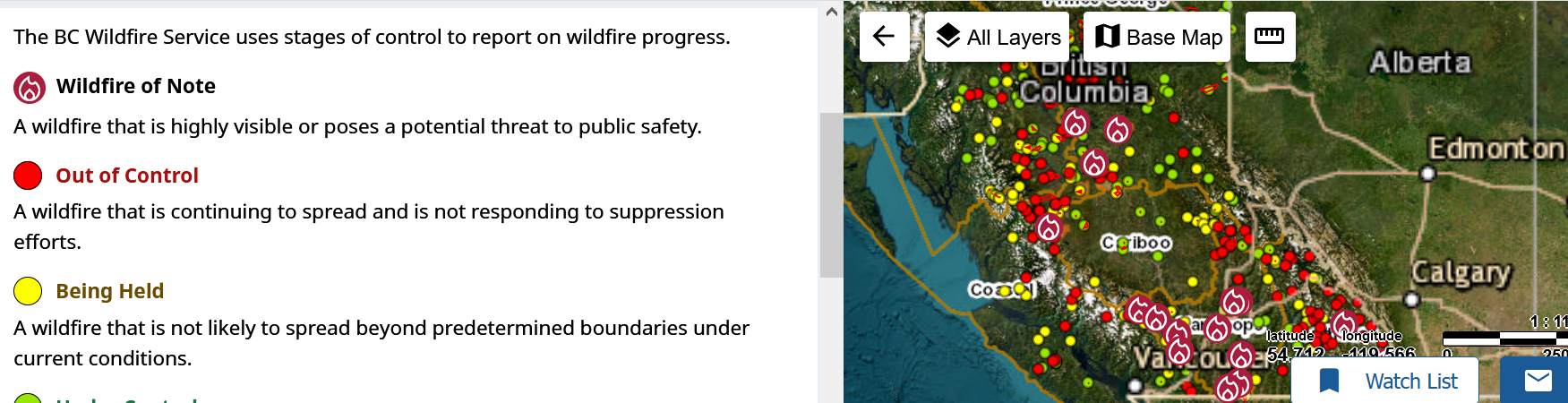
British Columbia is now under a state of emergency. You can see the status of fires across the province from this governmental website:

British Columbia fires_2023 August 19

The UBCO main page now features this very concise announcement: “A fire is burning near UBC Okanagan Campus. Evacuate.”

At the same time, farther to the north, Aurora College of Yelloknife (their website keeps giving me errors; anyone else getting this?) is delaying the start of fall classes because of fires, which have prompted evacuation in the area.  The College’s Facebook account said this, two days ago:

Due to the evacuation of Yellowknife, Ndilo and Dettah, Aurora College’s Yellowknife North Slave Campus will be closed until further notice. We will re-assess the closure as updates are received from city officials and emergency organizations.

According to one local site, the delay is:

to provide more time for emergency personnel and affected communities to deal with impacts of the fires. In addition to the delay, the college says some of communications have been compromised by the fires, including some telephone lines, email and website infrastructure, and are forced to share most information through various social media platforms.

The second development took place in a Montana court, where teenagers sued that state for failing to do enough to protect their environment from climate change.  A judge agreed, although state officials disagreed.

Why do these stories matter?

To begin with, the Canadian fire stories offer examples of climate change-worsened weather physically impacting campuses, both the grounds and the academic population.  These incidents are very much for what I described in my recent book, titled in a very much on the nose way for today Universities on Fire.  Unless we are very lucky as a species, we need to plan on experiencing more such extreme weather events in higher education.

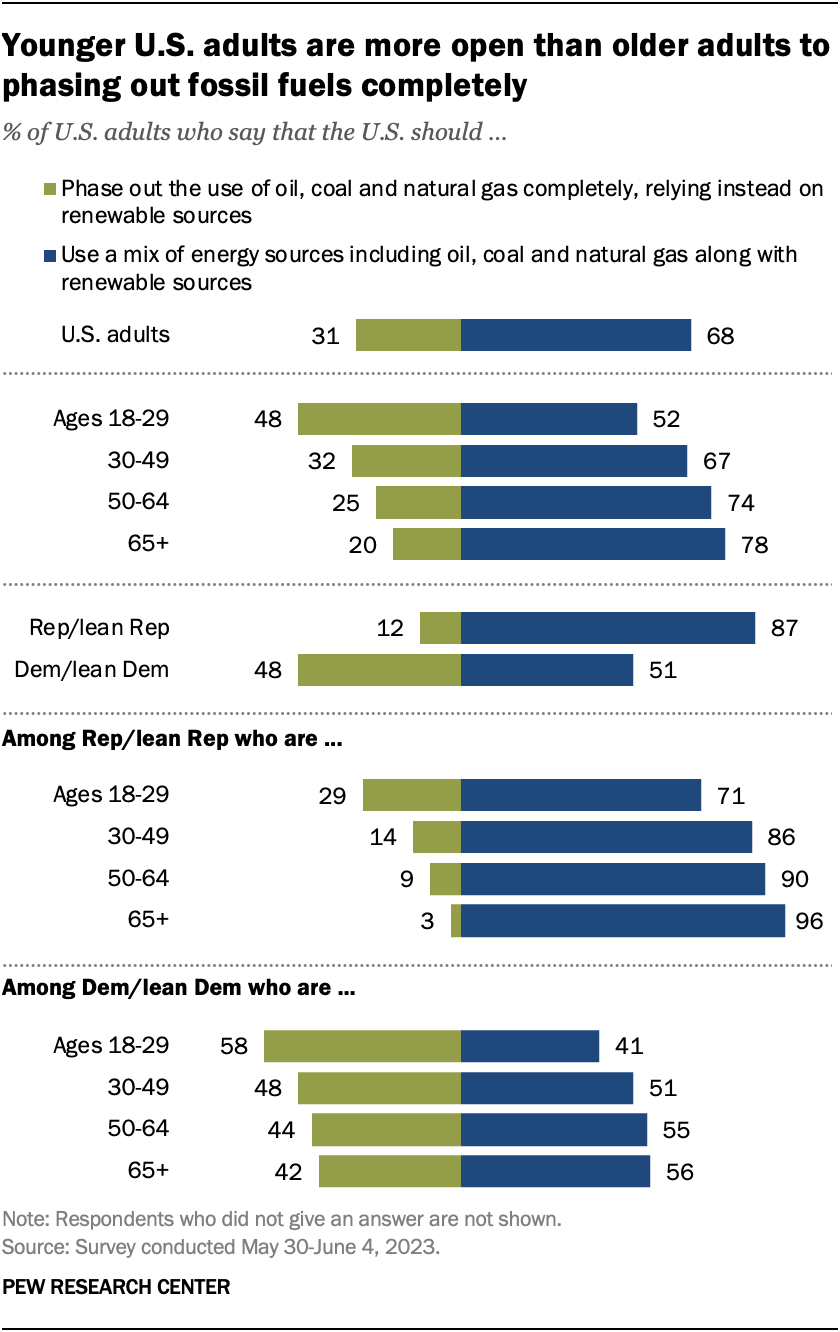
The Montana case offers an instance of a major aspect of how Americans value the climate crisis.  Note that it was teenagers (with adult help) who brought the suit.  This is very consistent with polling indicating that age strongly shapes climate view – i.e., the younger one is, the more likely they are to be concerned.  We saw this in a recent Pew survey, which offered findings like this:

Chart representing climate views by age and political party.

This impacts higher education directly.  Incoming traditional-age undergraduates are more likely than campus faculty and staff to be concerned about climate (compare the ages 18-29 to 65+, above). This may appear in terms of class and course of study selection, then evolve into research interests as they age up into faculty and staff positions.  We may also see activism among students, taking place on or off campus, as I’ve been forecasting. Suing a state government is no small thing, and points the way to a generation of academic politics.

Let me add a caveat – an obvious one, I think, but worth mentioning – that these two developments are playing out, and will play out, unevenly across the total higher education ecosystem.  Not all campuses are very exposed to fires. Not all colleges and universities will enroll students (then faculty and staff) who are energized by the climate crisis in sufficient numbers to be significant.  Enough will, though, for academics to be mindful, to plan, and to act.


Posted in climatechange | 3 Comments

Are you teaching about climate change and education? I’m available as a guest speaker.

Are you teaching a class this fall which addresses how climate change might impact higher education?

If so, I’m available to contribute, if it makes sense for your pedagogical and curricular purposes.

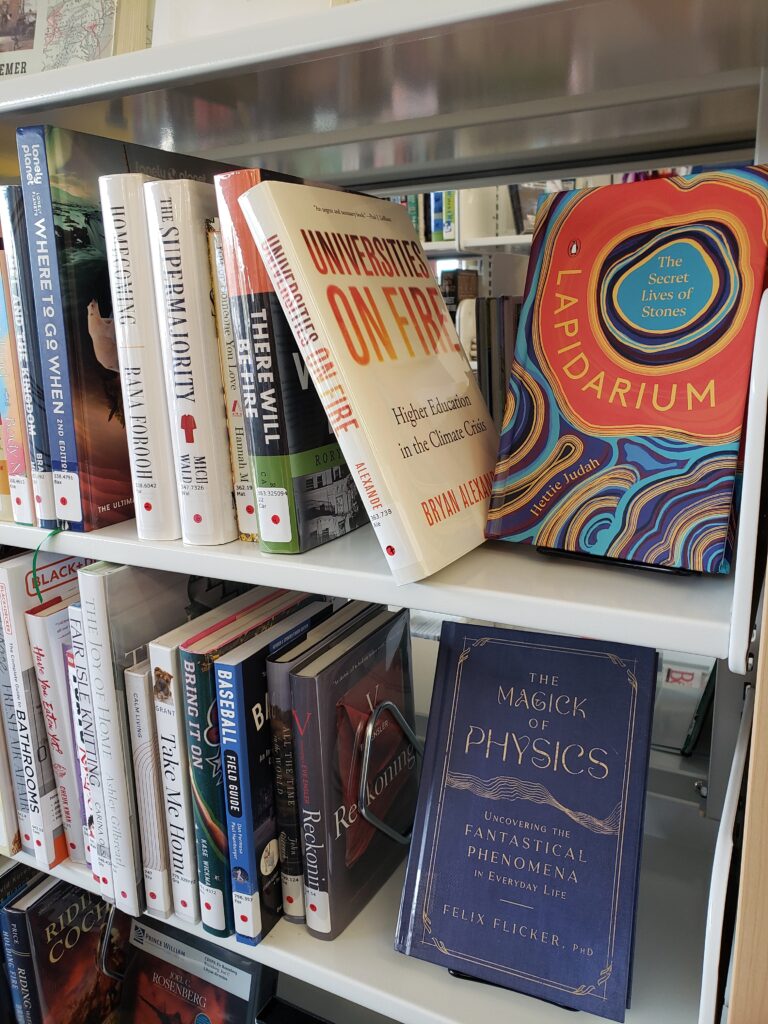
Universities on Fire on a library bookshelf

Universities on Fire on a local library bookshelf.

To explain: for several years now I’ve been researching the topic of the higher education-global warming relationship.  That’s led me to create numerous blog posts, presentations, articles, and a recent book, Universities on Fire.   My hypothesis is that climate change will have a deep impact on post-secondary education, and that academics have many actions we can take to respond to – and, better yet, anticipate the unfolding crisis.  It may be the greatest challenge facing academia in the decades ahead, starting now.

So why am I interested in participating in classes?  Partly because I’m fascinated by how global warming appears in the curriculum and want to learn more (that’s part of University on Fire‘s fourth chapter).  Yet also because I find students to be more interested in the topic than their faculty and staff elders, generally speaking, and I want to connect with that energy and learn from it.  They might become the prime movers for getting colleges and universities to seriously grapple with climate change.

In a given class I can give a talk, facilitate discussion, take questions, lead a simulation game, or follow whichever pedagogical format best fits class design and goals.  As an experienced presenter and classroom teacher I can make it all work.

Logistically, I’m happy to video into a live session via Zoom, Teams, Shindig, Skype, etc. Participating asynchronously, such as through a class blog or learning management system/virtual learning environment, is also fine.  If you’re within a day’s travel from northeastern Virginia, I could visit in person.

For faculty interested in me as guest on the topic, please reach out here.

Posted in climatechange, teaching | Leave a comment