
I just finished working on a research report for the EDUCAUSE Center for Analysis and Research (ECAR). It’s a deep dive into the major trends shaping campus IT work and environments.
“Trend Watch 2017: Which IT Trends Is Higher Education Responding To?” breaks down trends based on their prevalence among survey respondents. This gives a more detailed view of technology practice and thinking than a simple overview.
It’s aimed at campus technology leaders, including chief information officers, but should be beneficial for anyone working on or thinking about educational technology.
The first two categories in the trends are those that impact roughly one half of campuses:
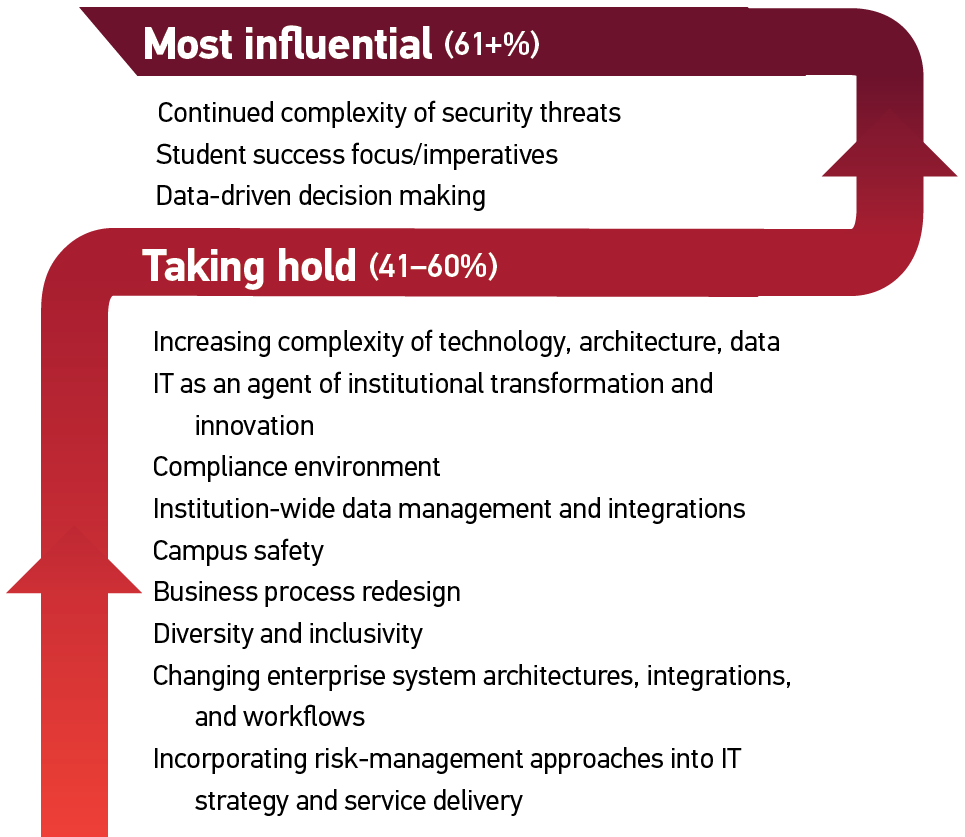
You can see many classic themes, including a variety of challenges: security, safety, risk management, complexity, increasing regulation. Note the importance of data, especially in terms of student work – those are two of the top three trends.
The middle of the trends ranking includes forces that aren’t universally felt, but that look important and worth considering:
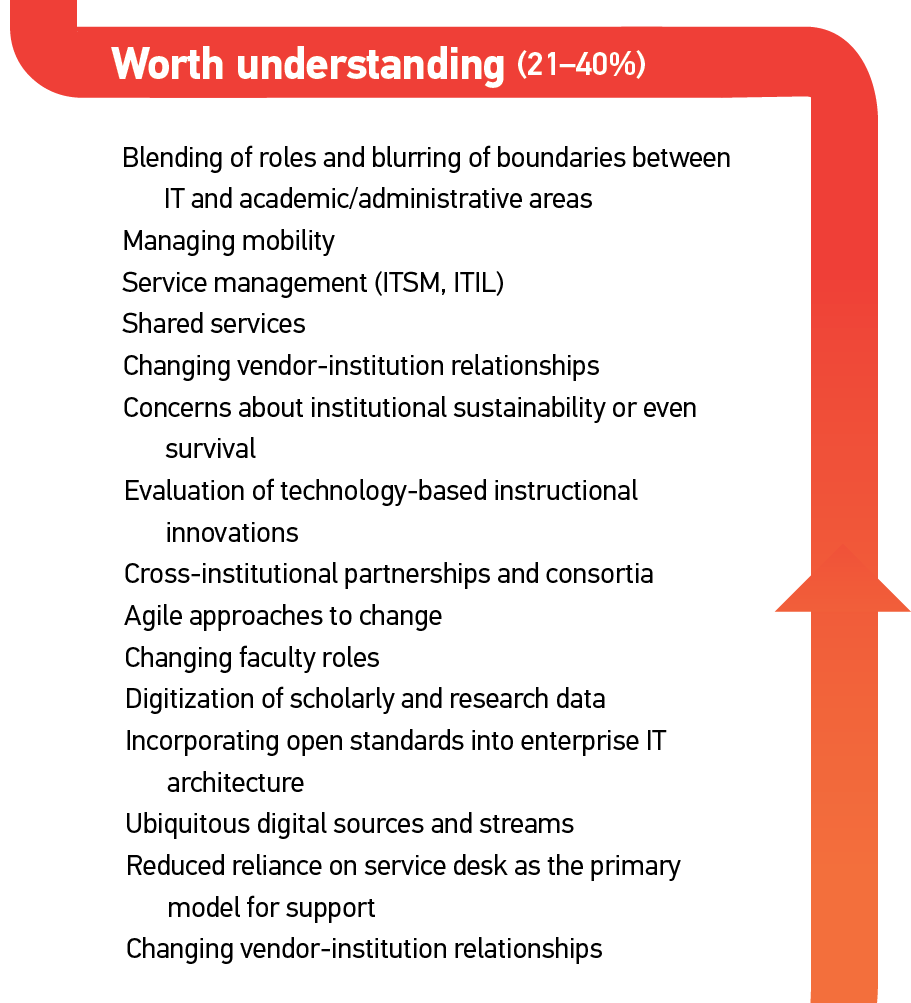
Here we see a large number of operational and institutional forces, from relationships with vendors and faculty to organizing work on desktops and within collaborations.
Below that are the least popular trends:
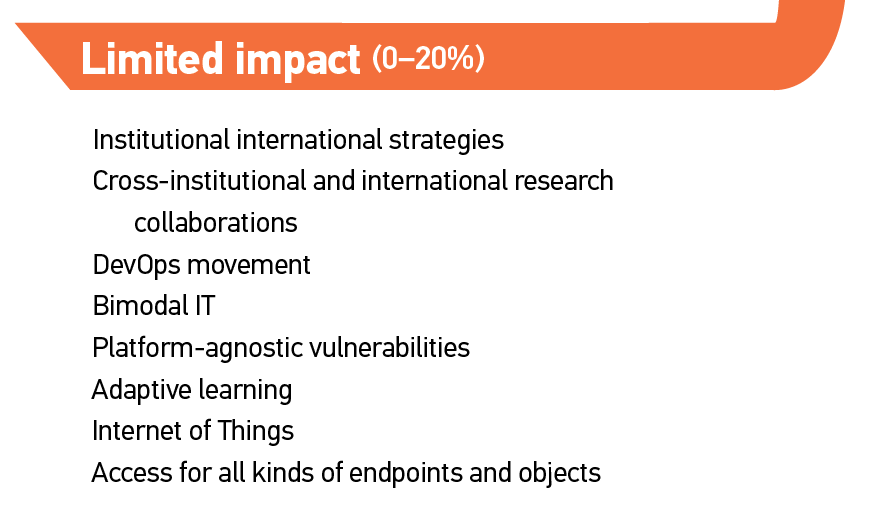
These may well be emergent forces, which we’re just beginning to see appear.
Taken together, these results offer a kind of roadmap for the changing nature of campus technology. They also illustrate where and how emerging technologies meet institutional reality.
For more thoughts and analysis, check the report.



Reblogged this on As the Adjunctiverse Turns.